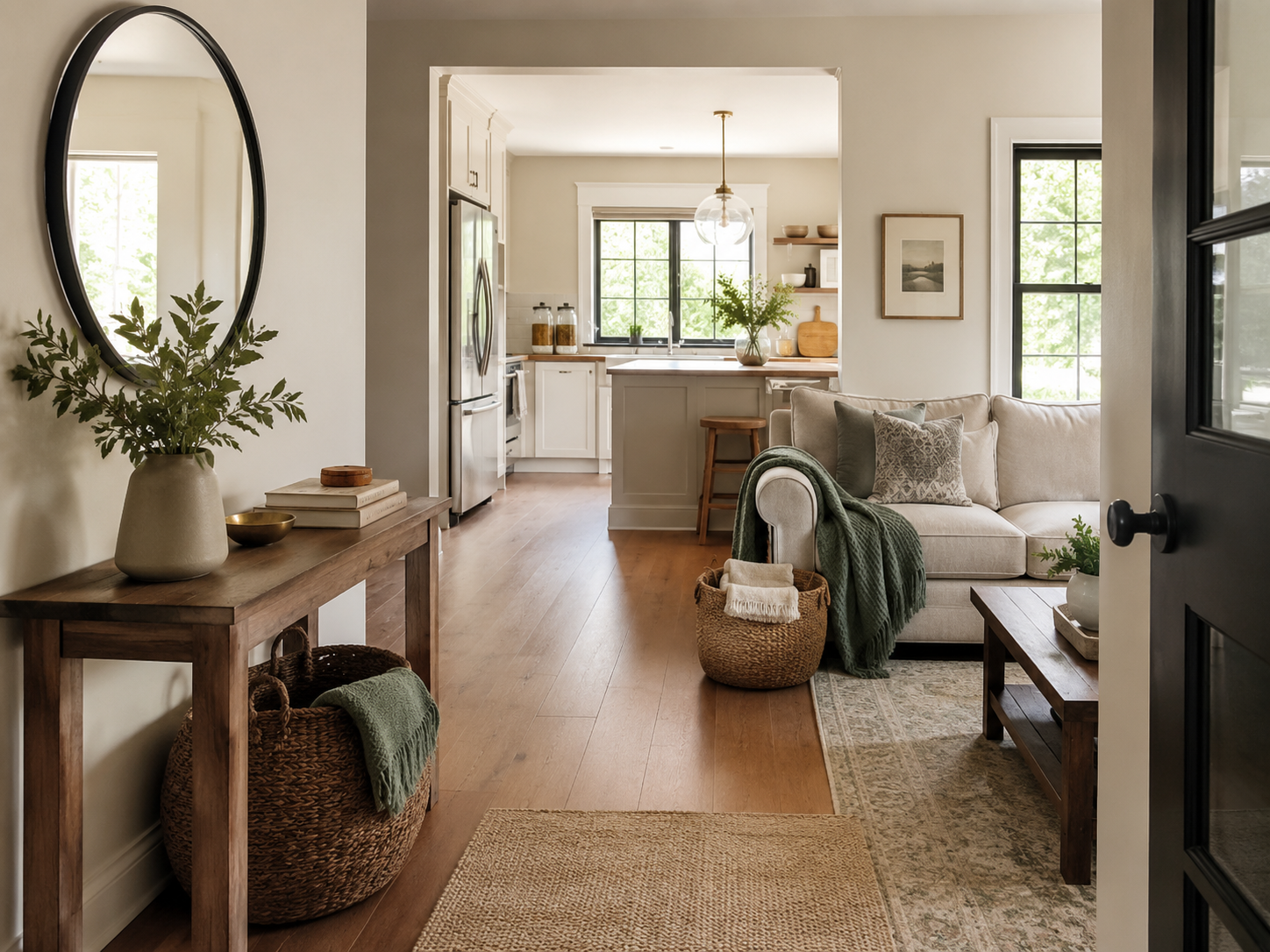
How to Organize Your Home Without Buying Anything: A Room-by-Room Reset
Home organization often begins with shopping.
A drawer feels crowded, so we look for dividers. A shelf looks untidy, so we order matching baskets. A countertop collects too many objects, so we begin searching for another container to hold them.
The problem is that storage products do not automatically create order. They can make clutter look more coordinated, but they cannot decide what should stay, where it belongs, or how often it is actually used.
A useful home reset begins before anything new enters the house.
It begins by reducing what each room is expected to hold, returning misplaced objects to their proper areas, and creating simple systems from the furniture, boxes, jars, trays, drawers, and containers already available.
This approach is not about creating a perfectly empty home. It is about making the home easier to live in and quicker to restore after an ordinary day.
You do not need a collection of matching organizers to begin. You need a clear starting point, a few temporary zones, and a willingness to make decisions one room at a time.
Begin with a No-Buy Rule
Before opening a cupboard or emptying a drawer, decide that no storage products will be purchased during the first stage of the reset.
This temporary rule changes the questions you ask.
Instead of asking:
- Which basket would fit here?
- Do I need another shelf?
- Would matching containers make this look better?
You begin asking:
- Why is this area crowded?
- Do all of these objects need to live here?
- Is something being stored far from where it is used?
- Does the home already contain a box, tray, jar, or drawer that could solve this?
- Would removing items work better than adding storage?
Keep a short note of problems that cannot be solved immediately. Some areas may genuinely need a hook, a divider, or a different piece of furniture later.
Do not buy it yet.
Live with the reset for at least a week. Many supposed storage problems disappear once duplicates, unused objects, and misplaced items have been removed.
The no-buy rule is not a permanent ban. It is a way to separate real needs from reactions to clutter.
Create Three Temporary Zones
Organization becomes slower when every object requires an immediate final decision.
Create three temporary zones before beginning:
Keep in this room
These objects belong in the room and are used there.
Move elsewhere
These objects are useful, but they have drifted into the wrong room.
Leave the home
These objects will be donated, recycled, returned, sold, or discarded.
Use containers the home already has: laundry baskets, reusable shopping bags, cardboard boxes, or empty drawers.
Do not create a fourth category called “decide later” unless absolutely necessary. That category can quickly become another permanent pile.
Work in small areas rather than emptying an entire room at once. One shelf, one drawer, or one surface is enough to create visible progress without turning the home upside down.
At the end of each session, move the second group to the rooms where the objects belong. Place the third group near the exit so it can leave the home quickly.
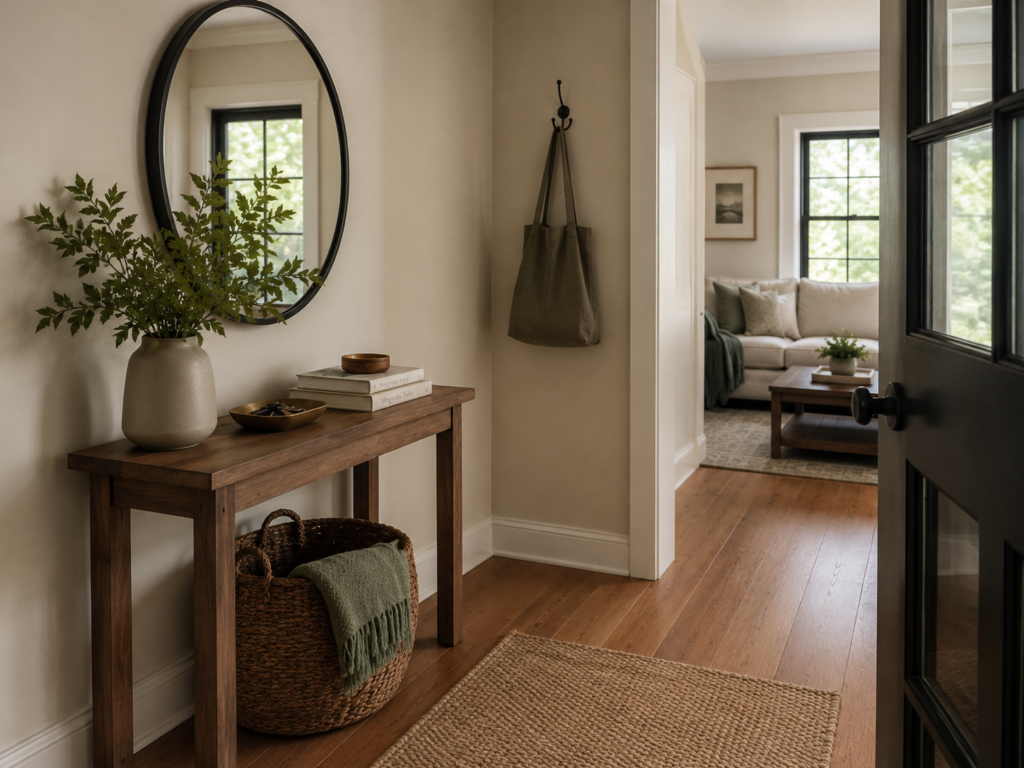
Reset the Entryway Around Arrivals and Departures
The entryway collects objects because it sits between the outside world and the rest of the home.
Shoes are removed. Bags are dropped. Mail arrives. Keys, sunglasses, receipts, coats, and packages remain wherever there is an open surface.
Begin by removing everything that does not support arriving or leaving.
The entryway may need to hold:
- Current-season shoes
- Frequently used outerwear
- Keys
- Everyday bags
- Sunglasses or umbrellas
- Mail waiting for action
- Items that must leave the house soon
It does not need to hold every shoe, every coat, or every reusable bag the household owns.
Move out-of-season items elsewhere. Return rarely used bags to a wardrobe. Recycle old receipts and packaging.
Then use what is already available to create clear landing places.
A bowl can hold keys. A small plate can collect coins. An existing basket can contain hats or gloves. A spare hook can be reassigned to the bag used every day.
If the entryway has no furniture, look for an unused stool, narrow table, wooden crate, or shelf elsewhere in the home before purchasing anything.
The goal is to reduce the number of decisions required at the door. Every frequently used object should have one obvious place.
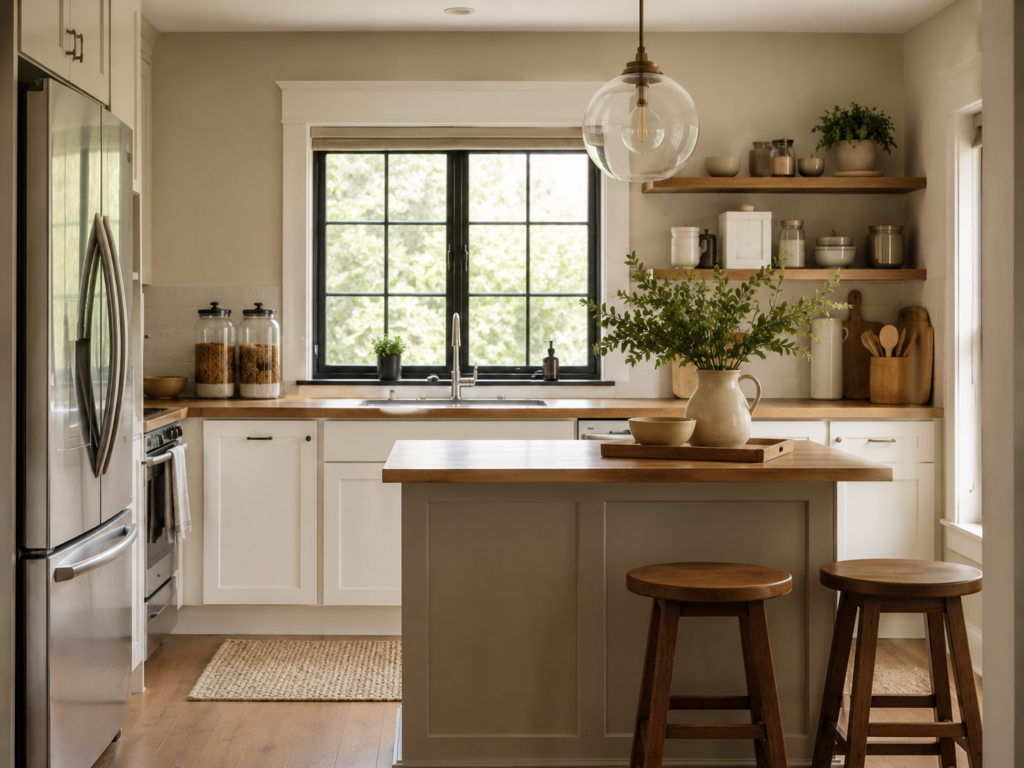
Organize the Kitchen by Frequency of Use
Kitchen clutter often comes from storing objects according to category rather than frequency.
All baking tools may be kept together, even though some are used weekly and others once a year. Every mug may occupy the most accessible shelf, despite the household using the same four each day.
Begin with the countertop.
Remove everything, clean the surface, and return only the objects used daily or several times a week. A coffee machine, kettle, knife block, or fruit bowl may deserve permanent space. Occasional appliances probably do not.
Next, examine the most accessible drawers and shelves.
They should contain the items used most often:
- Everyday plates and bowls
- Frequently used pans
- Cooking utensils
- Daily mugs and glasses
- Common spices
- Food-storage containers in regular rotation
Move seasonal, duplicate, and special-occasion objects to higher, lower, or less convenient areas.
Use existing containers to create separation.
A shallow food container can hold small baking tools. A mug can store measuring spoons. A shoebox lid can act as a drawer tray. A clean glass jar can contain clips or reusable straws.
Do not transfer every dry ingredient into decorative containers unless doing so improves freshness or makes the product easier to use.
A kitchen is organized when cooking and cleaning require fewer movements, not when every package has been replaced.
Reduce the Number of Bathroom Categories
Bathrooms become crowded because many small products create the impression that they all require separate storage.
Begin by gathering similar items:
- Daily skincare
- Occasional skincare
- Hair products
- Dental care
- Medicine
- Makeup
- Samples and travel sizes
- Backup toiletries
- Cleaning supplies
Remove empty containers, expired products, and anything that caused irritation or was never enjoyed.
Combine partly used duplicates when it is safe and practical. Place travel items together rather than scattering them across several drawers.
Then simplify the categories.
Daily products should be the easiest to reach. Occasional items can sit in a deeper drawer or higher cabinet. Backups do not need to share space with the product currently in use.
Look around the home for containers that can be repurposed.
A small ceramic bowl can hold hair ties. A clean candle jar can contain cotton swabs. A shallow tray can group daily skincare. A small box can keep medicine packets upright.
Avoid displaying every product on the counter. Leave enough clear space to use the basin comfortably and wipe the surface quickly.
The bathroom should support routines without making its entire inventory visible.
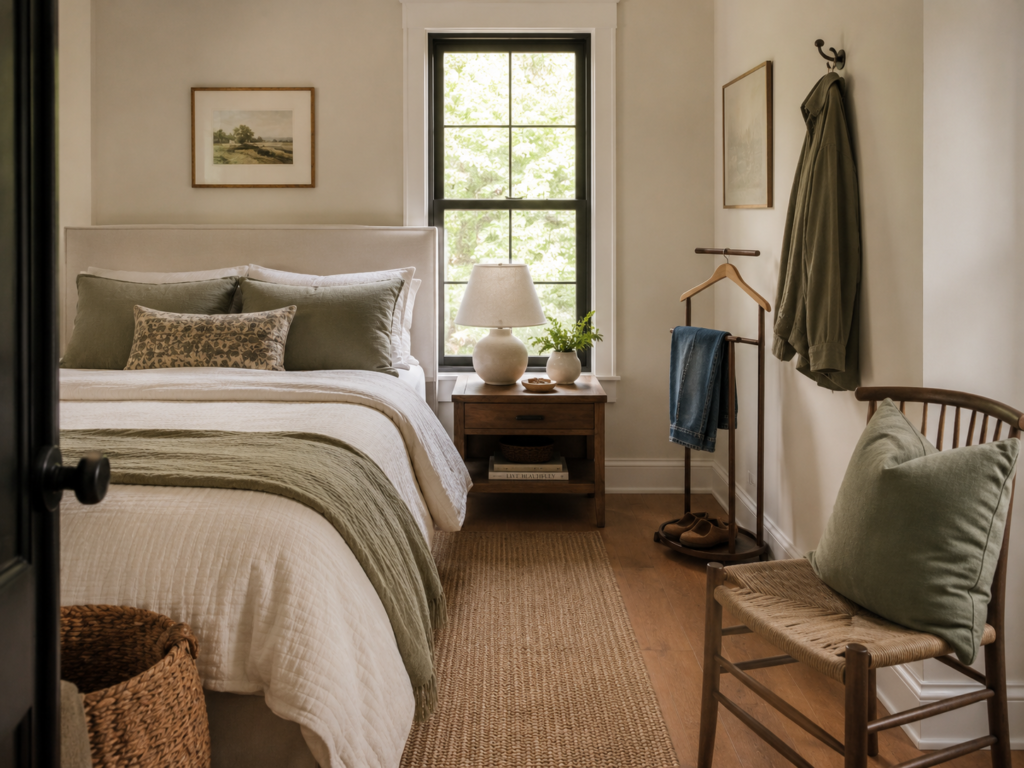
Rebuild the Bedroom Around Rest
The bedroom often becomes a holding area for unfinished decisions.
Clothes wait on chairs. Packages sit unopened. Books accumulate beside the bed. Objects from other rooms remain because the bedroom feels private and can be dealt with later.
Begin with the areas visible from the bed.
Clear the nightstands, floor, and any chair or bench used as temporary storage. Return unrelated objects to their proper rooms.
A bedside surface usually needs very little:
- A lamp
- A book or current reading material
- Water
- Glasses
- A phone charger
- One small personal object
Everything else should earn its place.
Next, address the clothing transition zone.
Most bedrooms need somewhere for clothes that have been worn but are not ready for washing. Without a designated place, they gather on a chair or the floor.
Use an existing hook, one section of a wardrobe, a valet stand, or a dedicated part of a laundry basket. Keep the limit small enough that it cannot become a second wardrobe.
Examine under-bed storage as well. This space is useful, but it should not become a hidden archive of forgotten belongings.
Store only clearly defined categories there, such as seasonal bedding, luggage, or off-season clothing. Use existing suitcases or sturdy boxes rather than buying new containers immediately.
A more restful bedroom is created as much by removing unfinished tasks as by changing the decor.
Make the Living Room Easy to Restore
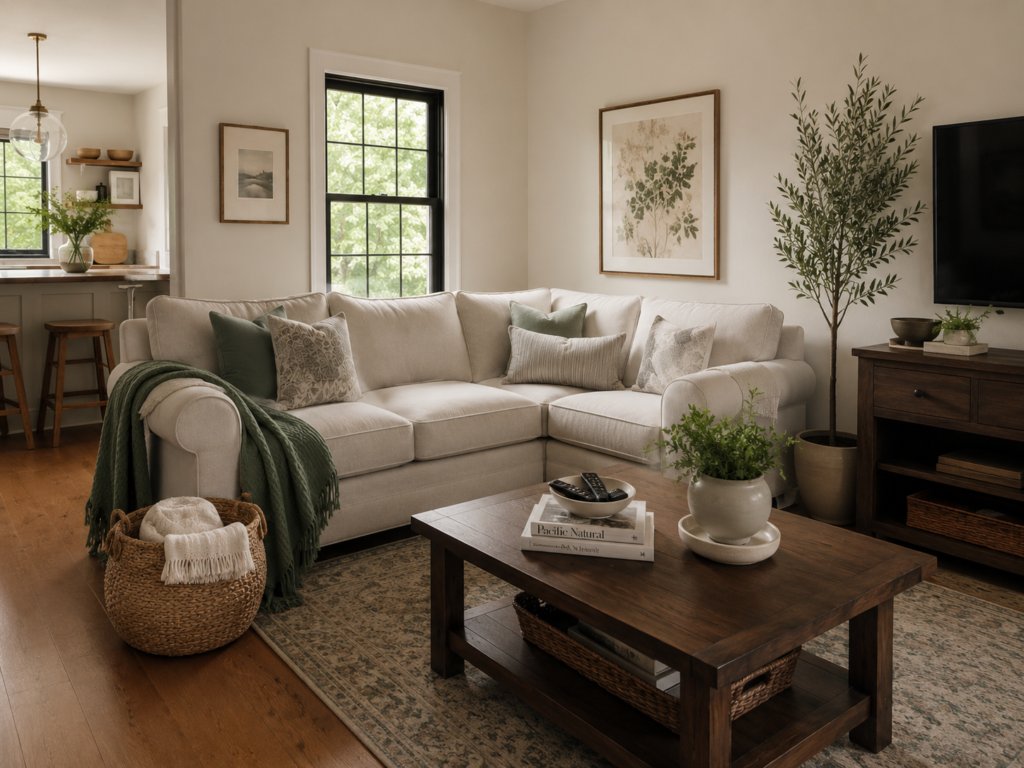
The living room serves several people and activities, so it rarely remains perfectly arranged.
The goal is not to prevent objects from entering the room. It is to make returning them easy.
Identify what regularly accumulates:
- Remote controls
- Charging cables
- Blankets
- Books and magazines
- Toys
- Game controllers
- Craft supplies
- Cups and plates
- Items waiting to be carried upstairs
Give each repeated category one home.
A bowl can hold remote controls. A drawer can contain chargers. A basket already used elsewhere may be moved beside the sofa for blankets. A stack of current books can remain on the coffee table, while finished books return to the shelf.
If toys or hobby materials are used in the living room, allocate a fixed amount of existing storage to them. The container sets the limit.
When it is full, something must return to another room before more can be added.
Avoid filling every surface with decorative objects. Clear surfaces are useful because they allow the room to adapt to real activities.
An organized living room should be recoverable in a few minutes, even after a busy evening.
Use What the Home Already Has
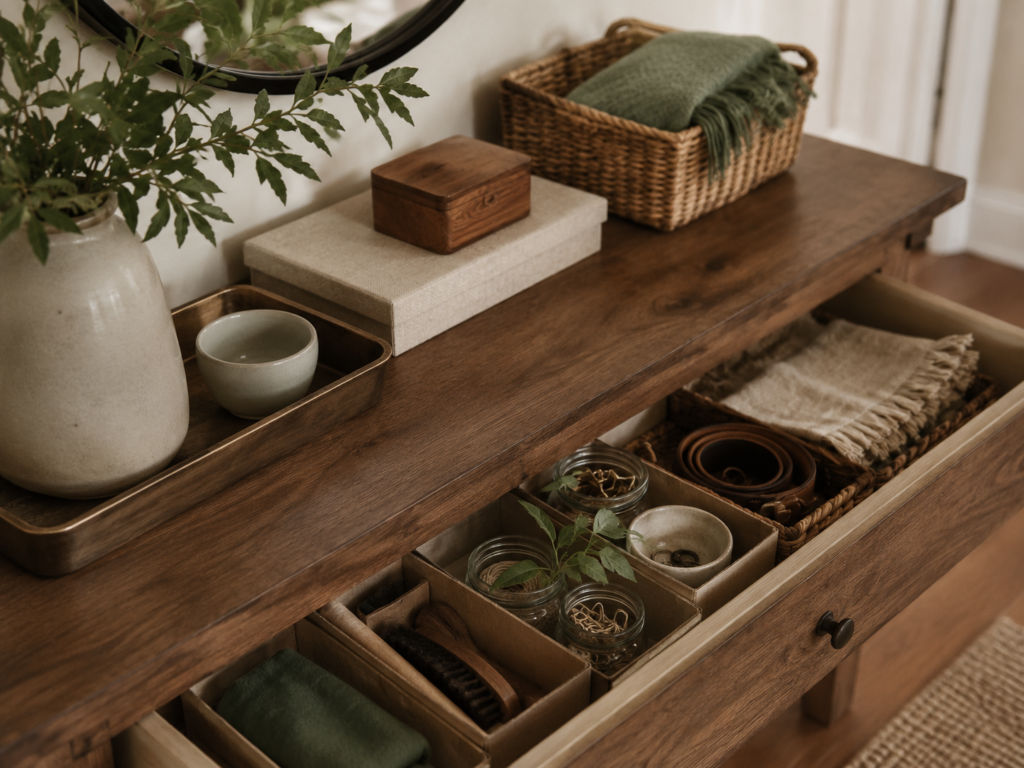
Before buying an organizer, search the home for an object performing no useful function.
Useful alternatives often include:
- Shoeboxes for drawers and shelves
- Jar lids as trays for small objects
- Glass jars for tools, brushes, or stationery
- Ceramic bowls for keys and jewellery
- Serving trays for grouping products
- Suitcases for seasonal storage
- Reusable bags for donations
- Magazine holders for paperwork or baking trays
- Food containers for small hardware
- Old gift boxes for cables and accessories
- Small stools as bedside or entryway tables
- Bookends for files, lids, or cutting boards
The temporary nature of these solutions is useful.
A cardboard box can help test whether a drawer divider would improve the space. A spare bowl can reveal whether keys consistently return to the same location.
After living with the arrangement, you will know whether a permanent purchase is actually necessary.
Do not hide unsafe, damaged, or unhygienic storage behind the idea of reuse. Containers should be clean, stable, and appropriate for what they hold.
The objective is not to keep every object because it might become an organizer. It is to make better use of what already deserves space in the home.
Give Paper a Shorter Life
Paper creates clutter because it often arrives without a clear next step.
Mail, receipts, school forms, manuals, appointment cards, and delivery notes move from surface to surface while waiting for action.
Create one temporary paper location using an existing folder, tray, basket, or drawer.
Every paper entering that location should require one of four actions:
- Respond
- File
- Scan
- Recycle
Avoid storing papers simply because they appear official.
Instruction manuals may already be available online. Receipts may no longer be needed after the return period. Notices may contain a single date that can be transferred to a calendar.
Set a weekly time to empty the paper location. The container should remain small enough that it creates a natural limit.
Important documents need a more secure and permanent system, but daily paper should not be allowed to enter that archive without a reason.
Create an Exit Route for Donations
Decluttering is not complete when unwanted objects have been placed inside a bag.
They must leave the home.
Choose one location near the exit for donations and returns. Use an existing reusable bag, box, or basket.
Set a limit: when the container is full, it leaves.
Keep returns separate and attach receipts or shipping labels immediately. Add the return deadline to a calendar rather than trusting memory.
For objects that may be sold, establish a short deadline. If they have not been listed or sold by that date, donate them.
Avoid creating a permanent donation room, corner, or cupboard. That only moves clutter into a less visible location.
The exit route should be temporary, obvious, and easy to act upon.
Reset the Home in Fifteen Minutes
A well-organized home will still become untidy.
The difference is that it can be restored without a major cleaning day.
Build a short weekly reset around the areas that collect the most visible clutter.
A fifteen-minute reset might include:
- Returning shoes and bags in the entryway
- Clearing the kitchen counter
- Emptying the paper tray
- Returning bathroom products to drawers
- Moving clothes from the bedroom chair
- Folding living-room blankets
- Collecting objects that belong upstairs
- Emptying the donation container into the car
Use a timer and stop when it ends.
The purpose is not to deep-clean the home. It is to prevent small disorder from becoming a full-room project.
Household members can each reset one area. Children can return books or toys. One person can clear the kitchen while another handles the entryway.
A system that depends on one person noticing and correcting everything will be difficult to maintain.
Notice Which Problems Remain
After living with the reset for one or two weeks, review the areas that still create frustration.
Perhaps a drawer genuinely needs dividers. The entryway may require another hook. The bathroom may need a wall cabinet because no hidden storage exists.
At this stage, any purchase can be specific.
You will know:
- What must be stored
- How much space it requires
- Where it will live
- How often it is used
- Which dimensions will fit
- Whether the item solves a recurring problem
This is very different from buying storage while standing in a cluttered room.
A thoughtful purchase can support an established system. It should not be expected to create the system on its own.
A Home That Is Easier to Use
Organizing without buying anything shifts attention away from products and back toward daily life.
The entryway becomes easier because fewer objects compete for space. The kitchen works better because frequently used tools are closer. The bathroom feels calmer because its categories are simpler. The bedroom contains fewer unfinished decisions, and the living room can be restored quickly after use.
None of these changes require identical baskets or perfectly labelled containers.
They require fewer objects, clearer boundaries, and homes that reflect how people actually move through them.
The most successful organization system is not the one that looks impressive immediately after it is completed.
It is the one that still makes sense on an ordinary Tuesday evening.