Your Morning Ritual, Designed: How to Create a Coffee Bar in a Small Kitchen
A coffee bar does not need a large kitchen, a built-in cabinet, or a collection of professional equipment.
It needs a clear purpose.
In a small kitchen, the best coffee station is not simply an attractive arrangement of mugs and jars. It is a compact working zone that makes the morning easier, keeps frequently used items together, and prevents coffee equipment from spreading across the entire countertop.
It can be as simple as one tray beside the kettle or as complete as a concealed cabinet with lighting, storage, and space for several brewing methods.
The right design depends on how you actually prepare coffee.
Before choosing shelves, containers, or decorative accessories, begin with the ritual itself. What do you reach for first? Which tools do you use every day? Where does the water come from? What needs to be washed afterward?
When those questions shape the design, even a very small coffee corner can feel intentional, efficient, and personal.
Start with Your Real Coffee Routine
A coffee bar should be designed around habits rather than appearances.
Someone who uses a capsule machine needs a different setup from someone who weighs beans, grinds them fresh, and prepares pour-over coffee. A tea drinker may need room for a kettle, strainers, and several types of leaves. A household with several morning routines may need a more flexible beverage station.
For a few days, pay attention to everything used while preparing a drink.
This may include:
- A coffee machine or kettle
- A grinder
- Beans, capsules, tea, or cocoa
- Filters and measuring tools
- Mugs and travel cups
- Sugar, syrups, or spices
- Spoons and napkins
- A milk frother
- A small waste container
- Cleaning cloths
Not every item needs to remain visible.
Daily essentials should be within easy reach. Occasional tools can live in a nearby drawer or cabinet, while backup supplies can be stored elsewhere in the kitchen.
This distinction is especially important in a small room. A useful coffee bar supports the daily routine without turning the countertop into permanent storage.
Find the Smallest Area That Can Work Well
The best location is not necessarily the largest available surface.
Look for a section of the kitchen that already supports the sequence of making coffee. A narrow countertop beside the sink may work because water and cleaning are nearby. A corner close to an outlet may be ideal for a machine and grinder. An underused cabinet or shallow alcove can become a hidden station.
Possible locations include:
- The end of the main countertop
- A corner between two cabinet runs
- A section beneath an upper cabinet
- A freestanding cart
- A narrow console against an empty wall
- The inside of a pantry or tall cabinet
- A small shelf above a base cabinet
- An unused section of a dining area adjoining the kitchen
Measure the equipment before deciding.
Coffee machines often need additional space above or behind them for lids, water tanks, steam wands, and ventilation. A setup that fits perfectly when the machine is closed may become frustrating when it is used.
Also consider the direction in which cabinet doors, refrigerator doors, and drawers open. The coffee station should not interrupt the busiest pathway through the kitchen.
In a compact space, a carefully chosen 60-centimetre section can work better than a larger surface placed in the wrong location.
Choose Between an Open and a Hidden Coffee Station
An open coffee bar keeps the equipment visible and ready to use.
This works well when the machine is used several times a day and the surrounding objects are easy to keep organized. A tray, one shelf, and a few attractive containers may be enough to define the area.
A hidden station places the equipment inside a cabinet, appliance garage, or pantry. Doors can be closed after use, allowing the kitchen to appear calmer.
Neither approach is automatically better.
An open station may be the more practical choice when:
- Counter space is already available
- The equipment is used frequently
- The machine is visually attractive
- Cleaning and resetting the area is easy
A concealed station may suit the kitchen when:
- Visual clutter is a concern
- Several appliances need to be stored together
- The kitchen shares space with the living room
- There is sufficient ventilation and electrical access inside the cabinet
When designing a cabinet station, never trap heat or steam. Appliances must have enough clearance, and electrical work should be completed safely.
For renters, an open arrangement is usually easier to create and reverse.
Build the Layout Around a Simple Sequence
A good coffee bar follows the order in which the drink is prepared.
Think of the station as a small workflow:
Supplies → preparation → brewing → serving → cleaning
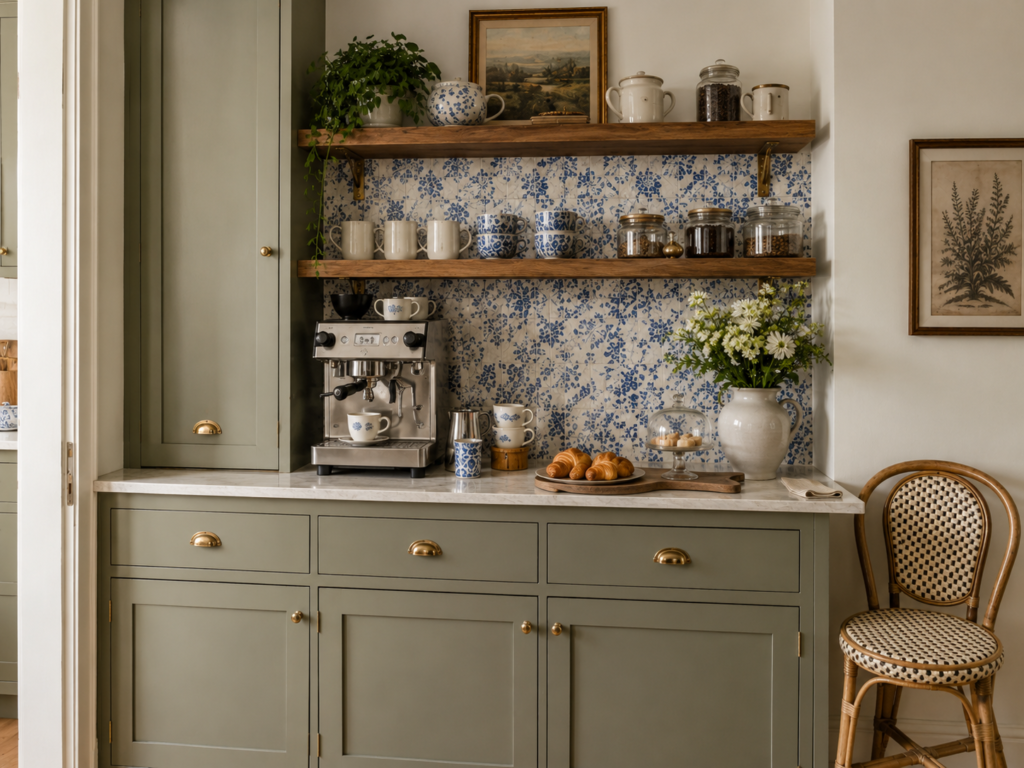
Beans, capsules, or tea should sit close to the machine. Mugs should be reachable without crossing the room. Spoons and small tools can be stored in a shallow drawer, cup, or container. A clear section of countertop should remain available for preparing and serving the drink.
Avoid spreading the process across several areas.
When the grinder sits at one end of the kitchen, the mugs in another cabinet, and the coffee itself inside the pantry, the station does not save time. It only creates another decorative zone.
Keep the working surface simple.
A machine, grinder, small tray, and one container may be enough. Everything else should earn its place through frequent use.
Use the Wall When the Countertop Is Limited
Vertical storage can transform a very narrow coffee station.
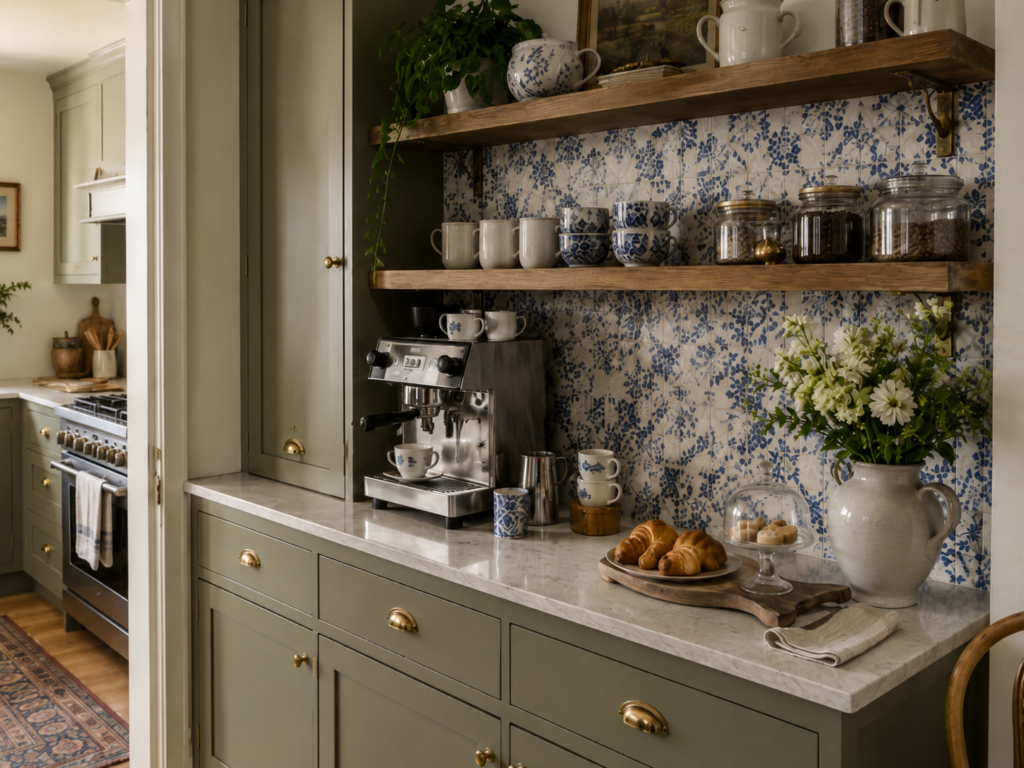
A single shelf above the machine can hold mugs, coffee containers, or less frequently used brewing tools. Hooks beneath the shelf can create additional storage without taking up counter space.
The key is restraint.
Several small shelves filled with mugs, signs, jars, and decorative objects can make the kitchen feel more crowded. One substantial shelf usually looks cleaner and is easier to maintain.
Other useful vertical solutions include:
- A wall-mounted mug rail
- A narrow spice-style shelf for syrups or tea tins
- A magnetic strip for small metal tools
- A shallow cabinet mounted above the station
- An internal door rack inside a pantry cabinet
- A peg rail for cups, cloths, and measuring spoons
Check the weight capacity before storing heavy ceramic mugs or glass containers.
The space above the coffee machine must also remain accessible. If the water tank opens upward, place the shelf high enough that the machine can still be refilled comfortably.
Create One Clear Visual Boundary
A coffee bar feels intentional when it has a recognizable boundary.
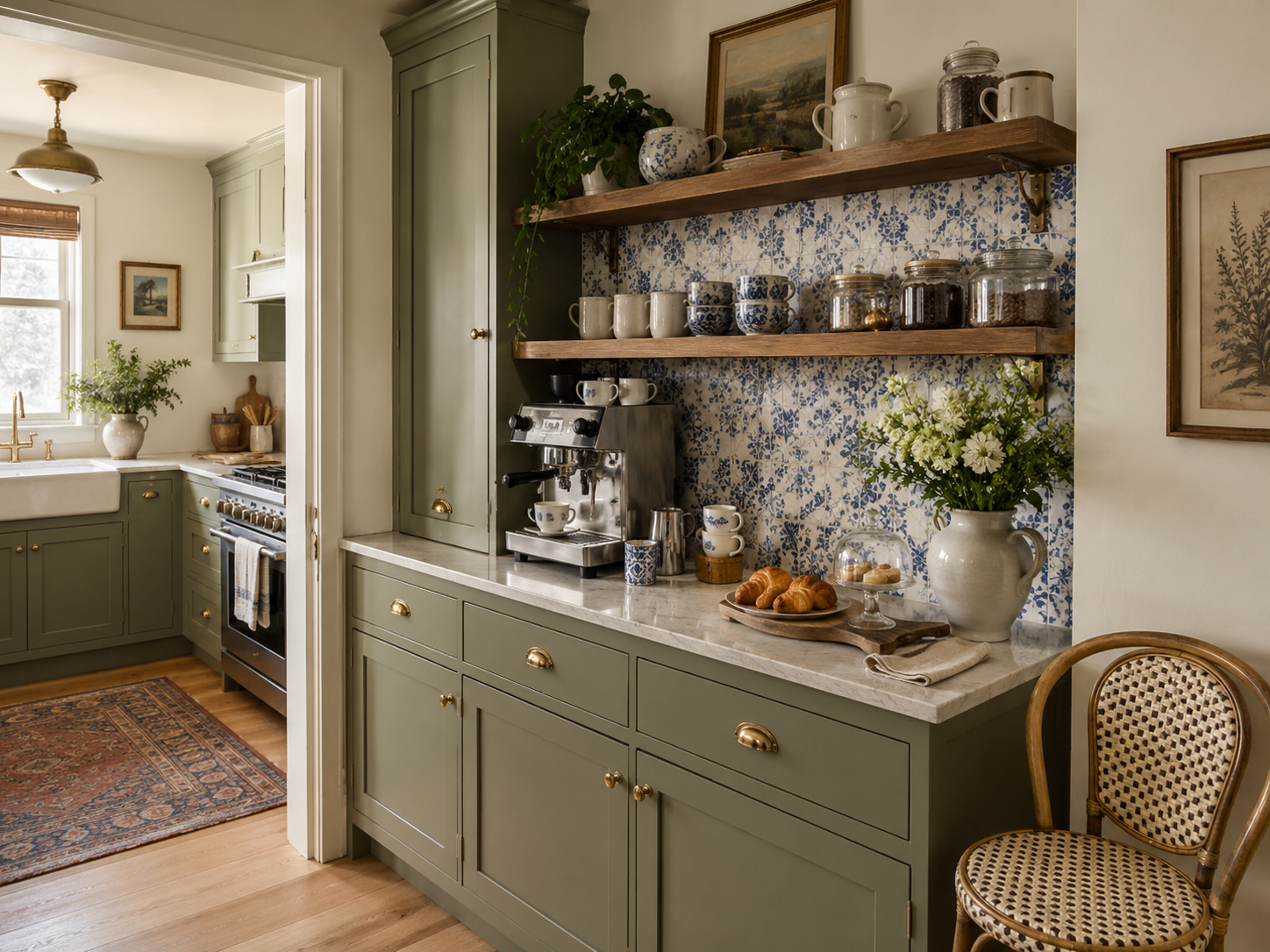
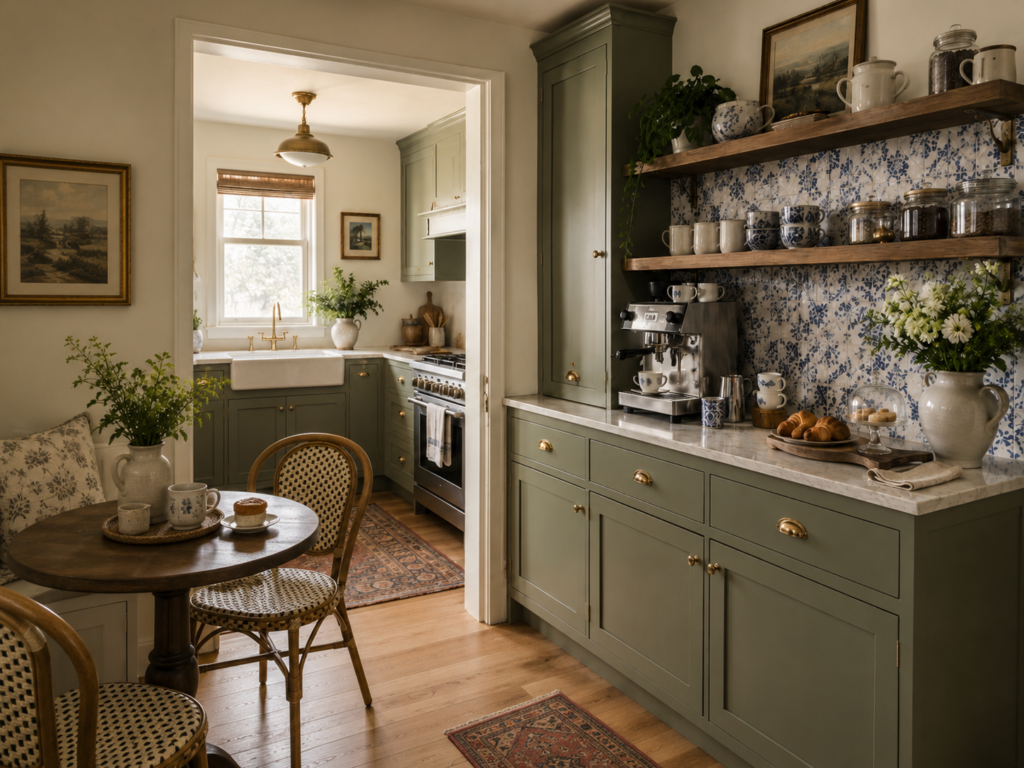
This does not require major construction. A tray can group the machine, jar, and accessories. A small section of contrasting tile can define the wall behind it. A shelf, picture light, or change in paint color can also make the station feel distinct from the rest of the countertop.
Choose only one or two defining elements.
For example:
- A dark green cabinet with a cream tile backsplash
- A cherry-red tray against neutral cabinetry
- A wooden shelf above glossy blue tile
- A patterned runner beneath a freestanding cart
- A small café-style wall light above the machine
This is also where the coffee corner can develop its own personality.
Unlike the previous SNOWLÉ kitchen article, this visual world can be more energetic: olive green, cherry red, cobalt blue, checked flooring, striped textiles, stainless steel, and expressive ceramics.
The station should still belong to the kitchen, but it does not need to disappear into it.
Plan Power, Water, and Heat Before Styling
The practical requirements should be resolved before decorative accessories are added.
Most coffee machines, kettles, grinders, and milk frothers require electricity. Avoid relying on multiple extension cables across the countertop. The station should ideally sit near a suitable outlet.
Do not overload sockets, and keep electrical connections away from the sink or areas where water may collect.
Consider how the machine will be filled.
If the water tank is removable from the back, leave enough space to reach it. When the tank lifts from the top, check the clearance beneath shelves or cabinets.
Steam is another concern.
Kettles, espresso machines, and milk frothers release heat and moisture. Repeated exposure may damage the underside of cabinets or cause condensation. Allow space for ventilation and wipe moisture after use.
A beautiful coffee bar that is inconvenient or unsafe will quickly become an unused corner.
Store Mugs According to How They Are Used
Mugs often take up more space than the coffee equipment itself.
Begin by keeping only the cups that are genuinely used. A large collection can be divided: everyday mugs near the coffee bar, special cups in another cabinet, and seasonal pieces stored elsewhere.
Everyday mugs can be placed:
- On one open shelf
- Inside the cabinet above the station
- On sturdy hooks
- In a shallow drawer with dividers
- On a tray when only two or three are needed
Avoid crowding too many mugs onto hooks. They should be easy to remove without knocking into one another.
Travel cups need a different approach. Store lids with their matching containers, preferably upright in a drawer or basket.
The station should support the reality of rushed mornings, not require a careful rearrangement each time a cup is selected.
Keep Ingredients Visible Only When They Add Value
Coffee beans, sugar, tea, and cocoa can look attractive in containers, but transferring every product into a matching jar is not always necessary.
Visible containers should protect the contents and make the routine easier.
Coffee beans are best stored in an airtight, opaque container away from heat, moisture, and direct sunlight. Clear glass jars may be attractive but are not always ideal for long-term storage.
Sugar, cinnamon, and frequently used additions can be kept in small lidded vessels. Backup packaging should remain inside a cabinet.
Syrups can quickly dominate a small counter. Keep only the most-used bottle visible and store the rest elsewhere.
Labels are useful when several similar ingredients are stored together, but they do not need to become the main visual feature.
A coffee bar should look lived in and functional, not like a display made entirely from decanted products.
Use Lighting to Change the Morning Experience
Many coffee stations sit beneath upper cabinets or in corners that receive little natural light.
A small lighting improvement can make the station easier and more enjoyable to use.
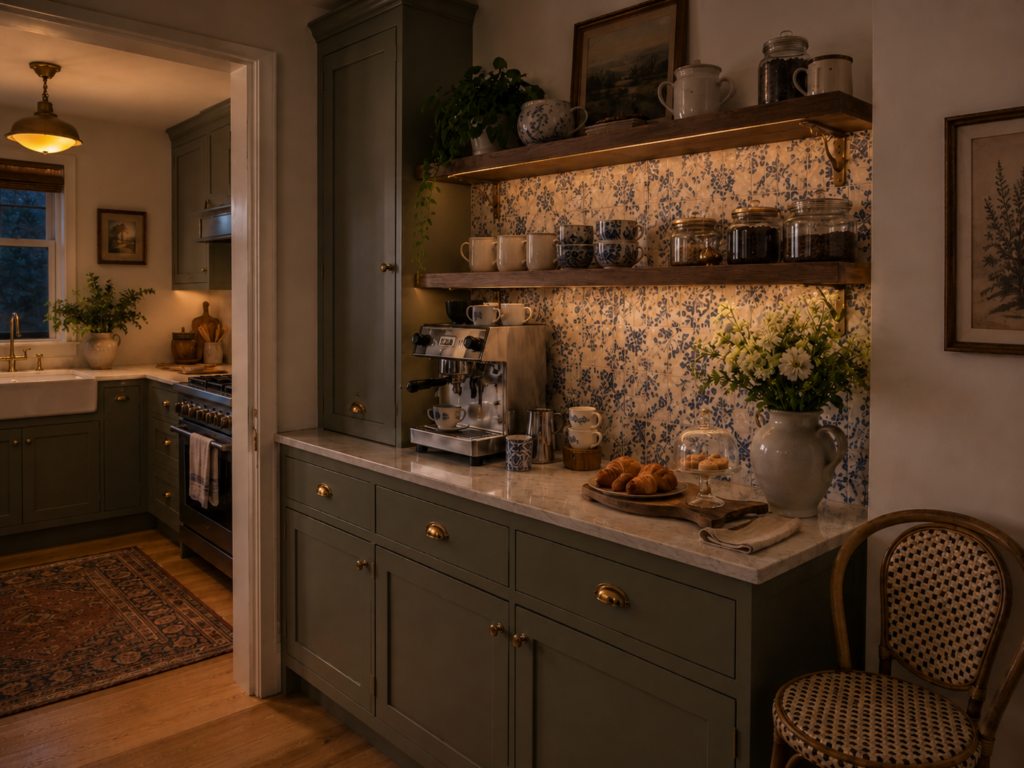
Under-cabinet lighting can illuminate the working surface. A compact wall light can give a freestanding station the atmosphere of a small café. Rechargeable lamps may help renters when permanent wiring is not possible, provided they are kept safely away from water and heat.
Choose lighting that is bright enough for measuring and cleaning but softer than a harsh ceiling fixture.
A dimmable source works especially well when the coffee corner is used early in the morning before the rest of the household is awake.
Light can also emphasize the station’s materials: glossy tile, stainless steel, colored ceramics, or a painted cabinet.
The purpose is not only to decorate the area. It is to make the ritual feel more deliberate.
Prevent the Station from Becoming a Drop Zone
A beautifully arranged coffee bar can quickly attract mail, keys, grocery receipts, and unrelated kitchen items.
Protect the area by giving those objects another destination.
Keep one section of the coffee bar visibly clear. This open space signals that the surface is intended for preparing drinks rather than storing miscellaneous objects.
Use a small tray to contain accessories, but do not allow the tray to become an overcrowded collection.
At the end of the day:
- Empty used capsules or grounds
- Return mugs to their place
- Wipe the machine and countertop
- Refill water when needed
- Put ingredients back
- Remove anything unrelated to the station
This reset should take less than two minutes.
If maintaining the station requires a complicated styling routine, the design contains too many objects.
Design a Rental-Friendly Coffee Bar
Renters can create a defined coffee station without altering cabinetry or tile.
A slim cart is one of the most flexible options. It can hold the machine on top, mugs on a lower shelf, and backup supplies inside baskets.
A freestanding console can also work when the kitchen includes an empty wall. Choose a surface deep and strong enough to support the equipment safely.
Removable solutions include:
- Tension or freestanding shelves
- Adhesive hooks rated for the correct weight
- Rechargeable lighting
- A large tray or cutting board used as a visual base
- Removable wall covering in a dry area
- Stackable drawer organizers
- Baskets placed inside existing cabinets
Keep all original hardware if knobs or handles are changed.
A temporary coffee station can still feel permanent in its organization and visual identity.
Let the Station Serve More Than Coffee
A beverage station becomes more useful when it adapts throughout the day.
In the morning it may support espresso or filter coffee. In the afternoon it can hold tea, sparkling water, or a quick snack. In the evening it may become a place for decaffeinated drinks or hot chocolate.
This does not mean displaying every possible ingredient.
Store the core equipment permanently, then rotate smaller items according to the household’s habits or the season.
A lower drawer might contain:
- Tea bags
- Cocoa
- Reusable straws
- Cocktail napkins
- Travel-cup accessories
- Spare filters
- Cleaning tablets
A flexible station earns its place even in a very small kitchen because it supports several daily rituals within one compact zone.
A Small Area with a Clear Purpose
A successful coffee bar is not measured by the number of appliances, shelves, or matching containers it contains.
Its value comes from clarity.
The equipment is placed where it can be used comfortably. The mugs and ingredients are close at hand. Cables, water, heat, and cleaning have been considered. The area has enough personality to feel special without becoming too decorative to use.
In a small kitchen, that balance matters.
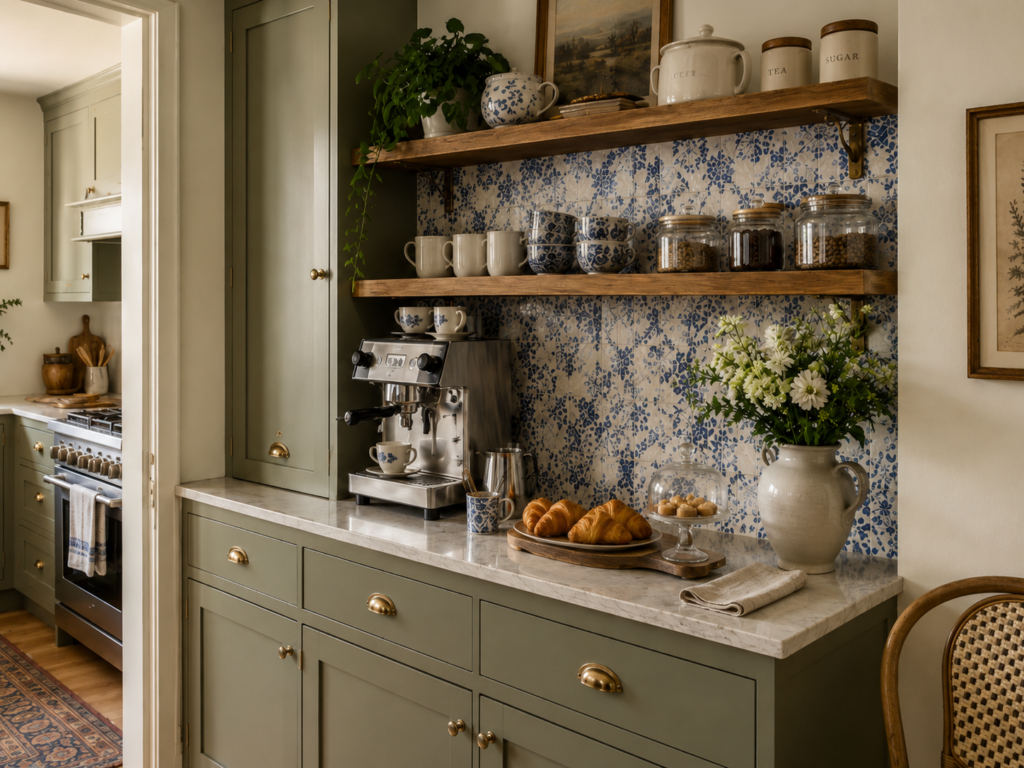
A single tray, one shelf, and a carefully chosen corner may be enough to turn an ordinary routine into a part of the home that feels genuinely considered.
The best coffee bar does not imitate a café.
It makes the way you already live work better.