Small Bathroom, Big Impact: How to Create a Boutique Hotel Bathroom at Home
A memorable hotel bathroom is rarely defined by size alone.
Some of the most inviting hotel bathrooms are compact, yet they feel intentional from the moment the door opens. The lighting is flattering. The towels are within reach. The surfaces feel considered, and even ordinary objects appear to have a proper place.
That sense of refinement can be recreated at home without building an enormous spa bathroom or replacing every fixture.
The key is to stop treating a small bathroom as a collection of practical necessities and begin designing it as a complete experience. Color, light, storage, texture, scent, and daily routines should work together rather than being addressed separately.
A boutique hotel-inspired bathroom should still function comfortably on busy mornings. It simply adds enough character and care to make those routines feel more enjoyable.
Decide What Kind of Hotel You Are Designing
“Hotel-inspired” does not have to mean white marble, chrome fixtures, and perfectly folded towels.
Before choosing products, decide what kind of boutique hotel atmosphere suits your home.
A city hotel bathroom might feature dark stone, glossy tile, smoked glass, and sculptural lighting. A countryside inn may feel softer, with painted cabinetry, patterned fabric, aged brass, and botanical artwork. A coastal hotel could use pale stone, striped textiles, weathered wood, and blue-green accents.
Choosing one clear direction will make a small room feel more coherent.
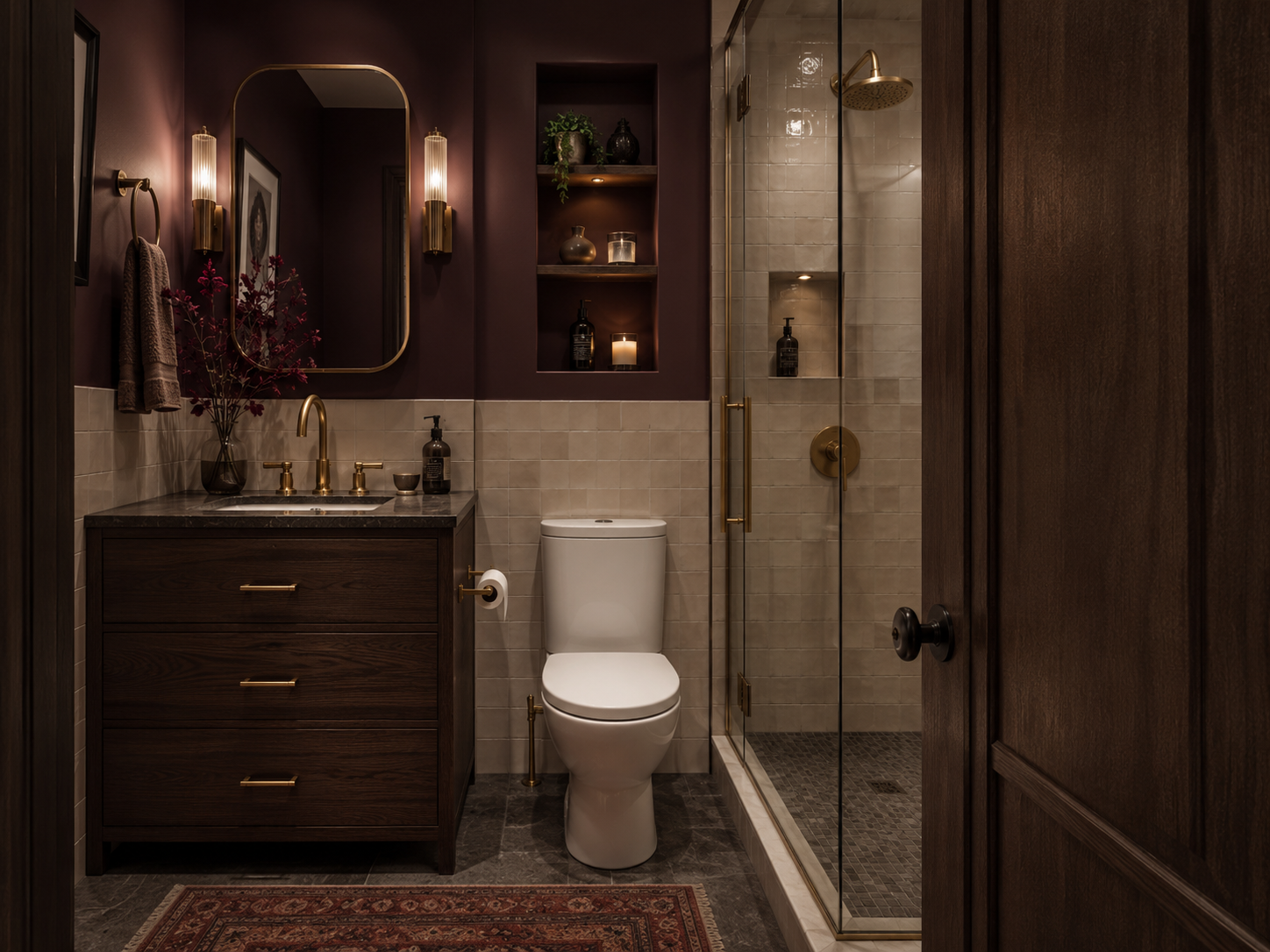
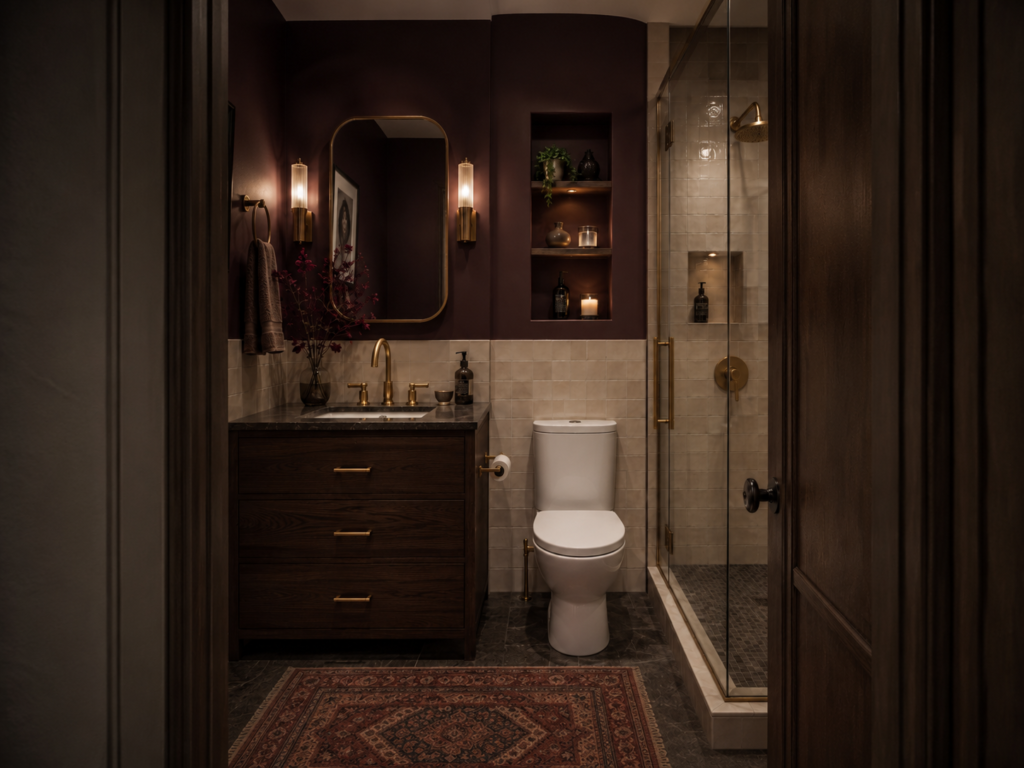
For this design, imagine an intimate hotel bathroom with:
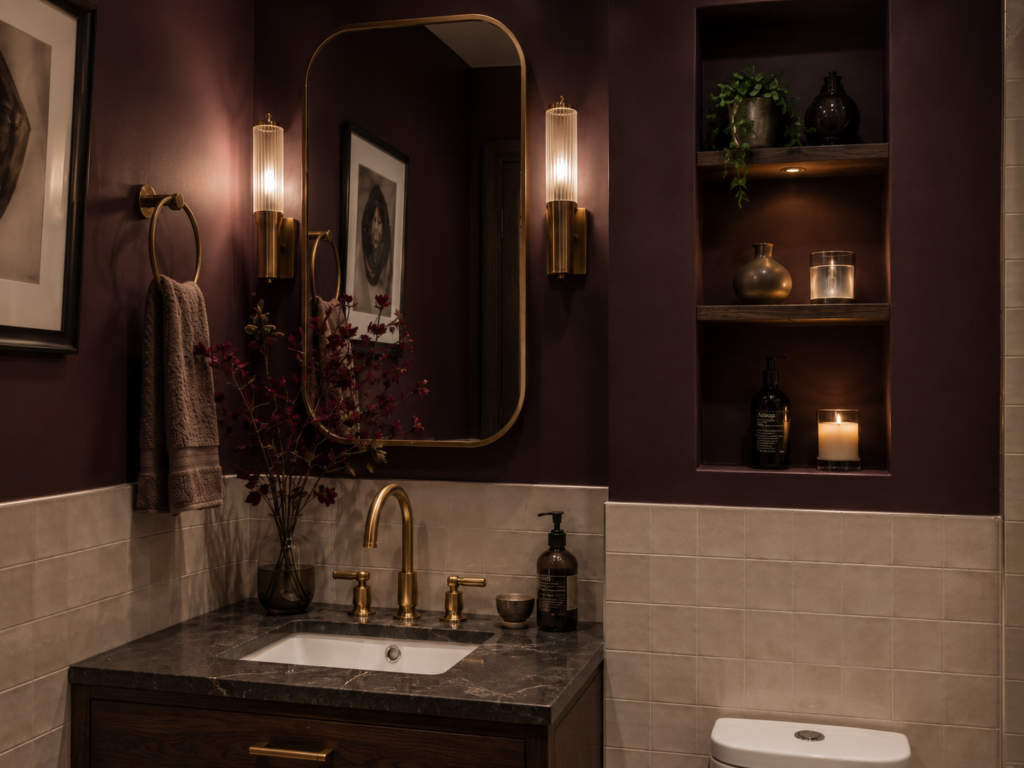
- Deep cocoa, plum, or muted aubergine walls
- A dark wood vanity
- Cream or softly veined stone
- Glossy handmade-style tile
- Aged brass or polished nickel fixtures
- Striped or bordered textiles
- Small-scale artwork
- Gentle pools of light rather than one harsh ceiling fixture
The purpose of this initial concept is not to create a themed room. It is to give every decision a shared visual language.
Use Color to Give the Room Presence
Small bathrooms are often painted white in the hope that they will appear larger. White can certainly work, but it is not the only way to create openness.
A compact room can also benefit from a deeper color that makes its boundaries feel deliberate rather than apologetic.
Cocoa brown, plum, inky blue, olive, oxblood, and charcoal can create a cocoon-like atmosphere, particularly in a powder room or bathroom with limited natural light. Glossy surfaces, mirrors, metal fixtures, and warm lighting will prevent the room from feeling flat.
When using a strong wall color, keep some visual relief through lighter elements:
- A pale stone countertop
- Cream towels
- A white or softly colored basin
- Reflective hardware
- A large mirror
- A lighter ceiling
Another approach is to place the strongest color on the vanity or tile while keeping the walls quieter.
For example, a dark walnut vanity can sit against warm off-white walls, while a plum-toned shower tile becomes the room’s main statement.
The best color choice is not necessarily the palest one. It is the color that gives the bathroom a clear identity.
Turn the Vanity into the Focal Point
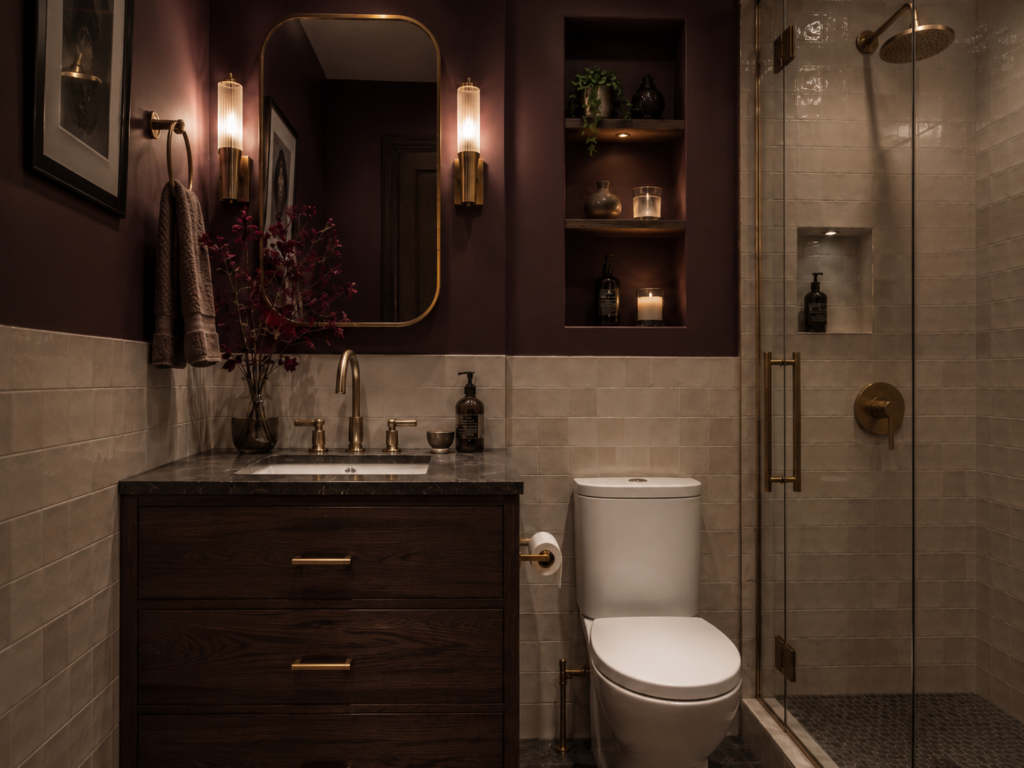
In a small bathroom, the vanity is often the first large object the eye notices. It should contribute more than storage.
A furniture-style vanity can instantly make the room feel more distinctive. Look for visible wood grain, shaped legs, framed doors, interesting hardware, or a rich painted finish.
When replacing the vanity is not possible, smaller changes can still make a significant difference:
- Replace basic knobs with brass, bronze, ceramic, or polished nickel hardware.
- Add a stone-look or solid-surface countertop.
- Paint the cabinet in a darker, more expressive color.
- Install a wall-mounted faucet to create more usable counter space.
- Replace a standard basin with a sculptural or softly rounded design.
Countertop styling should remain restrained. A hotel bathroom feels considered because it does not display every product at once.
Keep only a few frequently used items visible. Hand soap, a small tray, a cup, and perhaps a vase or candle may be enough.
Skincare, medicine, spare toiletries, and cleaning products should have designated storage rather than gathering around the sink.
Choose a Mirror That Changes the Room
A mirror can make a compact bathroom feel taller, brighter, and more complete.
Instead of automatically selecting a small rectangular mirror above the basin, consider the proportions of the entire wall.
A tall mirror can emphasize ceiling height. A wide mirror can visually extend a narrow vanity. An arched, pill-shaped, or softly irregular frame can bring contrast to a room dominated by straight lines.
The frame also helps establish the design direction.
A thin brass frame feels polished and architectural. Dark wood adds depth. Frameless glass appears cleaner and more modern. A decorative vintage-style frame can make a powder room feel especially personal.
Where practical, extend the mirror closer to the lighting fixtures so the reflection can multiply their glow.
Avoid choosing a mirror that is so small that it appears to float awkwardly above the vanity. In a compact bathroom, one generous mirror is often more effective than several small decorative objects.
Replace Harsh Lighting with Layers
Lighting is one of the clearest differences between an ordinary bathroom and a well-designed hotel bathroom.
A bright ceiling fixture may illuminate the room, but it often produces unflattering shadows around the face and leaves the space feeling clinical.
Use several layers instead.
Wall lights placed on both sides of the mirror provide more even illumination for grooming. When side placement is not possible, a picture-light-style fixture or horizontal light above the mirror can offer a more decorative alternative.
A ceiling fixture can then provide general light, while a small recessed or waterproof light supports the shower area.
For evening use, consider a softer source such as:
- Dimmable sconces
- Lighting beneath a floating vanity
- An illuminated mirror
- A low-wattage decorative lamp in a dry, safe location
- Battery-operated candles designed for bathrooms
All electrical fixtures must be suitable for bathroom zones and installed according to local safety requirements.
Choose bulbs that render skin tones naturally and avoid excessively cool blue light. The goal is clarity without making the bathroom feel like a workplace.
Make the Shower Feel Intentional
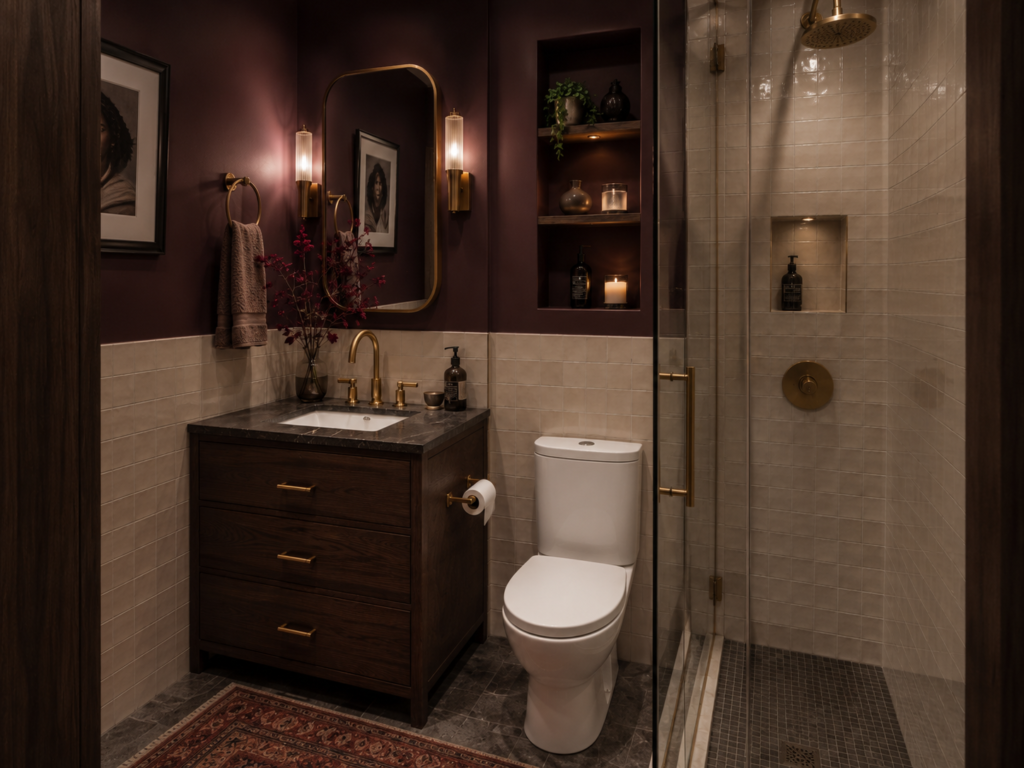
A small shower can still provide a strong visual moment.
Frameless glass helps preserve sight lines, but it is not the only attractive option. Fluted or reeded glass can add privacy and texture, while a dark-framed enclosure can suit a more graphic interior.
Tile placement matters as much as the tile itself.
Running tile to the ceiling can make the shower feel taller and more complete. Using one tile across the shower walls and bathroom floor may visually enlarge the space, while a contrasting shower tile can create a more dramatic focal area.
Handmade-style tiles, glazed surfaces, small mosaics, and stone-look porcelain can all add character. Consider how the finish interacts with water and light rather than focusing only on the color.
A recessed niche is useful for shampoo and soap, but its proportions should be planned carefully. A long horizontal niche can feel cleaner than several small shelves.
When renovating is not possible, improve the shower experience through simpler changes:
- Replace a basic showerhead with a more generous design.
- Use refillable matching bottles.
- Add a sturdy shower shelf in a finish that coordinates with the fixtures.
- Install a new curtain in a heavier, more textile-like fabric.
- Hang the curtain closer to the ceiling to make the room appear taller.
A shower should feel like part of the design, not a utility zone separated from it.
Treat Towels as Part of the Interior
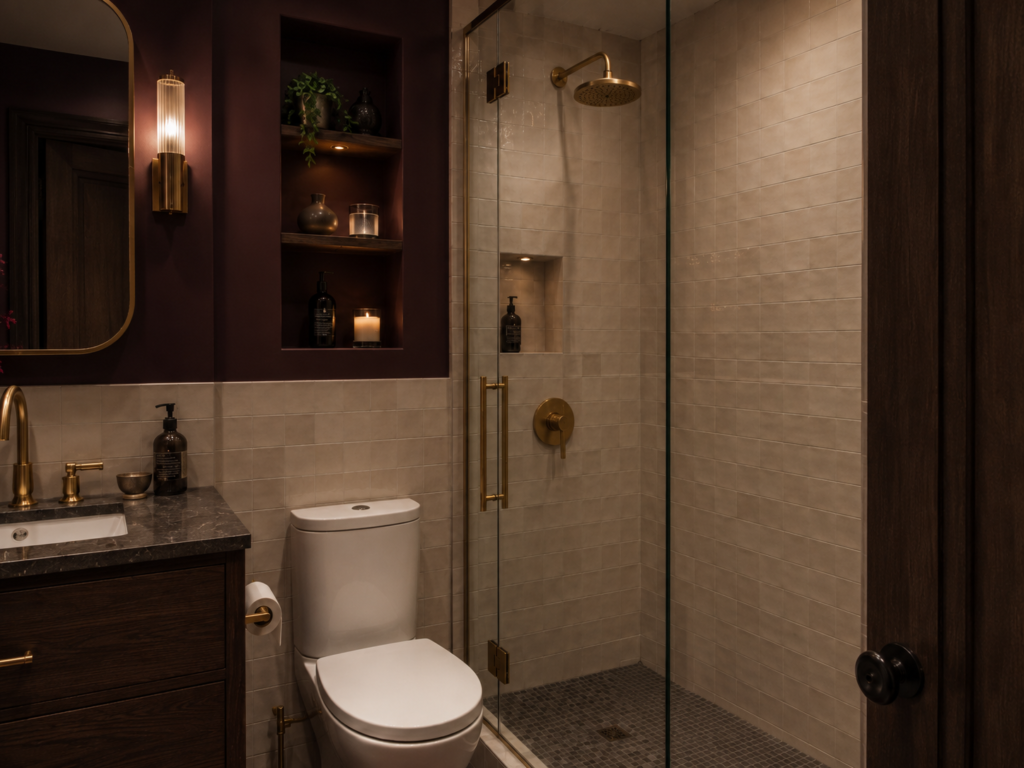
Hotel bathrooms rely heavily on textiles because they soften tile, glass, stone, and metal.
Choose towels that feel substantial enough to make daily use pleasant but still dry effectively in the room. Thick towels can look luxurious, although very heavy styles may be impractical in a bathroom with poor ventilation.
Color can be used more creatively than plain white.
Cream, deep green, rust, navy, plum, or striped towels can reinforce the room’s palette. A contrasting border can add a tailored hotel detail without introducing a complicated pattern.
Provide proper hanging space. Towels crowded onto one hook rarely dry well and quickly make the room look untidy.
Depending on the available wall space, use:
- A heated towel rail
- Double hooks
- A long towel bar
- A ladder-style rack
- Individual hooks assigned to each household member
Add a bath mat that feels deliberate rather than purely functional. A woven runner, striped cotton mat, or washable low-pile rug can introduce pattern and make the floor more comfortable.
Conceal Clutter Without Hiding Everything
Small bathrooms need efficient storage, but covering every wall with cabinets can make the room feel crowded.
Divide storage into three groups:
Daily items should be easy to reach.
Occasional items can live inside drawers or upper cabinets.
Backups and cleaning supplies can be stored in the least visible areas.
A vanity with drawers is often more useful than one large cupboard because smaller items can be separated and found easily. Drawer organizers prevent skincare, makeup, and grooming tools from becoming a mixed pile.
Use the space above the toilet only when it can be designed cleanly. A shallow cabinet or one substantial shelf usually looks better than several small shelves filled with decorative objects.
Recessed medicine cabinets provide hidden storage while preserving the appearance of a simple mirror. Narrow wall cabinets can also use vertical space without reducing floor area.
A hotel-inspired room should not look empty, but the visible objects should appear chosen rather than accumulated.
Create a Small Hospitality Station
One subtle way to capture the feeling of a boutique hotel is to arrange a few necessities as though they have been prepared for a guest.
This does not require displaying miniature toiletries or turning the bathroom into a staged showroom.
A small tray can hold:
- Hand soap
- Hand lotion
- A glass or ceramic cup
- A neatly folded washcloth
- A small bottle of fragrance
- A lidded container for cotton pads
Choose containers that coordinate without looking like a rigid matching set. Glass, ceramic, metal, and dark-colored bottles can all work, depending on the bathroom’s style.
Refillable dispensers reduce packaging clutter and allow everyday products to become part of the visual composition.
Keep the arrangement compact so the counter remains usable.
The most convincing hotel details are the ones that improve real routines.
Add Art Where It Is Least Expected
Bathrooms are often decorated last, which is why even one piece of art can make a strong difference.
A small framed landscape, abstract work, vintage photograph, or botanical print can give the room a more residential and collected quality.
Choose artwork that can tolerate the bathroom environment. Original or valuable works should not be placed where steam and humidity may damage them.
In a powder room with minimal moisture, the options are broader. In a frequently used shower room, consider inexpensive prints, sealed frames, metal artwork, ceramic pieces, or objects specifically suited to humid spaces.
Art can sit:
- Above the toilet
- Beside the mirror
- On a narrow shelf
- Across from the vanity
- Inside a recessed wall area
One confident piece often works better than several tiny frames.
The subject does not need to be bathroom-related. Art should add personality, not explain the function of the room.
Use Scent as a Finishing Layer
The atmosphere of a boutique hotel is not purely visual.
A subtle scent can make the bathroom feel cleaner and more memorable, but it should never overpower the room.
Choose one fragrance direction rather than combining several competing products. Cedar, fig, bergamot, vetiver, eucalyptus, tea, neroli, and soft floral scents can all suit a bathroom.
Options include:
- A reed diffuser
- A room spray
- Scented hand wash
- A candle used only when supervised
- Fresh eucalyptus or herbs
- Naturally fragrant flowers
Ventilation and cleanliness remain more important than fragrance. Scent should enhance a well-maintained bathroom rather than attempt to conceal moisture or drainage problems.
Make the Room Work in the Morning and at Night
A successful bathroom should adapt to different moments of the day.
In the morning, it needs clear lighting, accessible products, dry towels, and enough open counter space to move efficiently.
At night, the same room can feel quieter through dimmed lighting, a closed shower curtain, a bath mat underfoot, and fewer visible products.
Consider the entire sequence of use:
Where does a clean towel come from?
Where are clothes placed before a shower?
Can skincare be reached without opening several cabinets?
Is there somewhere safe to put jewelry or a phone?
Can two people use the room without constantly moving objects?
Boutique hotel style is convincing when it improves these small experiences.
Rental-Friendly Changes That Still Matter
A rental bathroom can be transformed without permanent construction.
Begin with the elements that have the greatest visual impact and can be removed later:
- Replace cabinet hardware and store the original pieces.
- Change the mirror when permitted.
- Use plug-in or rechargeable decorative lighting in safe, dry locations.
- Install a high-quality shower curtain and hang it near the ceiling.
- Add coordinated towels and a better bath mat.
- Use removable wallpaper in a well-ventilated powder room.
- Introduce framed art and a compact tray.
- Replace the toilet seat with a more substantial model, keeping the original.
- Use freestanding storage rather than drilling into tile.
Temporary changes should still respect ventilation, moisture, electrical safety, and the terms of the rental agreement.
A small rental bathroom does not need to look temporary simply because its alterations are reversible.
The Final Edit
Once the main elements are in place, remove anything that weakens the room.
Discard empty packaging, expired products, unused samples, damaged towels, and decorative items that occupy valuable space without adding function or character.
Check whether the palette feels connected. Repeat one or two finishes across the room: perhaps brass in the mirror, lighting, and hardware, or dark wood in the vanity and picture frames.
Make sure every visible item has a reason to remain visible.
Then add one final detail that feels personal: a favorite scent, an unusual piece of art, a striped towel, a vase of branches, or a beautiful container used every day.
The room should not look as though it was copied from a hotel. It should feel as carefully considered as one.
A Better Experience in a Smaller Space
Creating a boutique hotel bathroom is not about filling a small room with luxurious objects.
It is about making deliberate choices.
One expressive color can give the room identity. Better lighting can change how it feels to use the mirror. Thoughtful storage can clear the countertops. Textiles, scent, and artwork can soften the practical surfaces and introduce personality.
A compact bathroom may never become physically large, but it can become more polished, more comfortable, and far more memorable.
That is where the real impact begins.