How to Create a Bridgerton-Inspired Home Office with a Library
A home office does not have to feel like a practical corner assembled from a desk, a chair, and a collection of visible cables.
It can feel like a private world.
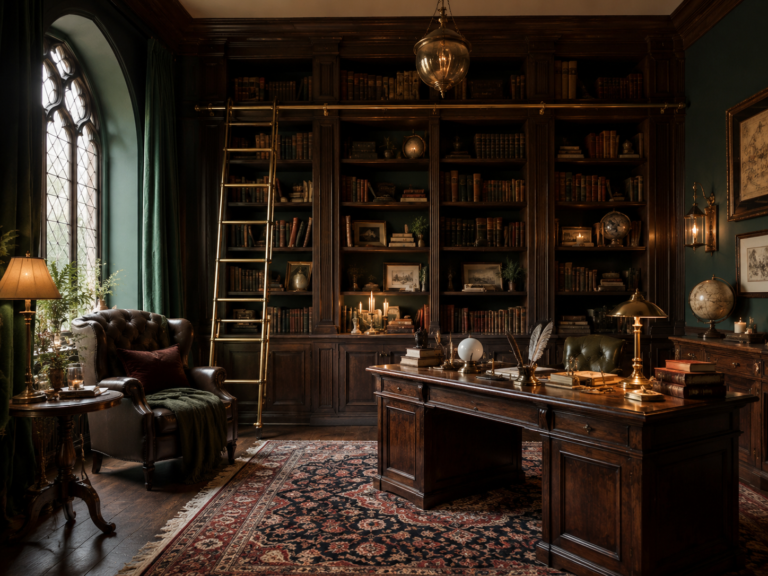
A Bridgerton-inspired study draws its appeal from romance, ceremony, color, and the sense that reading and writing deserve a beautiful setting. Yet the goal is not to reproduce a television set or fill the room with decorative objects that have no purpose.
The most successful version combines Regency-inspired elegance with the needs of modern daily work. A real library holds the room together, a carefully positioned desk creates focus, and a separate reading corner offers somewhere to step away from the screen.
This guide explores how to create a home office that feels expressive and theatrical without becoming impractical, overly themed, or disconnected from the rest of the home.
Begin with a Story, Not a Theme
Before selecting furniture or paint, decide what kind of person the room appears to belong to.
Perhaps it is the study of someone who writes letters in the morning, reads history in the afternoon, and works beneath the glow of a shaded lamp after sunset. Perhaps it belongs to a collector of botanical books, handwritten recipes, or antique maps.
This imagined story helps prevent the room from becoming a collection of unrelated “Regency-style” objects.
Instead of asking whether every piece looks appropriate for a period drama, ask whether it contributes to the life of the room.
A library ladder suggests a collection that has grown over time. A writing desk facing the window suggests a daily ritual. A velvet chair beside the shelves suggests long, unhurried reading.
The room should feel inhabited, not staged.
Build the Design Around a Proper Library
The library should be the architectural center of the room rather than a few floating shelves added after everything else.
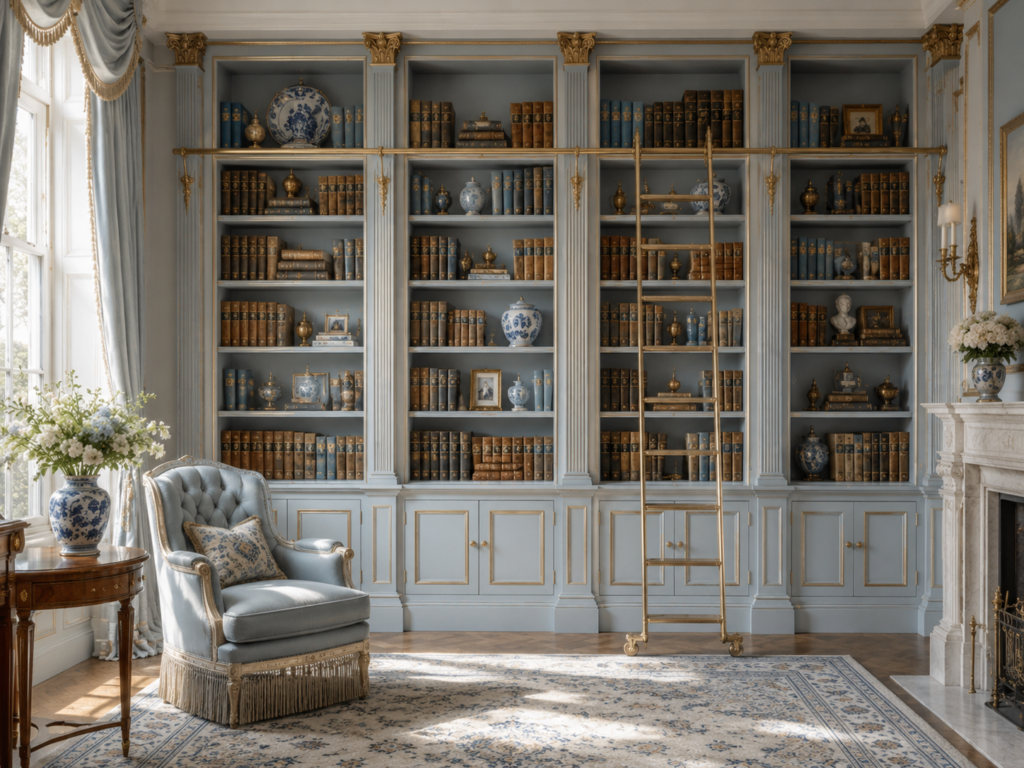
Floor-to-ceiling bookcases immediately give the space presence. Built-in shelves can frame an entire wall, surround a doorway, or sit behind the desk to create a dramatic background.
For a more complete and practical design, combine open shelving with closed storage underneath. The shelves can hold books and selected objects, while the lower cabinets hide office supplies, paperwork, chargers, and equipment that would otherwise interrupt the atmosphere.
Painted cabinetry works particularly well in this concept. Dusty blue, celadon green, muted plum, deep teal, and warm ivory all feel more distinctive than standard white shelving.
Natural or dark-stained wood creates a richer, more scholarly effect. Walnut and mahogany tones introduce contrast against pale walls and can keep a pastel room from feeling overly delicate.
If the shelves are tall enough, a slim library ladder can become both a functional feature and one of the room’s strongest visual details.
Avoid filling every shelf completely. Books need company, but they also need breathing room. Leave occasional gaps for framed art, a ceramic vessel, a small sculpture, or a box used to store letters and documents.
Give the Writing Desk a Sense of Occasion
The desk should feel important enough to anchor the room.
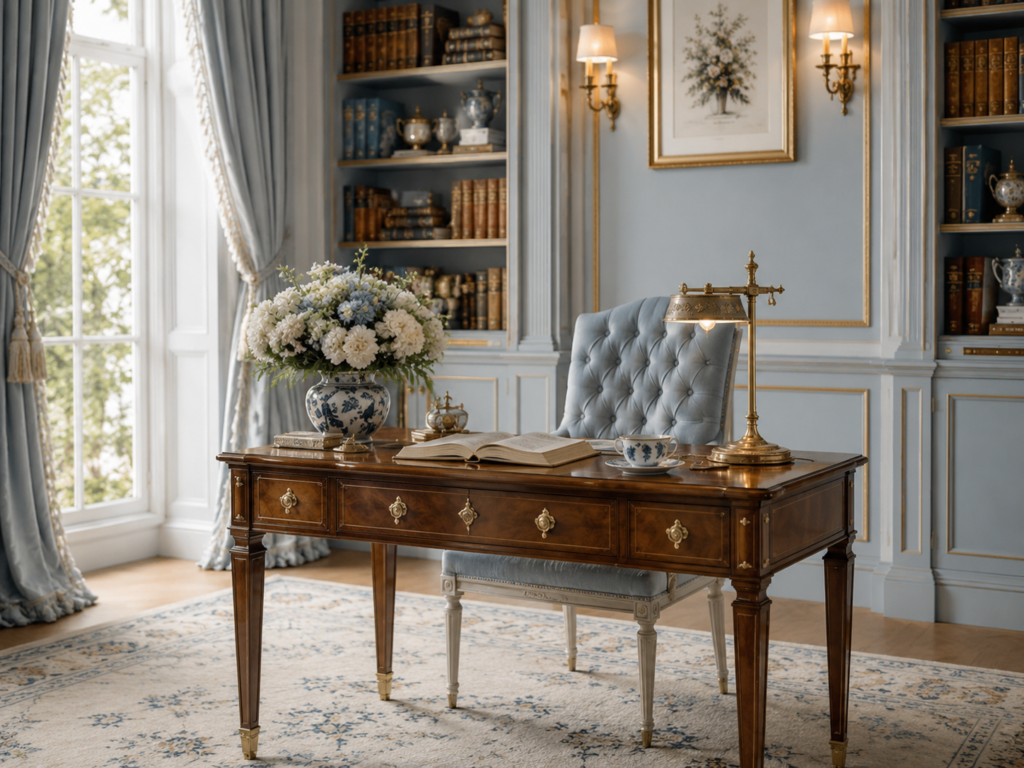
A simple modern desk can work, but it benefits from details that connect it to the concept: curved legs, a shaped edge, a darker wood finish, small drawers, or antique-inspired hardware.
Positioning matters just as much as style.
Placing the desk in the center of the room creates a formal and confident arrangement. It also allows the library to form a backdrop rather than leaving the person working with their back pressed against the shelves.
A desk placed near a window feels lighter and more intimate. Natural light supports daytime work, while curtains and a table lamp can transform the same area in the evening.
The desk should still be large enough for real work. Leave room for a laptop or monitor, a notebook, a lamp, and the objects used every day. A beautiful writing surface becomes frustrating when it cannot support the practical demands placed upon it.
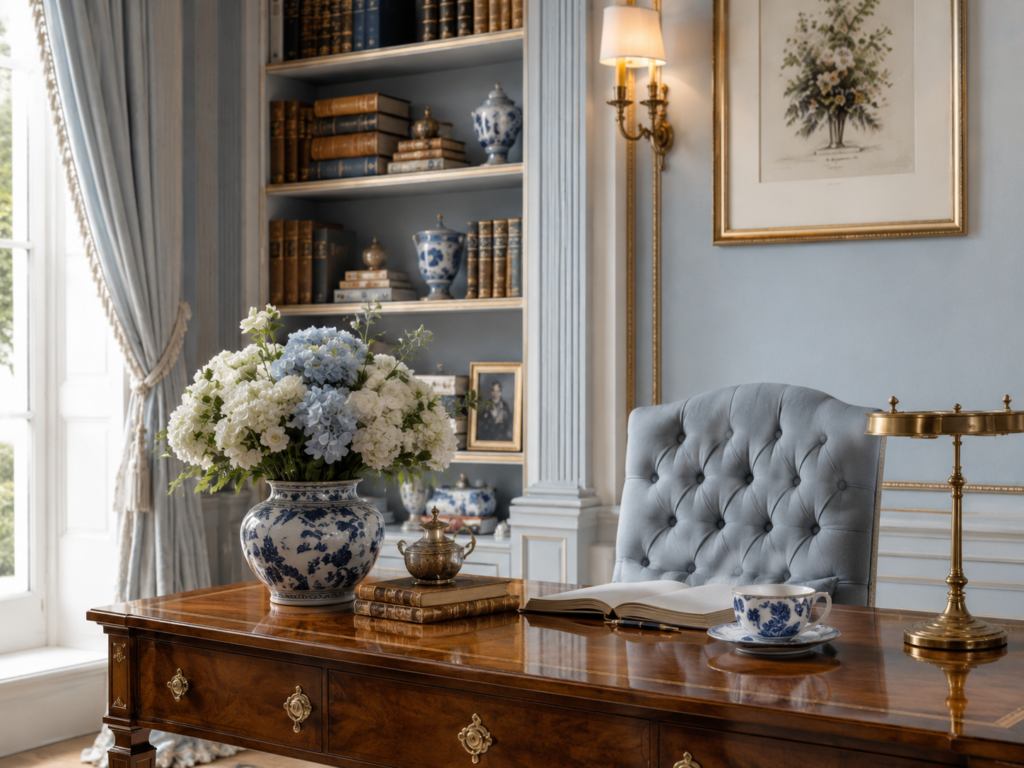
Choose only a few accessories for the top: a brass lamp, a small vase, a letter tray, a pen cup, or a decorative box for items that would otherwise create clutter.
The intention is to create ceremony around work without making the desk too precious to use.
Create a Reading Corner Beside the Shelves
A home office with a library should offer somewhere to read that is separate from the working position.
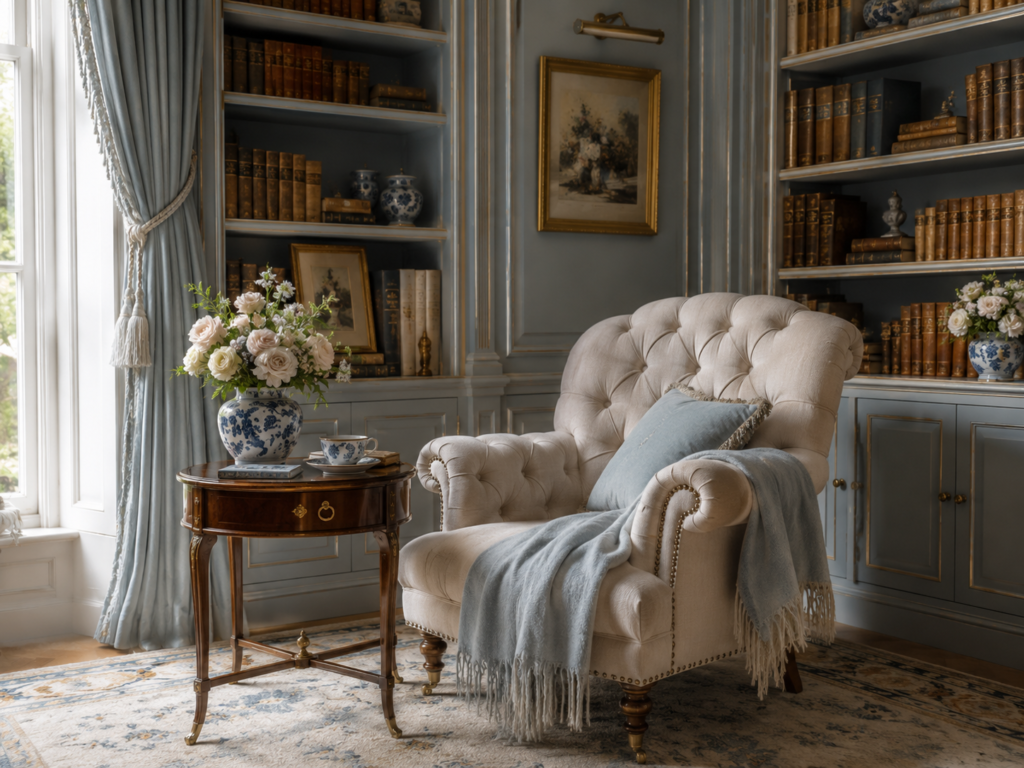
Place an upholstered armchair close to the bookcases, preferably near a window or in a corner that feels slightly removed from the desk. This creates a visual pause within the room and allows different activities to have their own territory.
The chair can introduce a stronger color or pattern than the larger furniture. Plum velvet, powder blue linen, sage green, floral upholstery, or a narrow stripe can bring character without dominating the space.
Add a small side table large enough for a book, a cup, and a pair of glasses. A footstool or compact ottoman can make the corner more comfortable without requiring a full chaise longue.
Lighting is essential here. A floor lamp or wall-mounted reading light should provide enough illumination to make the corner genuinely useful.
A basket for folded blankets or current reading material can complete the area while keeping everyday objects contained.
This corner prevents the room from becoming entirely productivity-focused. It reminds us that a library is not only a background for video calls but a place where books are actually opened and read.
Choose a Palette with Contrast
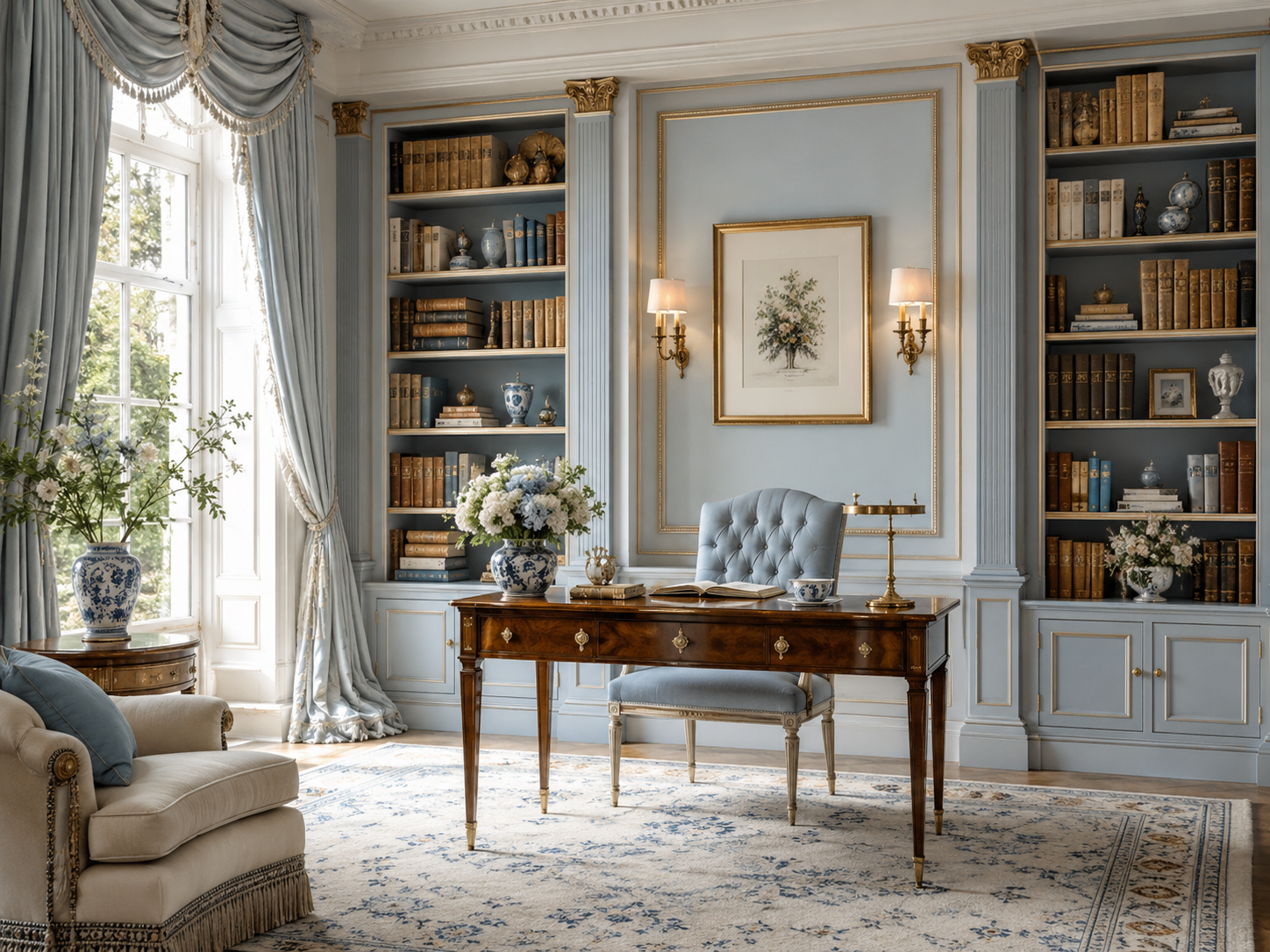
Bridgerton-inspired interiors are often associated with pale blue, blush pink, lavender, cream, and soft green. These shades can work beautifully, but using them without contrast may make the room feel too sweet or decorative.
Begin with one main color rather than attempting to use every pastel at once.
A powder-blue library can become the defining element of the room. Alternatively, pale lavender walls can sit behind dark walnut shelves, or a celadon green cabinet can be paired with cream curtains and plum upholstery.
Introduce darker tones to give the palette weight. Mahogany, oxblood, deep green, charcoal blue, and aged bronze create visual structure and prevent the design from feeling like a child’s room.
A balanced palette might include:
- Powder blue cabinetry
- Warm ivory walls
- Dark walnut furniture
- Plum or burgundy accents
- Antique brass lighting
- Soft green and rose details
Metallic finishes should appear in small, repeated amounts. Brass handles, a lamp base, picture frames, and curtain hardware can connect the room without making it glitter.
The atmosphere should feel romantic, but it should also feel intelligent and grounded.
Layer Pattern Like a Costume Designer
Pattern is one of the easiest ways to create a period-drama atmosphere, but it is also where the room can quickly become overwhelming.
Treat each pattern as part of a larger composition.
A botanical wallpaper may become the strongest pattern in the room. In that case, keep the curtains quieter and choose upholstery in a solid color or a restrained stripe.
When the walls are plain, the curtains or reading chair can carry more visual detail. Floral fabric, damask, narrow stripes, and small-scale geometric patterns can all fit the concept.
Vary the scale of the patterns rather than selecting several designs of equal intensity. A large botanical print can sit beside a fine stripe and a small embroidered cushion more comfortably than three competing florals.
Rugs are another opportunity to introduce pattern. A faded traditional rug can connect the desk, library, and reading area while adding age and softness to the room.
The pattern should appear collected rather than perfectly matched. Slight differences make the space feel as though it has developed gradually.
Use Lighting to Change the Mood
The room should not depend on a single ceiling fixture.
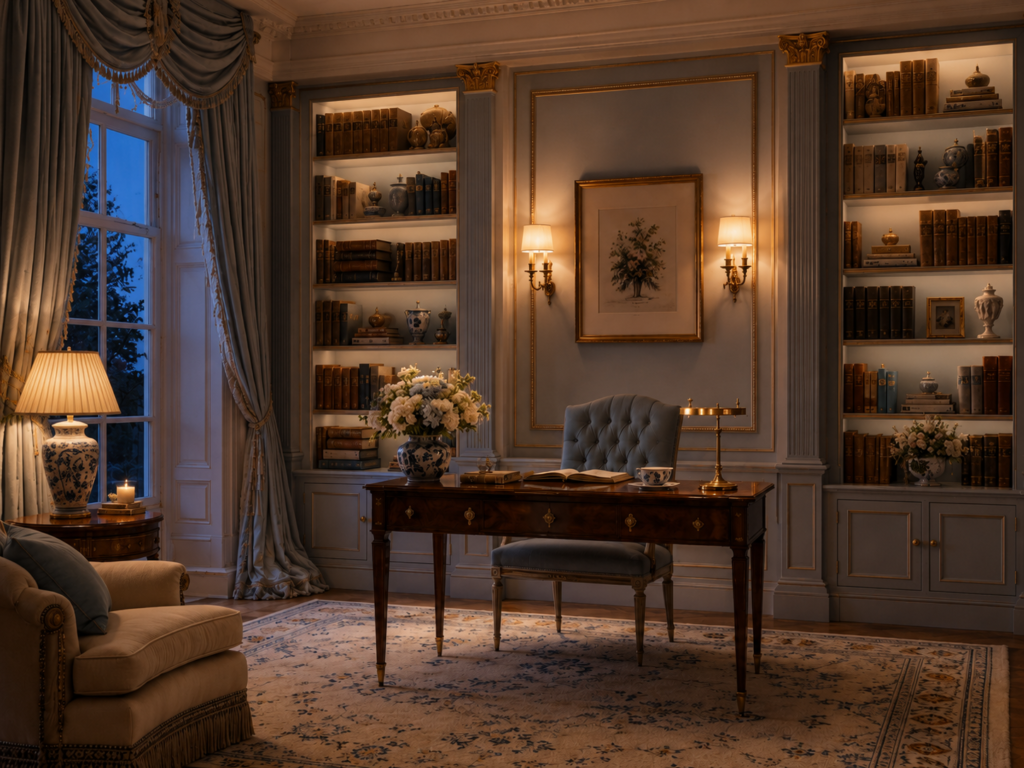
Layered lighting allows the study to feel focused during working hours and more atmospheric in the evening.
An elegant central pendant or chandelier can establish the room’s character. It does not have to be enormous or overly ornate. A smaller fixture with curved arms, glass drops, pleated shades, or candle-inspired bulbs may provide enough drama.
Add a table lamp to the desk for focused work. A shaded lamp produces softer light than an exposed bulb and feels more appropriate for the concept.
Library lights or picture lights can illuminate the shelves and artwork. Wall sconces placed between bookcases can also make the library feel integrated into the architecture.
The reading corner needs its own light source, positioned so that it illuminates the page rather than the entire room.
Use warm bulbs throughout, but make sure the desk still receives sufficient task lighting. Romance should not come at the expense of visibility.
During the day, sheer curtains can soften direct sunlight. Heavier side panels can add color, privacy, and a more dramatic evening appearance.
Hide Modern Technology Without Pretending It Does Not Exist
A modern home office needs screens, chargers, printers, routers, and cables. Ignoring these items usually results in a beautiful room that becomes untidy as soon as it is used.
Plan for technology from the beginning.
A monitor can sit inside a desk hutch, behind cabinet doors, or on a discreet arm that allows it to be moved when needed. A dark screen often blends more successfully against dark shelving than against a pale wall.
Printers and shredders can be placed inside ventilated lower cabinets. Pull-out shelves make them easier to access without leaving them permanently visible.
Use cable trays beneath the desk and route wires down the back of a leg. A floor outlet is ideal in a central desk arrangement, but a covered cable channel can provide a less invasive alternative.
Charging stations can be hidden inside a drawer or decorative box. Small holes at the back allow cables to pass through while keeping devices off the desktop.
A wireless keyboard and mouse reduce visual clutter, while a laptop stand can be selected in wood or brass-toned metal rather than standard black plastic.
The objective is not to disguise the room as an authentic nineteenth-century interior. It is to make modern equipment feel considered rather than accidental.
Style the Shelves with Books First
A library should look like a library.
Begin with the books before adding decorative objects. Arrange them in a way that feels natural to use: by subject, author, size, or a system understood by the person who owns them.
Avoid turning every book backwards or covering the shelves entirely with neutral decorative volumes. A real collection brings color, irregularity, and personality.
Mix vertical rows with a few horizontal stacks. Horizontal books can support a small frame, a magnifying glass, or a ceramic object.
Use decorative pieces sparingly. Suitable additions might include:
- Framed botanical studies
- Small landscape paintings
- Ceramic or glass vessels
- Letter boxes
- Bookends
- Candlesticks
- A globe or map
- Fresh or dried flowers
- Personal photographs in traditional frames
Not every object needs to look antique. A contemporary ceramic piece can prevent the room from feeling like a costume display.
Leave some shelves quieter than others. Variation creates rhythm and allows important objects to receive attention.
Add Details That Suggest Reading and Writing
The most memorable elements may be the smallest.
A stack of stationery, a ribbon-tied bundle of letters, a brass bookmark, a fountain pen, or a notebook with a cloth cover can reinforce the room’s purpose.
These details should be useful whenever possible. A decorative box can store cables. A letter tray can collect paperwork. A lidded vessel can hold small office supplies.
Fresh flowers are especially effective in this concept. Garden roses, delphiniums, hydrangeas, or seasonal branches can introduce movement and color without becoming permanent decoration.
Artwork can include portraits, botanical illustrations, architectural drawings, or landscapes. A small gallery wall near the reading chair may feel more intimate than one large statement piece.
Mirrors can reflect both daylight and evening lamplight. Choose a frame with some character, but avoid placing ornate gold detailing on every surface.
A few expressive elements will carry the idea more successfully than a room filled with obvious themed accessories.
A Practical Layout for the Room
For a medium-sized rectangular room, a balanced arrangement might look like this:
Place the library across the longest solid wall. Include closed cabinets along the bottom and open shelves above.
Position the desk in front of the library, facing into the room. Leave enough space behind the chair to move comfortably and open the lower cabinets.
Create the reading corner near the window, using an armchair, side table, and floor lamp. A rug can sit beneath the desk and extend toward the chair, visually connecting the two zones.
Use a narrower console or cabinet on the remaining wall for a printer, drinks tray, or additional storage. Artwork or a mirror can be placed above it.
Keep the central pathways clear. The room should feel layered, but it should not require navigating around decorative furniture.
In a smaller office, reduce the scale rather than removing the library. A wall-to-wall bookcase with a built-in desk and a single reading chair can provide the same sense of purpose within a tighter footprint.
A Room Made for Ideas
A Bridgerton-inspired home office should offer more than a recognizable aesthetic.
It should make reading feel inviting, writing feel intentional, and daily work feel connected to a richer environment.
The library gives the room its identity. The desk provides focus. The reading corner creates a slower rhythm. Color, pattern, and lighting bring drama, while hidden storage and thoughtful technology solutions keep the space practical.
The final room does not need to look as though it belongs to another century. It only needs to borrow enough romance, detail, and ceremony to make modern routines feel a little more meaningful.