Where Life Gathers: 10 Thoughtful Living Room Ideas
The living room is where many of a home’s most meaningful moments quietly unfold. It is where conversations stretch into the evening, where slow mornings begin, and where everyday life gathers without needing to be carefully planned.
A beautiful living room should offer more than an impressive first glance. It should feel comfortable enough to use, calm enough to rest in, and personal enough to reflect the people who live there.
Warm and timeless interiors are not created by following every new trend. They develop through thoughtful choices: inviting furniture, natural materials, gentle lighting, collected objects, and enough space for real life to happen.
These ten ideas will help you create a living room that feels refined, welcoming, and comfortable for years to come.
1. Begin with a Calm and Warm Foundation
A timeless living room begins with a color palette that allows the space to breathe.
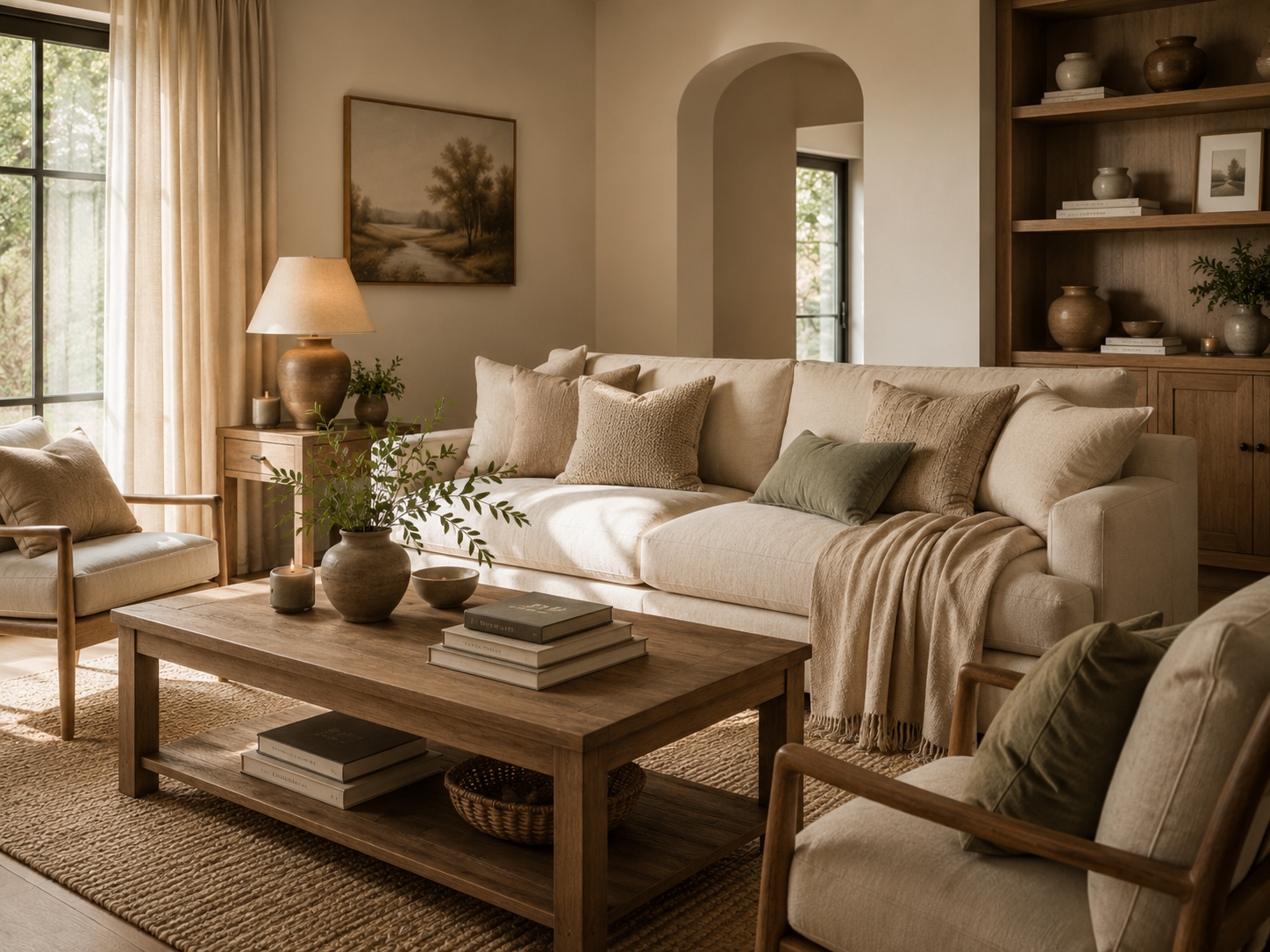
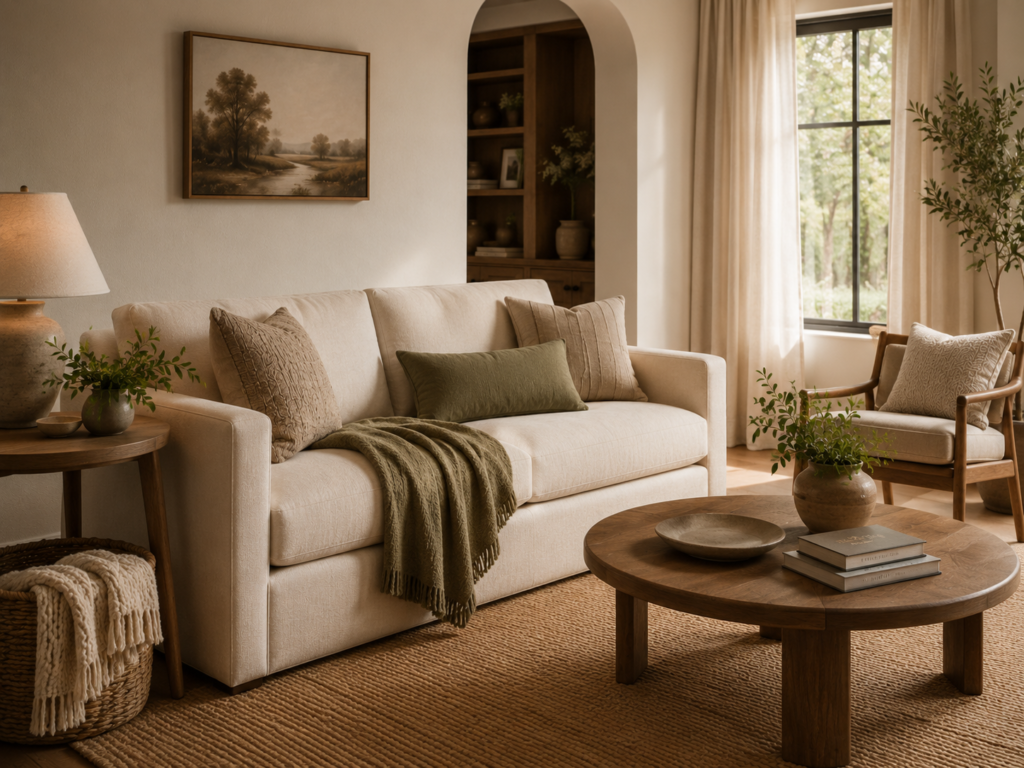
Warm ivory, oatmeal, soft taupe, muted beige, mushroom, and gentle greige create a peaceful foundation without making the room feel flat or cold. These colors respond beautifully to natural light and work well with wood, stone, linen, and aged metals.
Instead of using the exact same shade everywhere, introduce several closely related tones. A soft cream wall, slightly deeper upholstery, and warmer curtains can create depth while maintaining a calm atmosphere.
Darker shades can be added in smaller amounts through wooden furniture, picture frames, cushions, or decorative objects.
The goal is not to remove all contrast. It is to create a balanced background that allows texture, shape, and personal details to become more noticeable.
2. Let Comfortable Seating Lead the Room
The seating arrangement is the heart of a living room. Before choosing decorative objects, think about how people will naturally use the space.
A sofa should feel comfortable enough for everyday life while maintaining a simple, lasting shape. Deep seats, supportive cushions, and soft but durable fabrics help the room feel genuinely inviting.
Add armchairs or occasional chairs when space allows. They do not need to match the sofa perfectly. In fact, combining complementary shapes and materials often creates a more collected and relaxed appearance.
Arrange seating to encourage conversation rather than directing every piece toward a television. Chairs angled slightly toward the sofa can make the room feel more social and connected.
A beautiful living room begins with furniture that invites people to sit down and stay.
3. Layer Natural Textures for Depth
Neutral rooms become interesting through texture rather than excessive color.
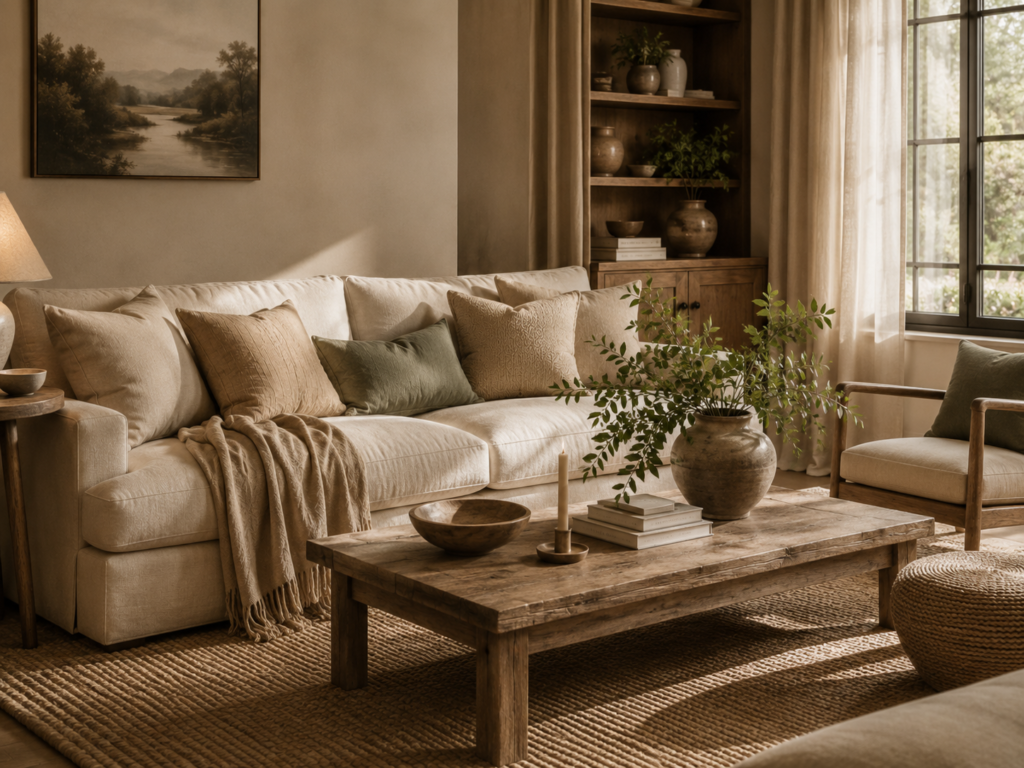
Linen curtains, woven rugs, wool cushions, boucle upholstery, natural wood, ceramic vessels, and aged metal finishes can create a rich interior while preserving a quiet palette.
Choose a mixture of smooth, soft, coarse, and organic surfaces. A clean-lined wooden table can sit beside a soft sofa, while a woven basket adds contrast near a polished stone fireplace.
These variations prevent the room from feeling overly coordinated or showroom-like.
Texture also changes how a room responds to light. Linen softens sunlight, ceramics create gentle shadows, and visible wood grain brings warmth that becomes more noticeable throughout the day.
A restrained palette feels far more welcoming when every surface offers something slightly different.
4. Use Lighting to Create More Than One Mood
A single ceiling light is rarely enough to make a living room feel warm and comfortable.
Layer several sources of light throughout the room. A floor lamp beside the sofa can support reading, while a table lamp can bring a softer glow to a console or side table. Wall sconces and picture lights can highlight artwork or architectural details.
Whenever possible, place lighting at different heights. This spreads warmth throughout the room and prevents the ceiling from becoming the only illuminated area.
Choose bulbs with a warm tone rather than harsh, cool light. Lampshades made from linen, paper, pleated fabric, or frosted glass can soften the brightness even further.
During the day, allow natural light to remain part of the design. Lightweight curtains provide privacy while preserving a gentle connection to the outdoors.
Lighting should help the room move naturally from a bright daytime space to a calm evening retreat.
5. Anchor the Space with the Right Rug
A rug can visually connect the furniture and make a living room feel complete.
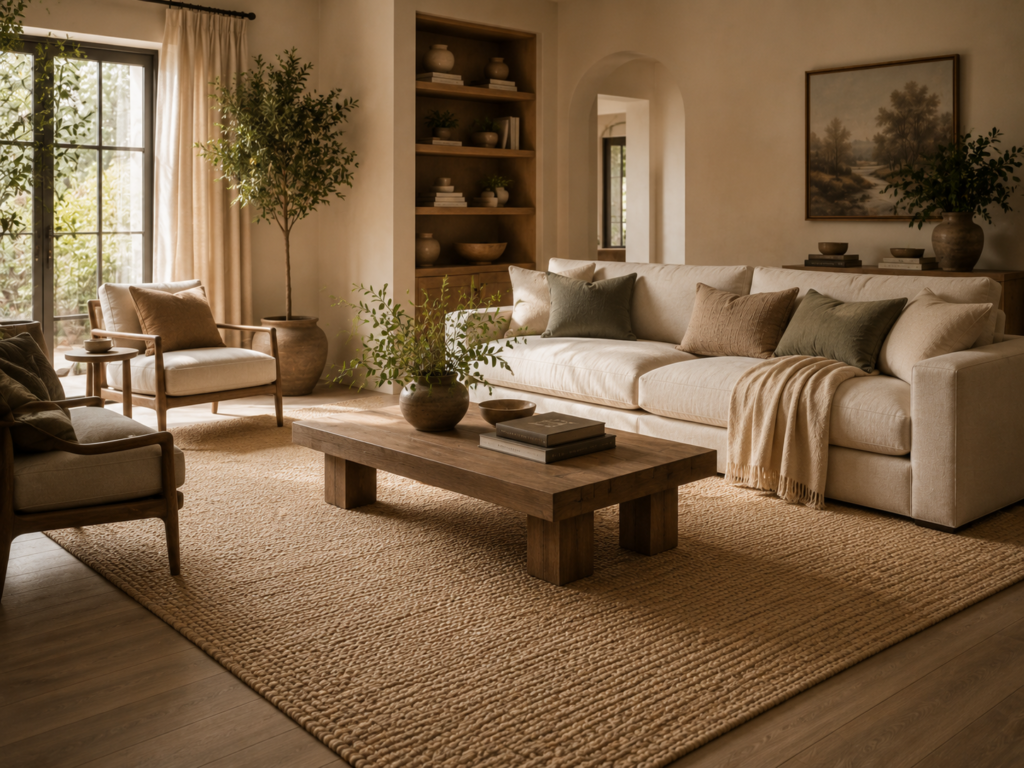
When the rug is too small, individual pieces of furniture can appear disconnected. Ideally, the front legs of the sofa and surrounding chairs should rest on the rug. In larger rooms, all major seating pieces may fit entirely within it.
Choose a rug that supports the atmosphere rather than dominating it. Muted traditional patterns, subtle geometric designs, natural woven surfaces, and softly distressed finishes all work well in a timeless room.
Consider texture as well as appearance. Wool brings softness and durability, while jute and other natural fibers introduce an organic, relaxed character.
The rug should help define the conversation area and create a visual foundation for everything placed above it.
6. Create a Focal Point Without Overcrowding
Every living room benefits from a clear visual center, but a focal point does not need to be dramatic.
A fireplace, a large piece of artwork, a window with a beautiful view, or a thoughtfully styled console can give the room direction. The surrounding furniture can then be arranged to support that feature.
When a room contains several competing focal points, it may begin to feel visually restless. Choose one area to lead and allow the remaining elements to play quieter roles.
A television can also be included without becoming the dominant feature. Dark cabinetry, restrained shelving, or a balanced gallery arrangement can help it blend more naturally into the room.
Leave some surrounding space empty. A focal point becomes more effective when it is given room to stand on its own.
7. Style the Coffee Table with Restraint
A coffee table sits near the center of the living room, making it an ideal place for a small, thoughtful arrangement.
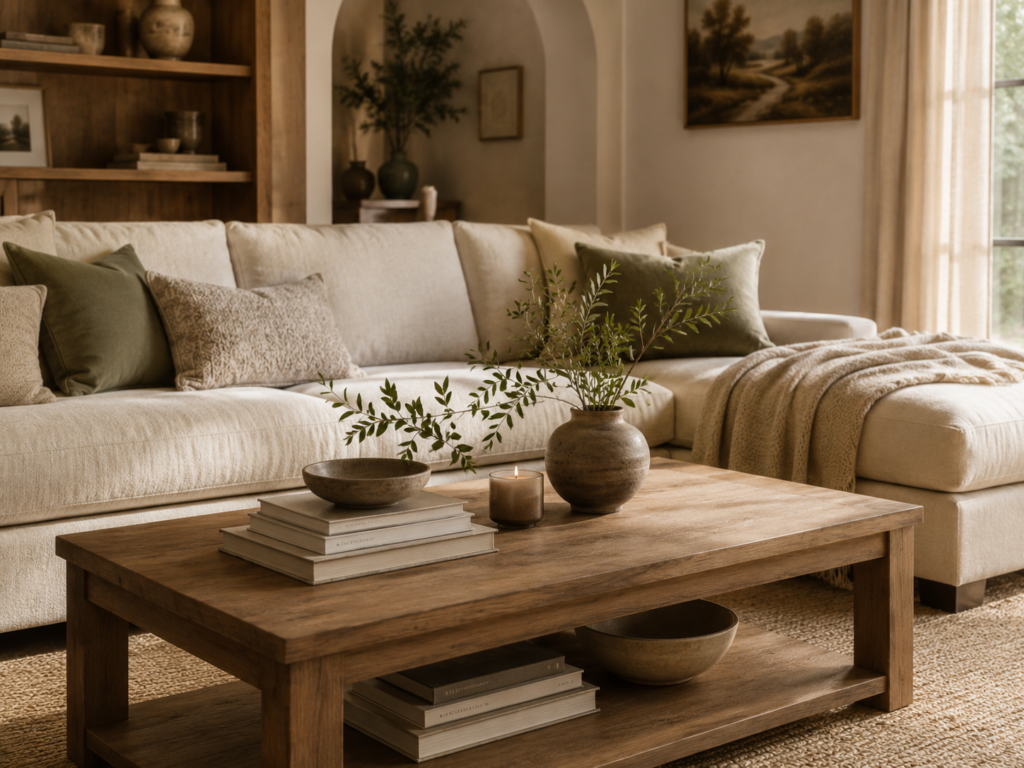
Begin with objects that are both useful and beautiful. A few books, a shallow bowl, a candle, or a small vase of seasonal branches may be enough.
Vary the height and shape of the objects while keeping the overall arrangement low enough for conversation across the room. Grouping pieces on a tray can make the surface feel organized and allows everything to be moved easily when more space is needed.
Avoid covering the entire table. Empty surface is valuable, especially in a room used every day.
A successful coffee table arrangement should look considered without making the table feel untouchable.
8. Blend New Pieces with Collected Character
A timeless living room rarely looks as though everything was purchased at the same moment.
Combining newer furniture with vintage, inherited, or handcrafted pieces can bring depth and individuality to the space. An aged wooden side table, an old landscape painting, a ceramic lamp, or a weathered decorative bowl can soften the appearance of newer items.
These pieces do not need to be valuable antiques. Their irregularities, visible materials, and signs of age are often what make them appealing.
Keep the overall palette connected so that contrasting styles feel intentional rather than random.
A room becomes more personal when it develops gradually. Collected interiors tell a story that perfectly matched furniture sets often cannot.
9. Make Space for Everyday Living
A beautiful living room should support the routines of the household rather than work against them.
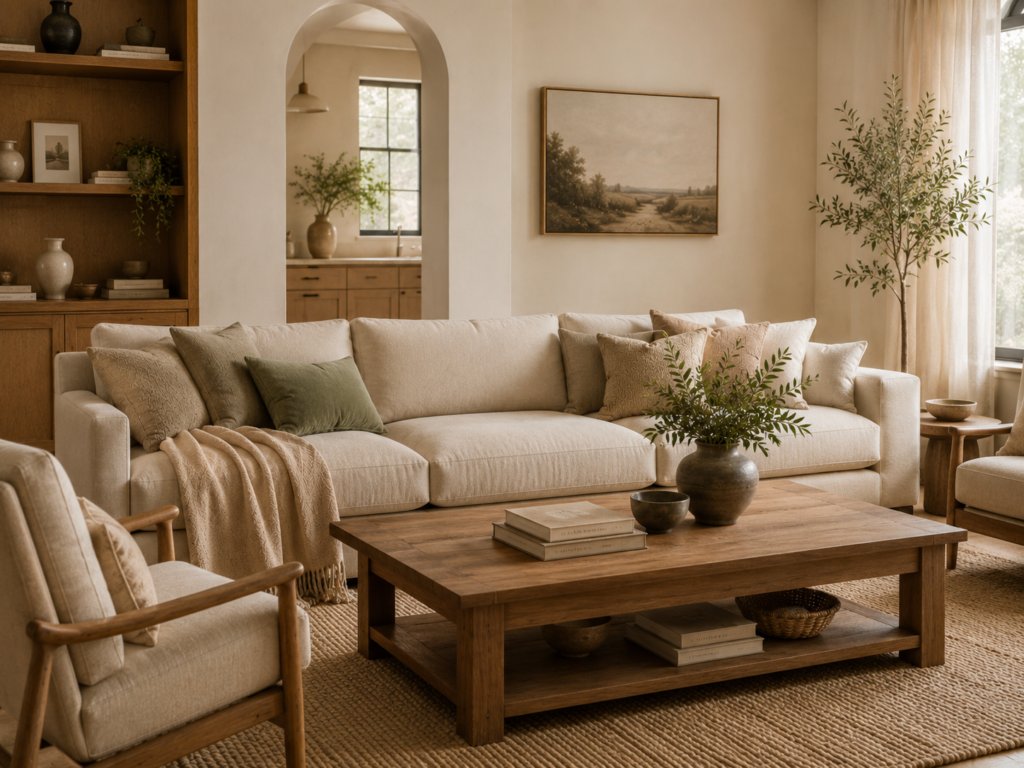
Include side tables where drinks can be placed comfortably. Keep blankets within reach in a basket or folded over the arm of a chair. Provide discreet storage for remote controls, magazines, toys, or other everyday objects.
Consider how people move through the room. Furniture should create natural pathways rather than forcing anyone to squeeze between pieces.
In a family home, choose fabrics and finishes that can tolerate regular use. Washable covers, durable rugs, and surfaces that age gracefully can preserve a relaxed atmosphere.
Comfort comes from knowing that the room can be enjoyed without constant worry. A timeless living room is designed to be lived in, not simply admired.
10. Finish with Personal and Meaningful Details
The final layer should make the living room feel connected to the people who call it home.
Display a small collection of books that are genuinely read, photographs that carry meaning, artwork chosen over time, or objects brought back from memorable places.
Fresh greenery, seasonal branches, and simple flowers can introduce life without making the space feel heavily decorated.
Avoid filling every wall, shelf, and surface. Personal details feel more important when they are surrounded by a little breathing room.
Rotate objects occasionally rather than displaying everything at once. This keeps the room feeling fresh while allowing meaningful pieces to receive proper attention.
The most memorable living rooms do not reveal themselves all at once. Their character becomes visible slowly through the objects, habits, and stories held within them.
A Living Room Designed for Connection
A warm and timeless living room is created through balance.
It combines softness with structure, beauty with practicality, and carefully chosen pieces with the natural character of everyday life. Comfortable seating welcomes people into the room, layered textures add depth, and gentle lighting makes the space feel peaceful throughout the day.
The room does not need to be perfect or completely finished. The most inviting interiors continue to evolve as new memories, objects, and routines become part of the home.
Comfort comes together when a living room looks beautiful but still leaves room for life.