Good Taste Begins in the Kitchen: 10 Warm and Timeless Kitchen Ideas
A beautiful kitchen is not defined by the latest trend or the most impressive renovation. It is shaped by how the space feels when morning light enters the room, when dinner is slowly prepared, and when family and friends gather without needing an invitation.
The most welcoming kitchens balance beauty with everyday function. They feel considered but never untouchable, refined but still deeply comfortable.
Warm colors, natural materials, gentle lighting, and thoughtful details can transform even the simplest kitchen into a space that feels grounded and timeless. These ten ideas will help you create a kitchen that looks beautiful today and continues to feel inviting for years to come.
1. Begin with a Warm and Quiet Color Palette
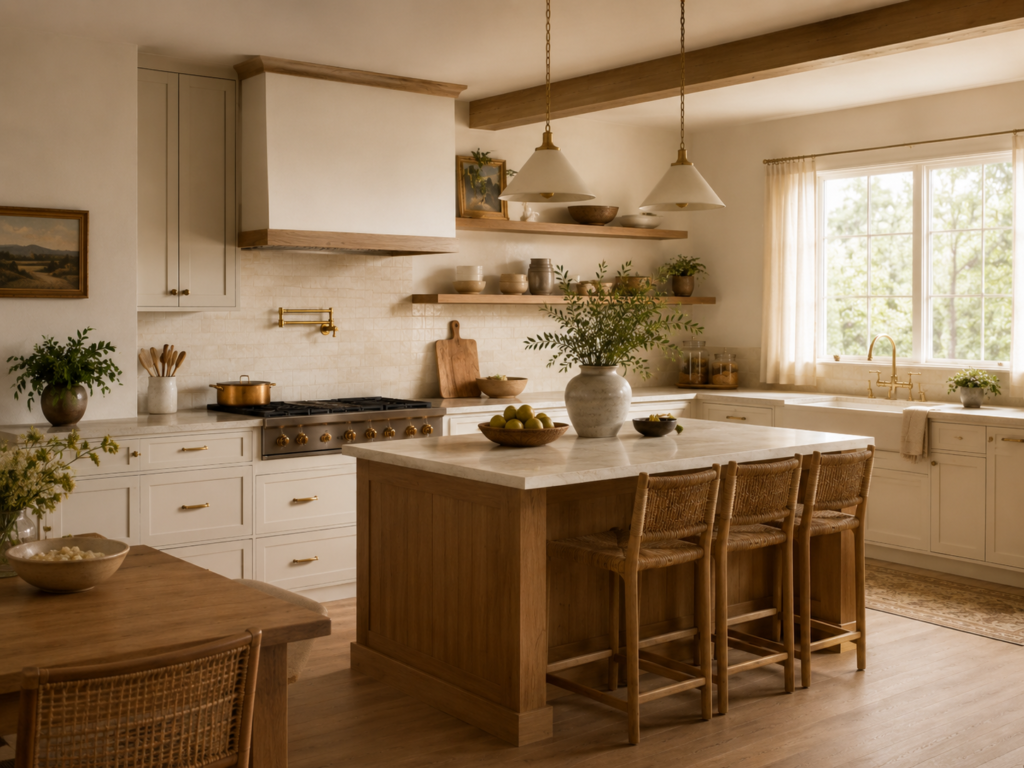
The foundation of a timeless kitchen begins with color. Instead of bright whites and cool grays, choose softer shades that make the room feel calm and welcoming.
Warm ivory, oatmeal, mushroom, soft taupe, muted clay, and gentle sage all work beautifully in a kitchen. These colors reflect light without making the space feel cold or overly polished.
For a cohesive look, keep the cabinets, walls, and larger surfaces within a closely related color family. Subtle differences in tone will create depth while preserving a peaceful atmosphere.
A quiet palette also gives natural materials, collected objects, and everyday kitchenware space to stand out without creating visual clutter.
2. Let Natural Wood Bring Warmth and Character
Natural wood immediately brings life into a kitchen. Its visible grain and changing tones add character that manufactured surfaces often cannot reproduce.
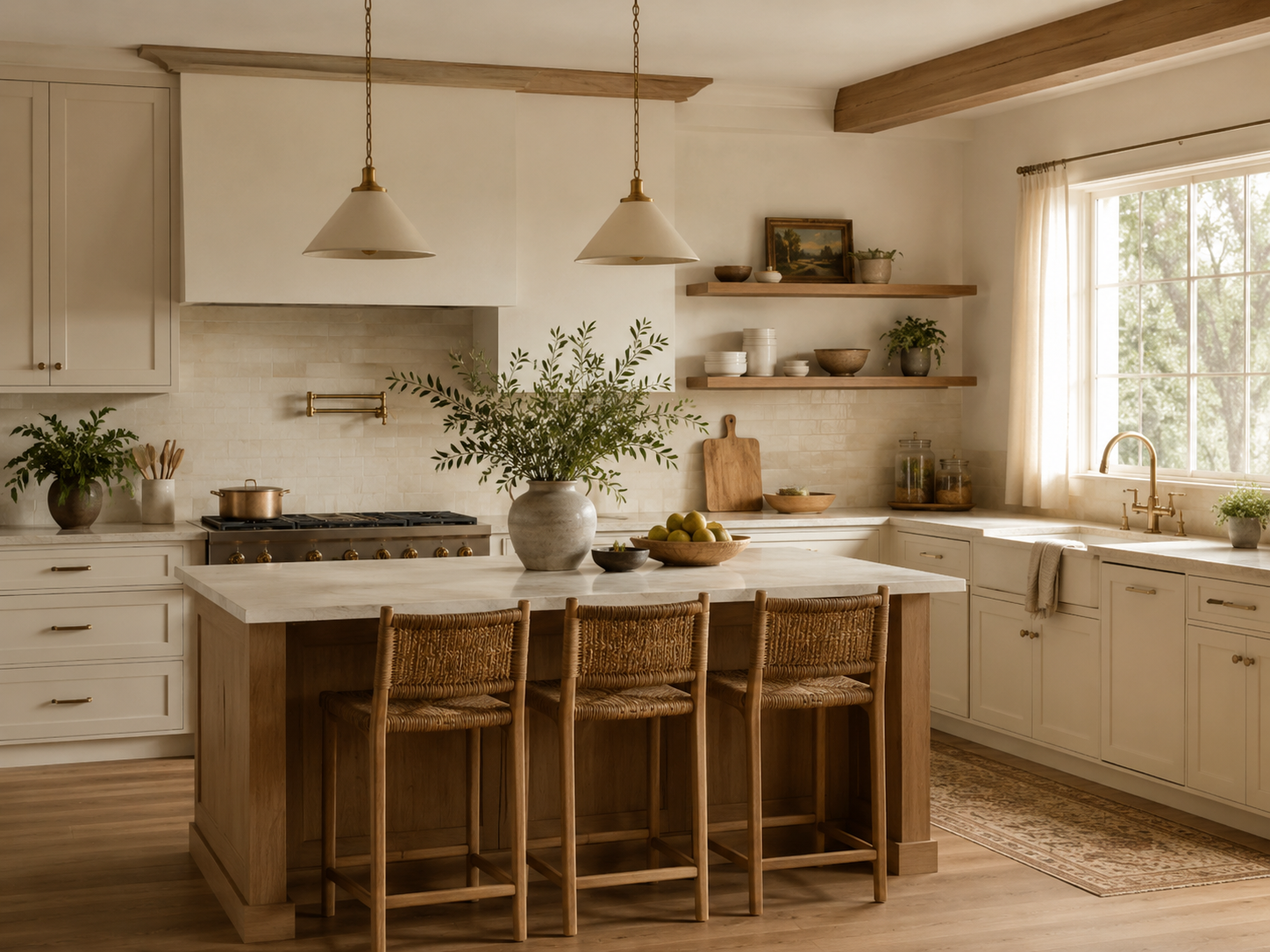
Wood can be introduced through cabinetry, open shelving, bar stools, cutting boards, a kitchen island, or a small dining table. Even a few carefully chosen elements can soften a room filled with stone, tile, and metal.
Light oak creates an airy and relaxed feeling, while walnut and darker woods add richness and contrast. Mixing wood tones can also feel natural when the overall palette remains restrained.
The goal is not to cover every surface with wood. Allow one or two wooden features to become quiet focal points within the room.
3. Layer the Lighting for a Softer Atmosphere
Kitchen lighting should do more than illuminate a work surface. It should support different moods throughout the day.
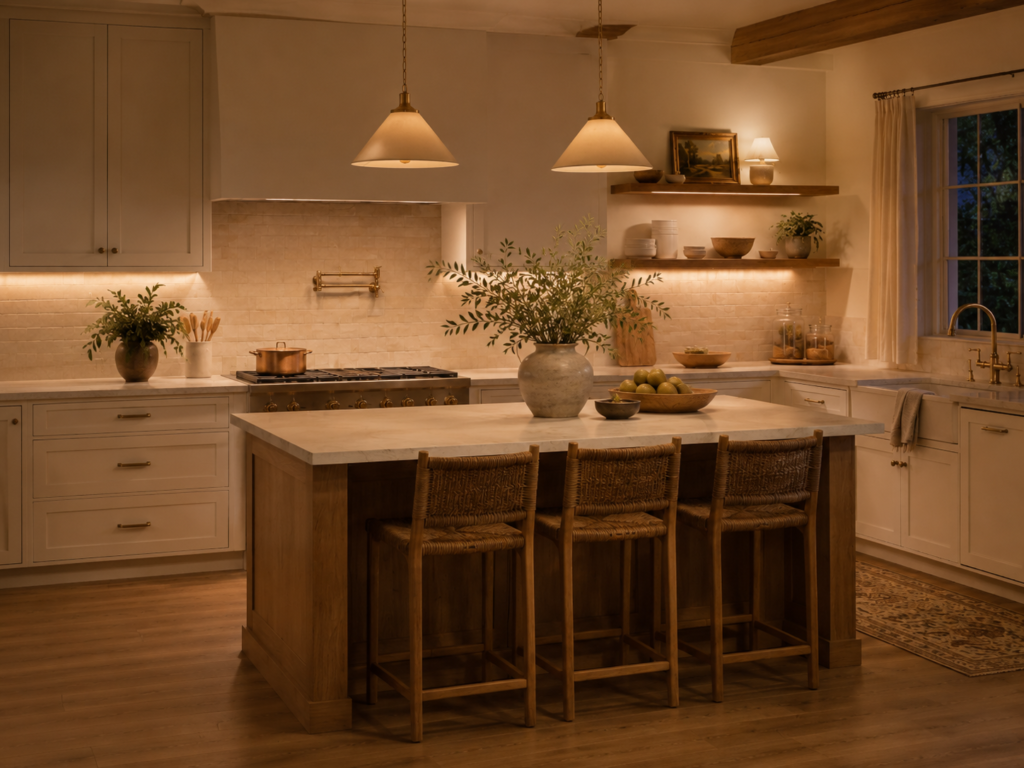
Begin with practical lighting for food preparation and cooking. Under-cabinet lights and focused ceiling fixtures can brighten the areas where visibility matters most.
Then introduce softer layers through pendant lights, wall sconces, or a small lamp placed on a counter. These warmer sources of light help the kitchen feel intimate in the evening when strong overhead lighting is no longer needed.
Fixtures made from aged brass, ceramic, glass, linen, or woven materials can also add texture and personality.
A kitchen feels far more welcoming when the lighting can shift naturally from practical daytime use to a calm evening atmosphere.
4. Choose Surfaces That Age Gracefully
Timeless kitchens often include materials that become more beautiful through use rather than surfaces that must remain perfectly untouched.
Natural stone, honed finishes, handmade tiles, warm metals, and solid wood develop subtle marks and variations over time. These signs of everyday living can give the kitchen depth and authenticity.
Perfection is not necessary. A slightly irregular backsplash or a stone surface with natural movement often feels more inviting than something completely uniform.
When choosing a material, consider how it will look after years of meals, gatherings, and daily routines. A surface that ages gracefully helps the kitchen feel lived in rather than carefully staged.
5. Combine Open and Closed Storage
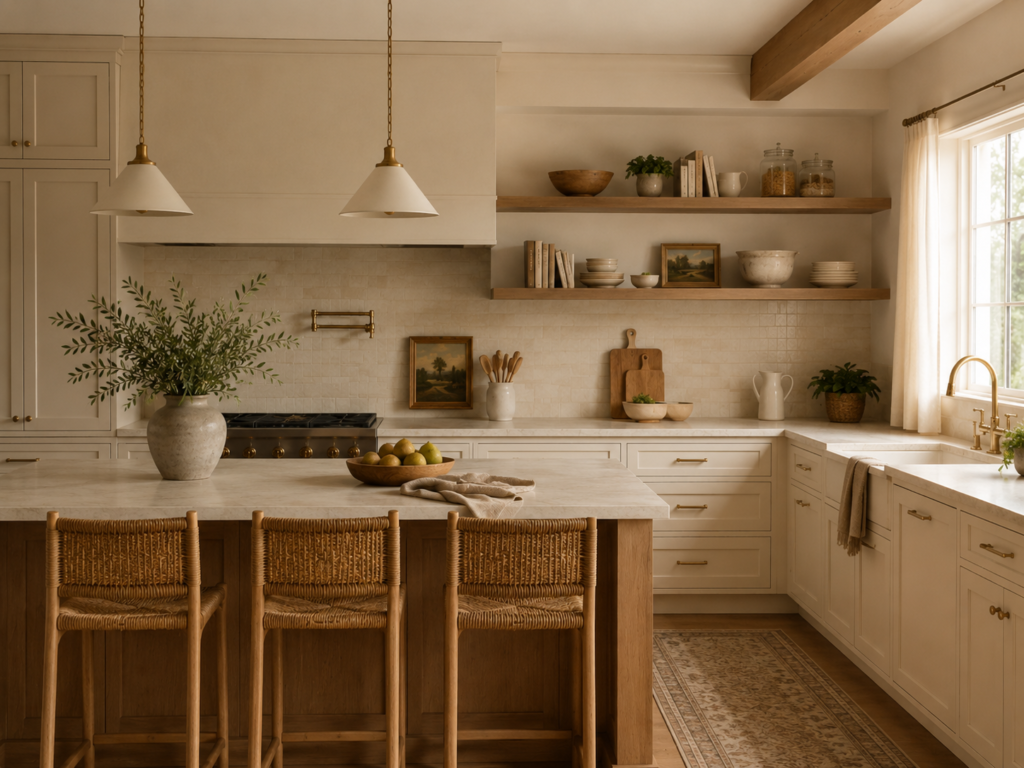
A warm kitchen needs both visual breathing room and practical storage. Combining open shelves with closed cabinets creates a balance between the two.
Closed cabinetry can hide appliances, food packaging, and less attractive necessities. Open shelving can display a small collection of useful and beautiful objects, such as ceramic bowls, glassware, cookbooks, or wooden serving pieces.
Avoid filling every shelf. A little empty space allows each object to feel intentional and keeps the kitchen from appearing crowded.
Open storage works best when it contains items that are regularly used. Everyday pieces naturally change position and prevent the arrangement from feeling overly styled.
The result should feel personal and functional rather than like a display that cannot be touched.
6. Add Softness Through Textiles
Kitchens are naturally filled with hard surfaces, so textiles play an important role in making the room feel more comfortable.
A washable runner can soften the floor and visually connect different areas of the kitchen. Linen towels, fabric seat cushions, and simple window coverings can introduce additional warmth without overwhelming the room.
Choose natural-looking fabrics in muted colors or subtle patterns. Linen, cotton, and woven materials suit the relaxed character of a timeless kitchen.
Textiles are also an easy way to adjust the atmosphere through the seasons. A heavier runner or deeper-toned towel can create warmth during colder months, while lighter fabrics can keep the space feeling fresh in spring and summer.
7. Make Everyday Objects Part of the Decor
Some of the most beautiful kitchen details are also the most useful.
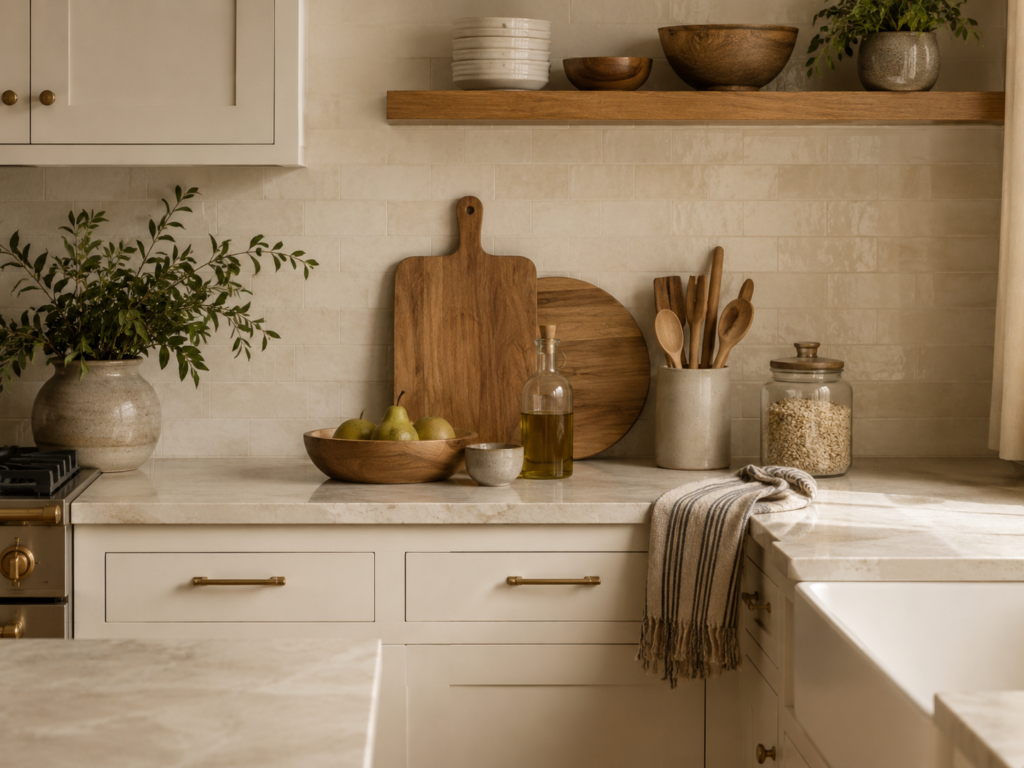
Wooden cutting boards, ceramic bowls, glass jars, salt cellars, linen towels, and well-designed utensils can remain visible while contributing to the overall style of the room.
Group related objects together rather than spreading them across every surface. A wooden board placed behind a small bowl and a bottle of olive oil can form a practical cooking station that also looks considered.
Choose objects with natural textures and simple shapes. Pieces do not need to match perfectly, but they should share a similar sense of warmth and restraint.
When useful objects are selected with care, the kitchen can feel beautifully styled without relying on unnecessary decoration.
8. Create a Comfortable Place to Gather
The kitchen often becomes the natural center of a home, even when there are more formal places to sit.
A pair of stools at an island, a small breakfast table, or a built-in bench can create an informal gathering place. These areas invite people to stay nearby while meals are prepared and make everyday routines feel more connected.
Comfort matters as much as appearance. Choose seating with supportive shapes, soft cushions, or tactile materials that encourage people to remain at the table a little longer.
In a smaller kitchen, even a single stool or a narrow wall-mounted table can create a useful place for morning coffee.
A warm kitchen is not only designed for cooking. It is designed for conversation, company, and the small moments that happen in between.
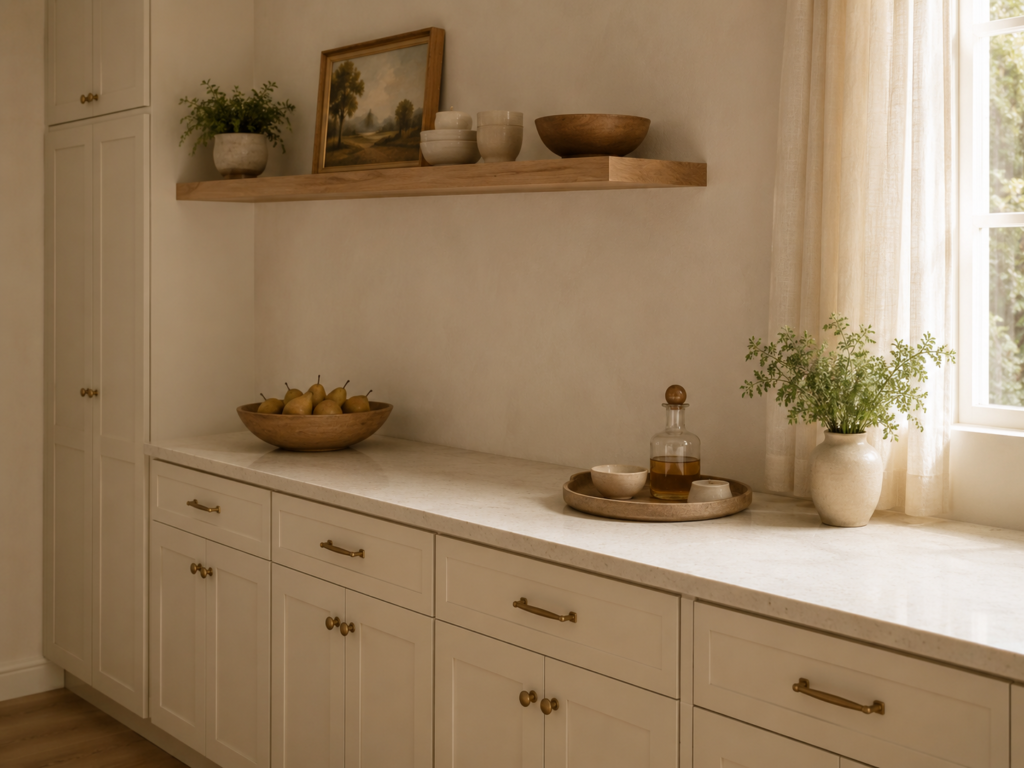
9. Keep the Countertops Calm, Not Empty
Completely empty countertops can make a kitchen appear clean, but they can also make it feel impersonal. The aim should be calm organization rather than total emptiness.
Leave generous areas clear for food preparation while allowing a few useful objects to remain visible. A tray can hold cooking oils and seasonings, while a ceramic bowl can contain fruit or fresh produce.
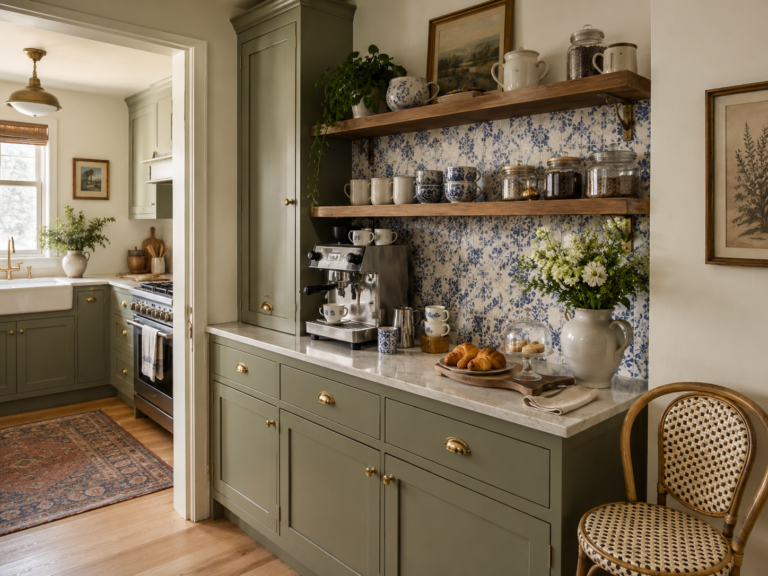
Create small functional zones according to how the kitchen is used. Coffee supplies can stay near the coffee machine, and frequently used utensils can remain close to the stove.
This approach keeps the space practical while reducing visual noise.
A calm countertop should make daily routines easier, not force every item to be hidden after each use.
10. Finish with Meaningful and Personal Details
The final layer of a timeless kitchen should reflect the people who live there.
A framed piece of art, a handwritten family recipe, a vintage bowl, a favorite cookbook, or a small vase of seasonal branches can make the room feel personal without becoming overly decorated.
These details do not need to be expensive or perfectly coordinated. Their value comes from the memories, habits, and stories they represent.
Introduce personal pieces slowly and allow the kitchen to evolve over time. A collected room often feels warmer and more authentic than one decorated all at once.
Good design creates beauty, but personal details are what make a kitchen feel like home.
A Kitchen Made for Everyday Living
A warm and timeless kitchen is not created through one dramatic decision. It develops through a series of thoughtful choices: softer colors, honest materials, layered lighting, useful objects, and places where people naturally want to gather.
The most beautiful kitchens are not afraid of everyday life. They welcome cooking, conversation, changing seasons, and the gentle marks that appear through regular use.
Good taste begins when a kitchen feels as wonderful to live in as it looks