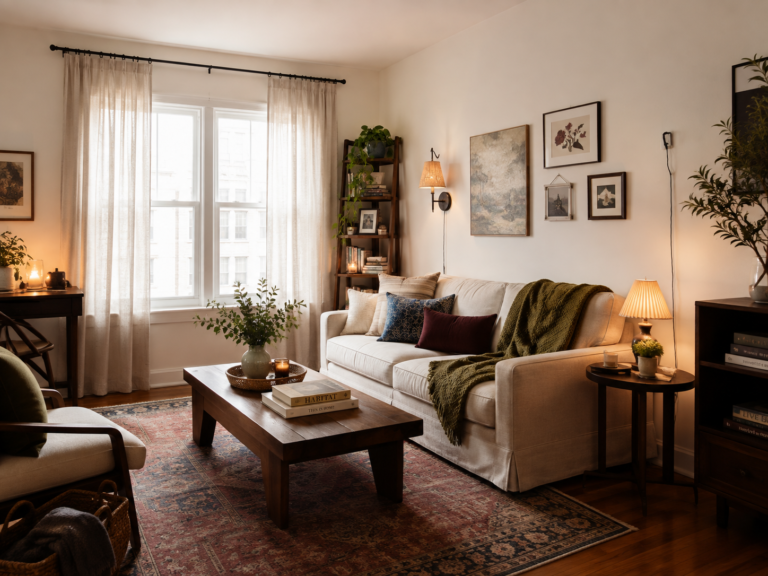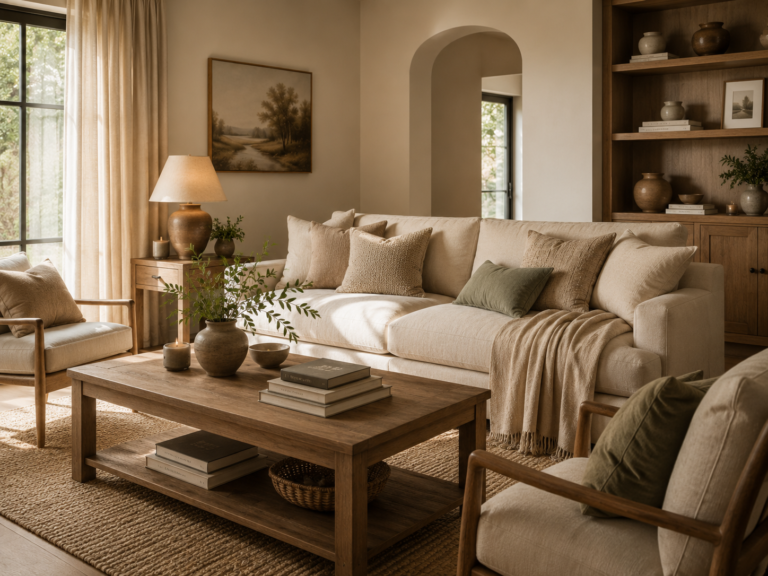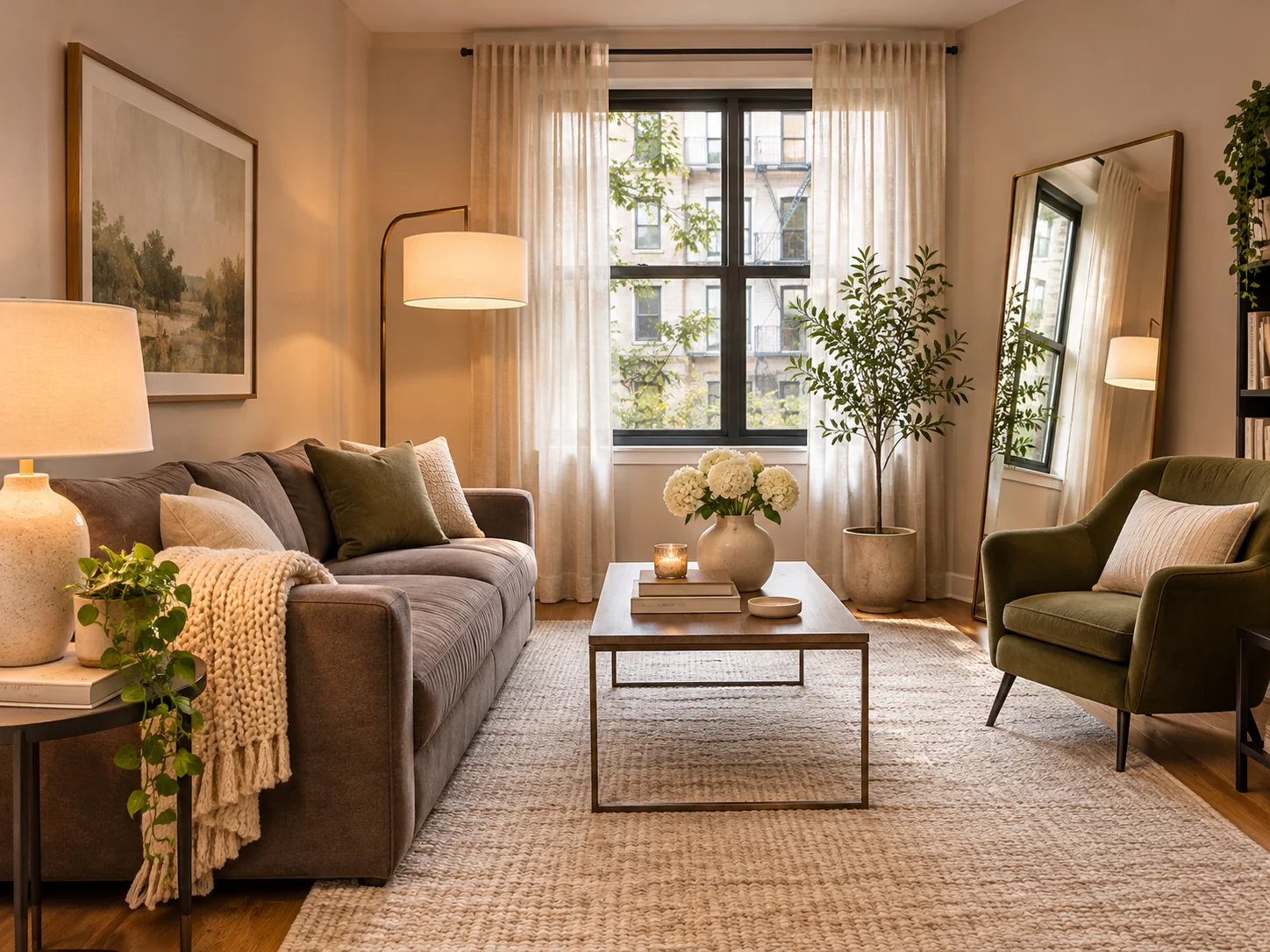
9 Ways to Make a Dark Living Room Feel Brighter Without Renovating
A dark living room can make an entire home feel smaller, heavier, and less inviting — even when the room itself is perfectly comfortable.
Sometimes the problem is obvious: a small window, a north-facing exposure, or another building blocking the daylight. But often, the room is losing more light than it needs to because of heavy window treatments, furniture placement, dark corners, or a lighting plan that relies on one ceiling fixture to do everything.
The good news is that making a dark living room feel brighter does not necessarily require new windows, rewiring, or a major renovation.
A few thoughtful changes can help natural and artificial light travel farther through the room, reduce visual heaviness, and make the space feel more open throughout the day.
Here are nine places to start.
1. Clear the Path Around the Windows
Before adding another lamp or buying lighter furniture, look at what is happening around the windows you already have.
A surprisingly small amount of daylight can be lost when tall furniture, large plants, deep curtain stacks, or bulky decorative pieces sit directly beside the glass.
Move anything that physically interrupts the light coming into the room.
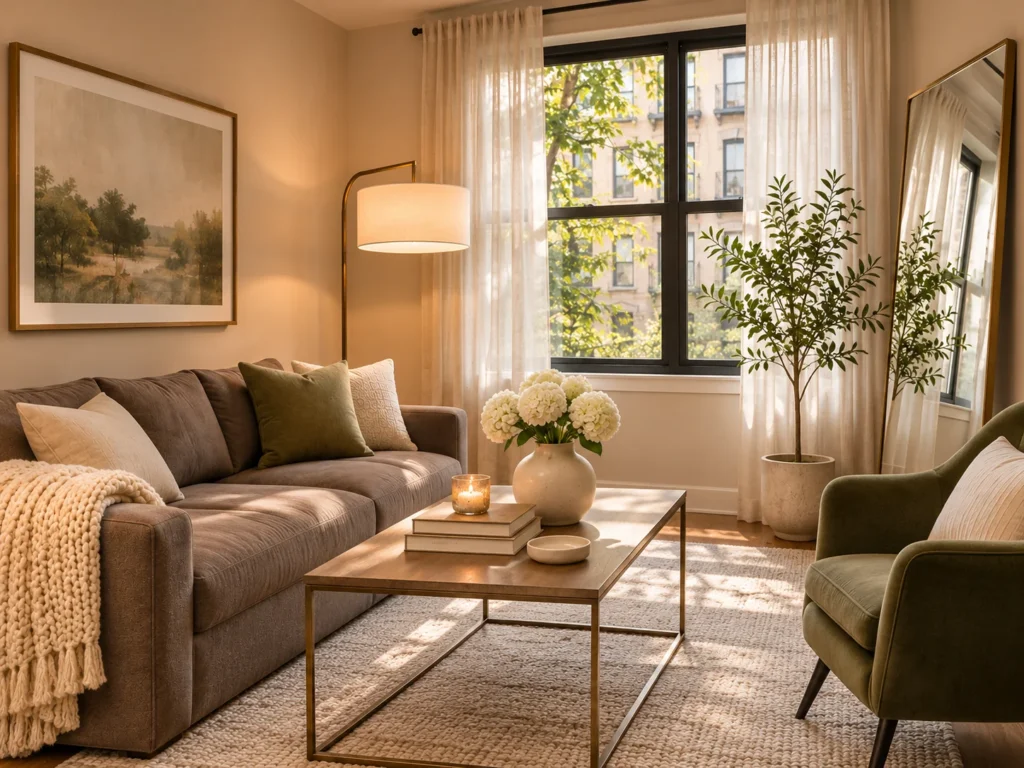
A bookcase positioned close to a window may work better on an interior wall. A large plant can move a few feet farther into the room. Curtains can be mounted wider so that, when open, the fabric sits mostly outside the window rather than covering part of it.
The goal is simple: let the available daylight enter the room with as little obstruction as possible.
You do not need an enormous window if the window you have is allowed to do its job.
2. Rethink Heavy Window Treatments
Privacy and softness matter, but thick curtains can make an already dark living room feel even dimmer.
If your current window treatment absorbs most of the daylight, consider creating a lighter combination instead.
Sheer curtains can filter direct light without completely blocking it. If you still want substantial curtains for privacy or nighttime use, layer the two rather than relying on one heavy fabric throughout the day.
Mounting the curtain rod higher and slightly wider than the window can also make the opening feel larger and allow more of the glass to remain exposed when the curtains are pulled back.
This does not mean every dark room needs white curtains. Linen, soft oatmeal, muted stone, pale olive, and other light-to-mid-tone fabrics can still bring personality without visually closing the window.
Think about the curtain as a frame for the light rather than a wall in front of it.
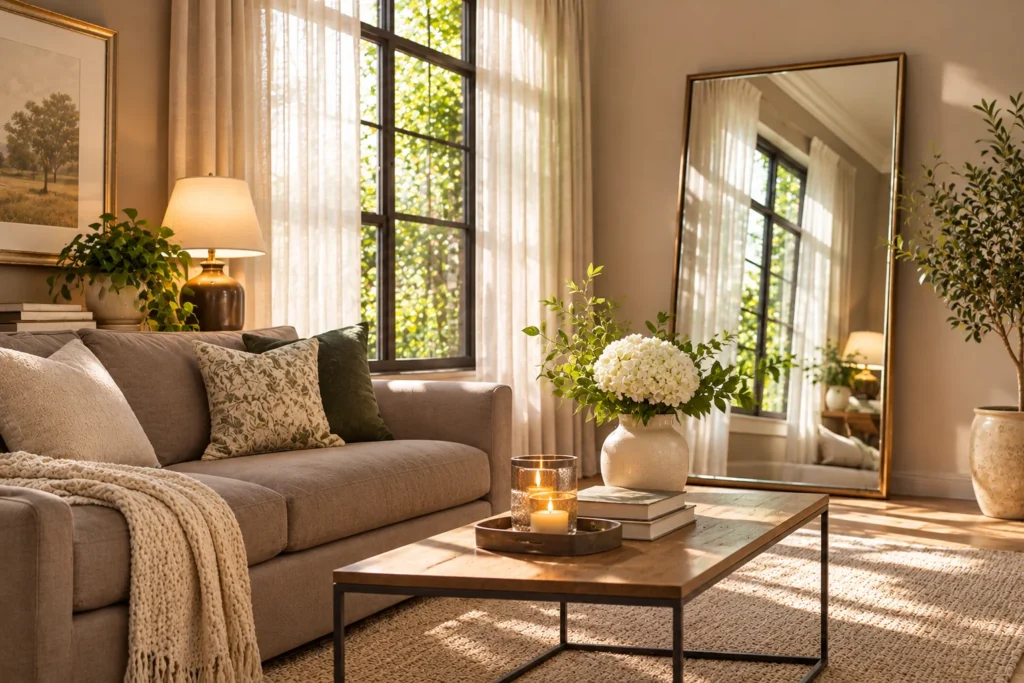
3. Put Mirrors Where They Can Actually Reflect Light
Mirrors are one of the oldest tricks for brightening a room, but simply hanging one somewhere on the wall is not enough.
Placement matters.
A mirror works hardest when it can catch daylight from a nearby window or reflect the glow from a lamp into another part of the room.
Stand in the room during the brightest part of the day and look at where the natural light lands. A mirror positioned across from or at an angle to that light can help visually extend it deeper into the space.
Dark corners can also benefit from a mirror paired with a floor lamp or wall light.
The mirror does not have to be enormous. A tall leaning mirror, an antique-style wall mirror, or even a smaller reflective piece placed strategically can make more difference than a giant mirror positioned where it reflects nothing useful.
Use reflection deliberately.
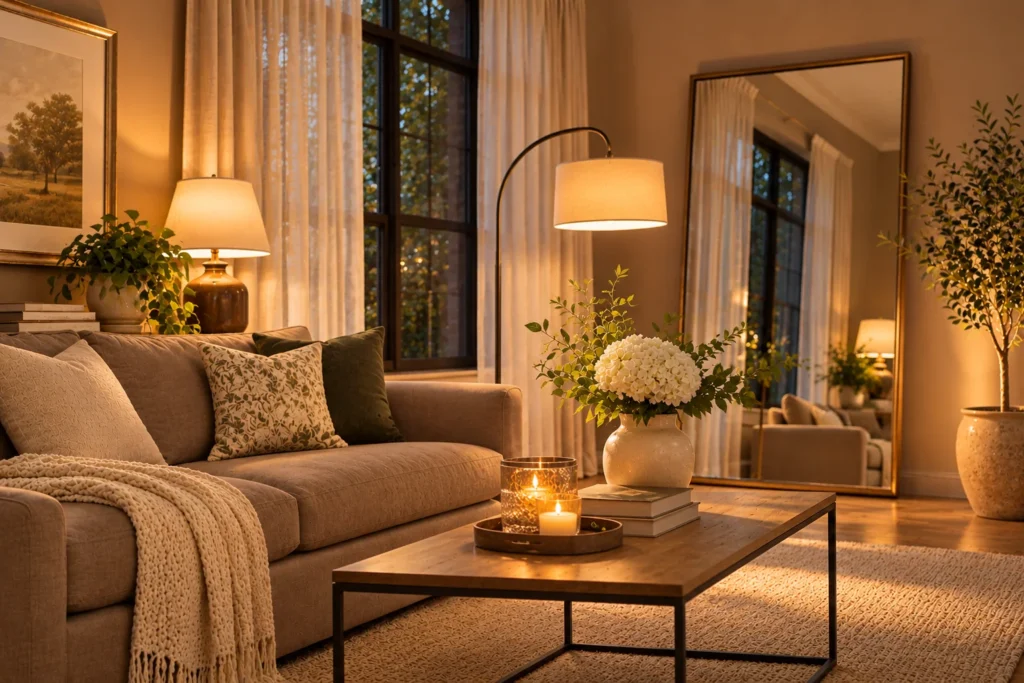
4. Stop Asking One Ceiling Light to Illuminate the Entire Room
A dark living room often feels darkest at night because the entire lighting plan depends on one fixture in the center of the ceiling.
That creates light in one place and shadows everywhere else.
Instead, think in layers.
A good living room may combine:
- ambient light for general brightness
- task light beside a sofa or reading chair
- accent light near shelving, artwork, or a darker corner
You might have a ceiling fixture, a floor lamp beside the sofa, and a small table lamp on the opposite side of the room.
The individual lamps do not need to be extremely bright. What matters is that light is distributed across several points rather than concentrated in the middle.
This also makes the living room feel more dimensional after sunset instead of turning into one brightly lit center surrounded by dark edges.
5. Give the Darkest Corner Its Own Light Source
Most living rooms have one corner that seems to disappear after sunset.
It might sit between the sofa and a bookcase, beside the fireplace, or at the far end of the room away from the window.
Do not leave that area dark simply because it is not the main seating zone.
A slim floor lamp, small table lamp, plug-in wall light, or even a carefully positioned lamp on shelving can change how large the entire room feels.
When the perimeter of the room remains visible, your eye can perceive the full dimensions of the space.
When several corners disappear into darkness, the usable room appears to shrink.
Instead of only asking, “Is there enough light to see?” ask:
Where does the room visually stop?
That is often where the next light source belongs.
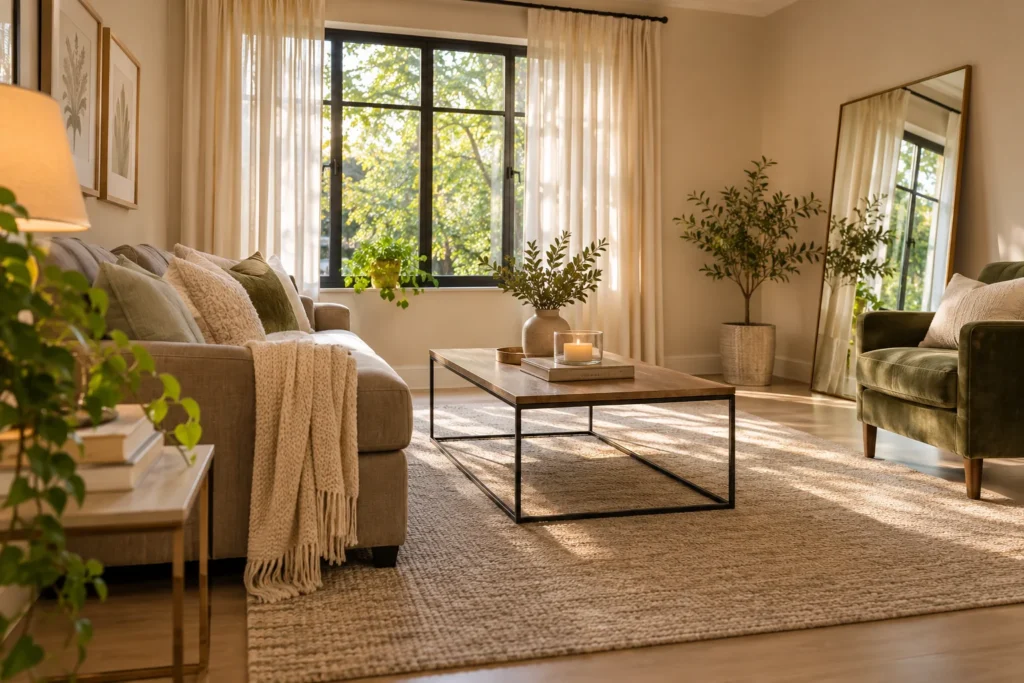
6. Use Lighter Visual Weight, Not Just Lighter Colors
Making a dark room brighter does not mean replacing everything with white furniture.
Visual weight matters almost as much as color.
A very large sofa with a low, solid base can visually block a room more than a piece raised slightly on legs. A massive dark coffee table may feel heavier than a smaller wood table with visible space underneath it.
Look for places where you can allow more floor and wall to remain visible.
This might mean:
- moving an oversized side table
- using furniture with legs rather than completely solid bases
- replacing one heavy decorative object with something more open
- leaving breathing room between larger pieces
Even existing furniture can often feel lighter simply through rearrangement.
The objective is not minimalism. It is preventing every surface and sightline from becoming visually dense.
7. Do Not Automatically Paint Everything Bright White
White paint is often suggested for dark rooms, but it is not always the magic solution people expect.
A white wall still depends on the light available to illuminate it. In a room with very little daylight, a stark white can sometimes feel flat rather than luminous.
Instead, consider how the room behaves throughout the day.
Soft off-whites, pale warm neutrals, gentle stone shades, muted creams, and very light earthy colors can sometimes work more naturally with limited daylight.
And if you love darker colors, you do not necessarily have to remove them.
A darker bookcase, sofa, fireplace, or accent wall can create contrast that makes lighter surfaces appear brighter.
The important part is balance.
Before repainting an entire room, test samples on more than one wall and look at them in morning light, afternoon light, and under your lamps at night.
A paint color is never experienced independently of the room’s light.
8. Reduce the Things That Absorb Visual Attention
A room can feel dark even when the actual light level is reasonable.
Sometimes the problem is visual clutter.
When every table is covered, every shelf is packed, and every wall has multiple small objects competing for attention, the room can feel heavier and more enclosed.
Try removing a few things before adding anything new.
Clear one section of the coffee table. Give books and objects more space on shelving. Combine several small decorative pieces into one intentional grouping.
This is not about making the room empty.
It is about giving light somewhere to land.
A cleaner wall, an open portion of a tabletop, or visible floor around furniture can create visual pauses that make the whole room feel more spacious.
If you already own reflective or subtly luminous materials — glass, glazed ceramics, metallic details, polished wood — position a few where they can interact with nearby light rather than scattering them everywhere.
9. Rearrange the Room Around the Light You Have
Before deciding that the room itself is the problem, experiment with the layout.
A sofa may be blocking part of a window. A tall chair might interrupt a useful sightline. The main seating arrangement may be concentrated in the darkest half of the room while the brightest area is barely used.
Try looking at the living room as a map of light rather than a furniture plan.
Where is the room brightest in the morning?
Where does daylight reach in the afternoon?
Where do shadows become strongest?
Then consider whether the furniture is helping or fighting those patterns.
Even moving a sofa several inches away from a window wall can help. Turning an armchair toward the brighter side of the room can change how a seating area feels. Relocating a lamp from beside another lamp to the opposite corner may create better balance without purchasing anything.
The best layout is not always the one that looks most symmetrical on paper.
It is the one that makes the room work better in real life.
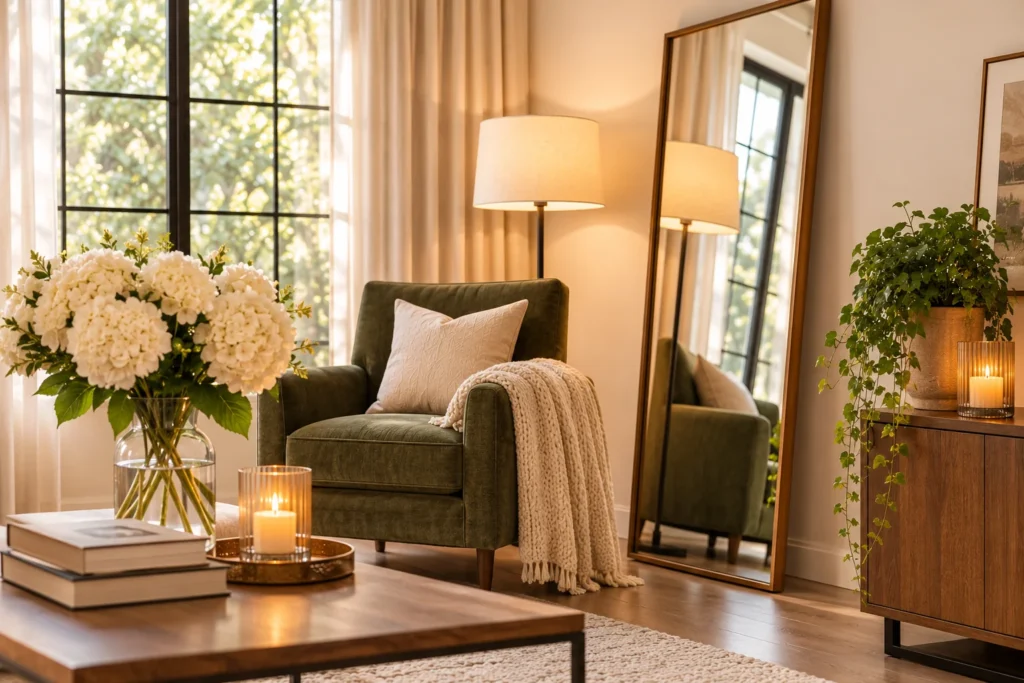
A Brighter Living Room Does Not Have to Be a Lighter Living Room
There is an important difference between making a room brighter and making everything in it pale.
Dark wood can stay.
A deep green chair can stay.
Your favorite charcoal sofa can stay.
A room with personality does not need to be stripped back to white walls and beige furniture in order to feel more open.
The more useful goal is to make better use of the light you already have.
Open the window area. Spread artificial lighting across the room. Illuminate forgotten corners. Let mirrors reflect something useful. Reduce unnecessary visual weight. And arrange the furniture so that daylight can move through the space rather than stopping at the window.
A living room does not need perfect natural light to feel good.
It simply needs a lighting and layout plan that works with the room you actually have.