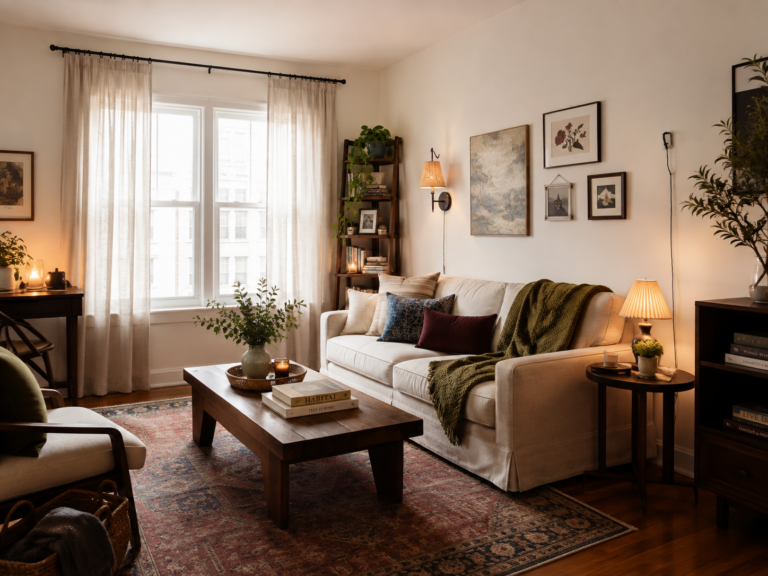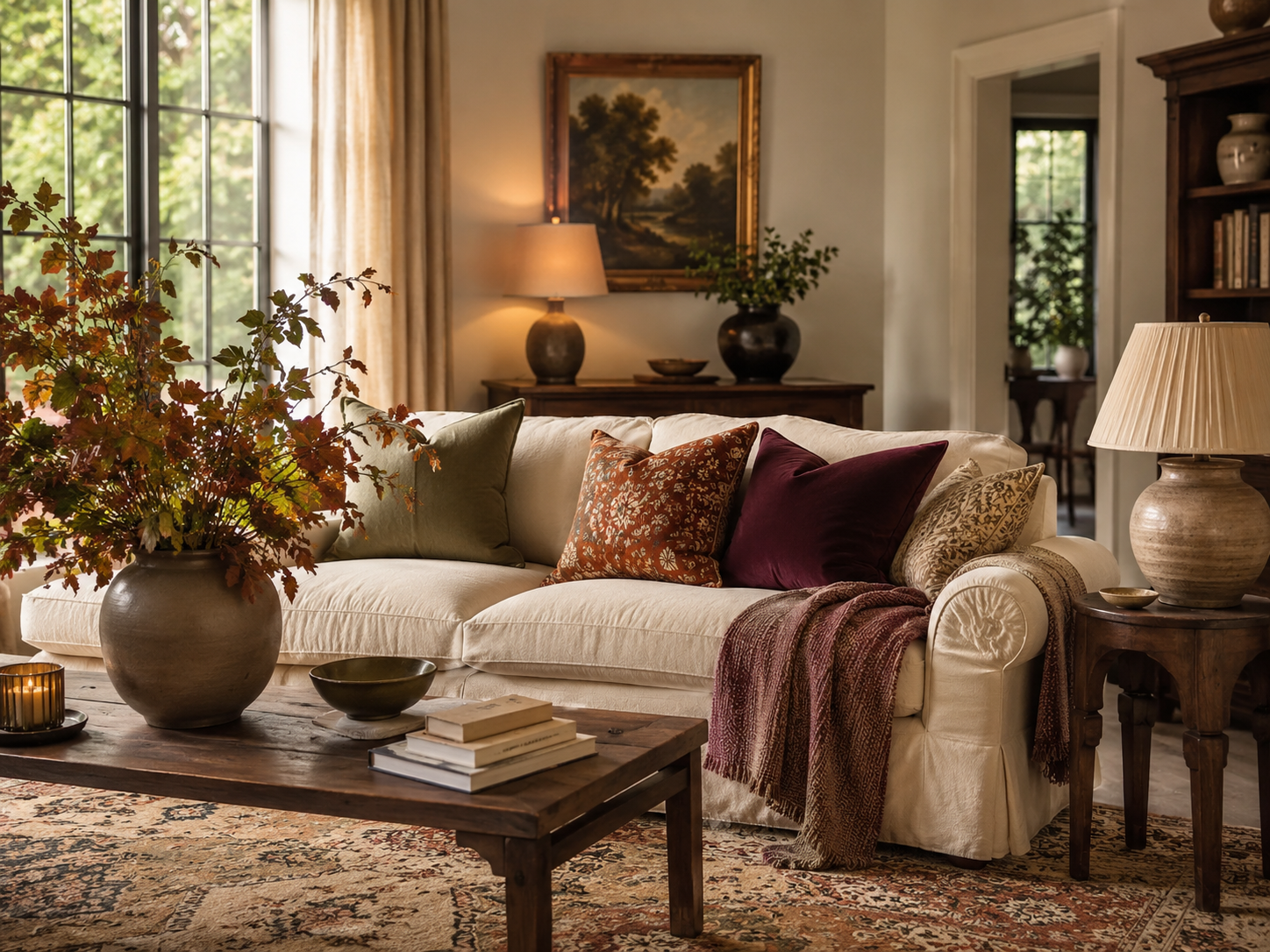
10 Early Fall Decorating Ideas to Transition Your Home from Summer to Fall
There is a strange little stretch of the year when summer has not quite left, but your home suddenly starts to feel too light for what is coming next.
The windows are still open.
Afternoons can still be warm.
But the evenings arrive earlier, the light changes, and the linen throw that looked perfect in July begins to feel a little unfinished.
Early fall decorating works best when it responds to that in-between moment.
You do not need pumpkins on every surface or an entirely new color palette. In fact, the easiest transition is usually much quieter: deeper colors, warmer light, more substantial texture, branches instead of delicate summer flowers, and a few rooms edited for the routines that return with cooler weather.
The goal is not to decorate for fall overnight.
It is to let the house slowly catch up with the season.
1. Start With the Light Before You Change the Decor
Before adding anything seasonal, notice how the light in your home has already changed.
By late summer, evening arrives differently. Corners that felt bright a few weeks ago may now become shadowy much earlier.
Use that as your first decorating cue.
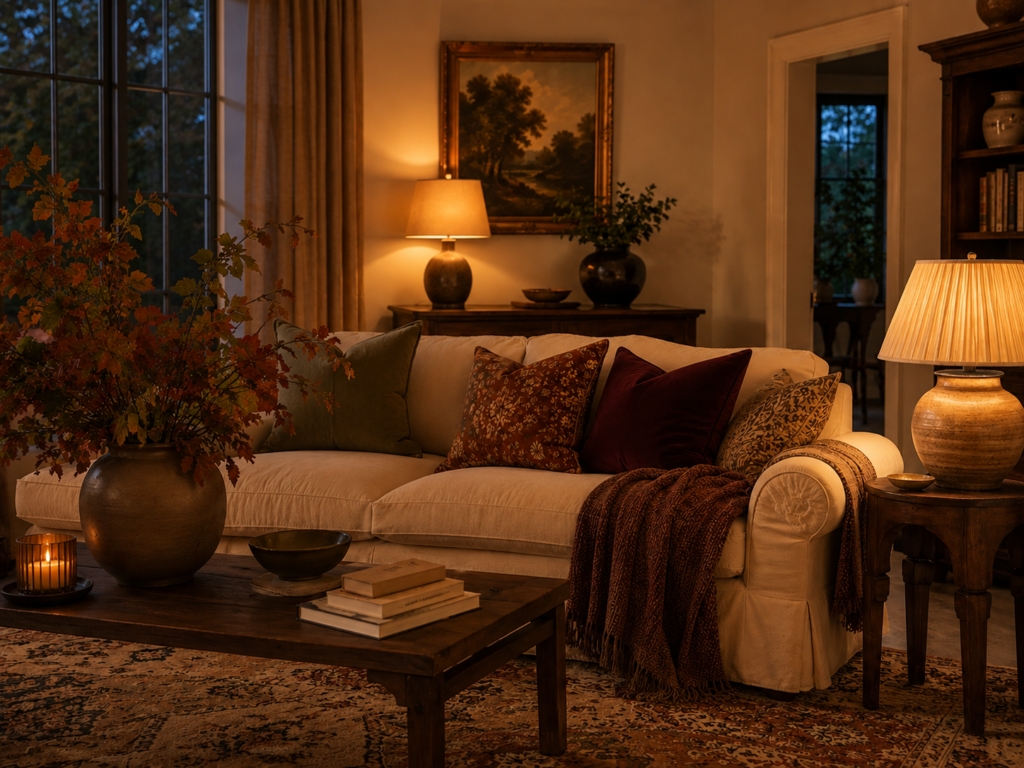
Turn on table lamps before the room is fully dark.
Add a small lamp to a console, kitchen counter, or bookshelf that did not need one in midsummer.
If a room relies mostly on overhead lighting, introduce one or two lower sources of light instead.
A warm lamp beside the sofa changes the feeling of a room far more than a bowl of decorative pumpkins ever could.
Candles can help too, but they do not need to carry the entire seasonal atmosphere.
The first sign of fall inside a home can simply be the moment when the lamps start coming on again.
2. Deepen the Color Palette Without Replacing Everything
You do not need to remove every light summer color when September approaches.
Keep the cream sofa.
Keep the pale walls.
Keep the natural linen.
Then introduce a few deeper tones that make those lighter elements feel more grounded.
Plum can sit beautifully beside cream.
Oxblood works surprisingly well with walnut and faded blue.
Olive feels richer beside warm white than it does against an entirely dark room.
Chocolate brown, tobacco, rust, navy, and muted terracotta can all shift the mood without making the space look themed.
The easiest way to use these colors is through things that already belong in the room: a cushion, a throw, a lampshade, artwork, a vase, or one upholstered chair.
You are not creating a fall palette from scratch.
You are simply giving the existing one more depth.
3. Replace the Lightest Textures First
Seasonal decorating often becomes easier when you think in terms of weight rather than objects.
What feels too light?
Perhaps it is the gauzy throw on the sofa.
The thin cotton blanket at the end of the bed.
The very summery cushion cover.
The lightweight rug beside the bed.
You do not need to replace every textile at once.
Start with one or two.
A brushed cotton throw can replace a thin linen one.
A wool-blend blanket can move onto the sofa.
Velvet, corduroy, boucle, heavier cotton, and substantial woven fabrics can appear in small amounts.
The room should still breathe.
Early fall is not winter, and the goal is not to bury every surface under layers.
You are looking for just enough texture to make sitting down feel a little more inviting when the temperature drops after sunset.
4. Let Branches Replace Summer Bouquets
Fresh flowers can feel very specific to summer.
As the season begins to shift, try something less delicate.
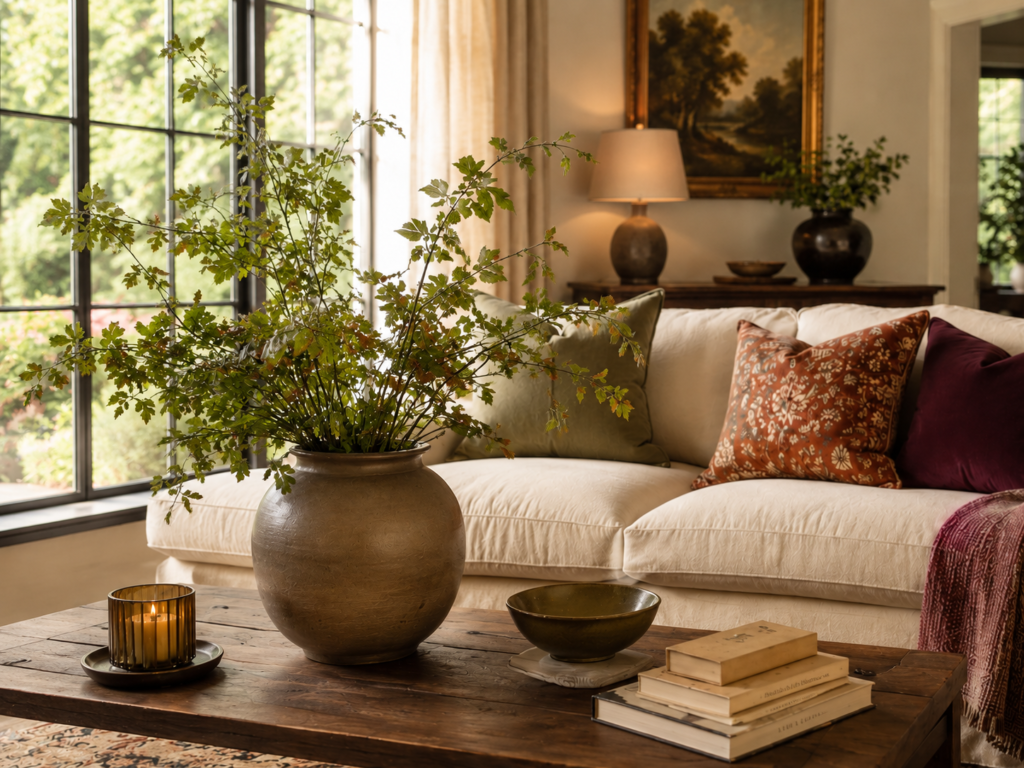
A few long branches in a simple vessel can change the entire mood of a table or console.
Look for foliage with shape rather than perfect color.
Green branches still work beautifully in early fall.
So do eucalyptus, olive branches, dried grasses, hydrangeas beginning to fade, berry stems, or leaves that have only just started changing.
The arrangement does not need to look like an obvious autumn centerpiece.
In fact, slightly wild and asymmetrical usually feels more natural.
A tall branch in an old ceramic jug can be enough.
It connects the room to what is happening outside without turning the house into a seasonal display.
And unlike a collection of small decorative objects, one generous arrangement gives the eye somewhere to rest.
5. Make the Living Room Feel Ready for Longer Evenings
The living room usually notices the season before the rest of the house.
This is where evenings begin to stretch.
Books return to the coffee table.
Blankets stay within reach.
The chair beside the window becomes useful again.
Instead of redecorating the room, adjust it for how you are about to use it.
Move a lamp closer to the chair where someone actually reads.
Place a throw where it can be reached without unfolding an entire styled arrangement.
Clear enough space from the coffee table for a mug.
If the sofa has been covered in bright summer cushions, swap only one or two for something darker or more textured.
A living room feels seasonal when its habits change.
Make it easier to stay there after the sun goes down.
That is more convincing than decorating it with objects that exist only because the calendar says fall.
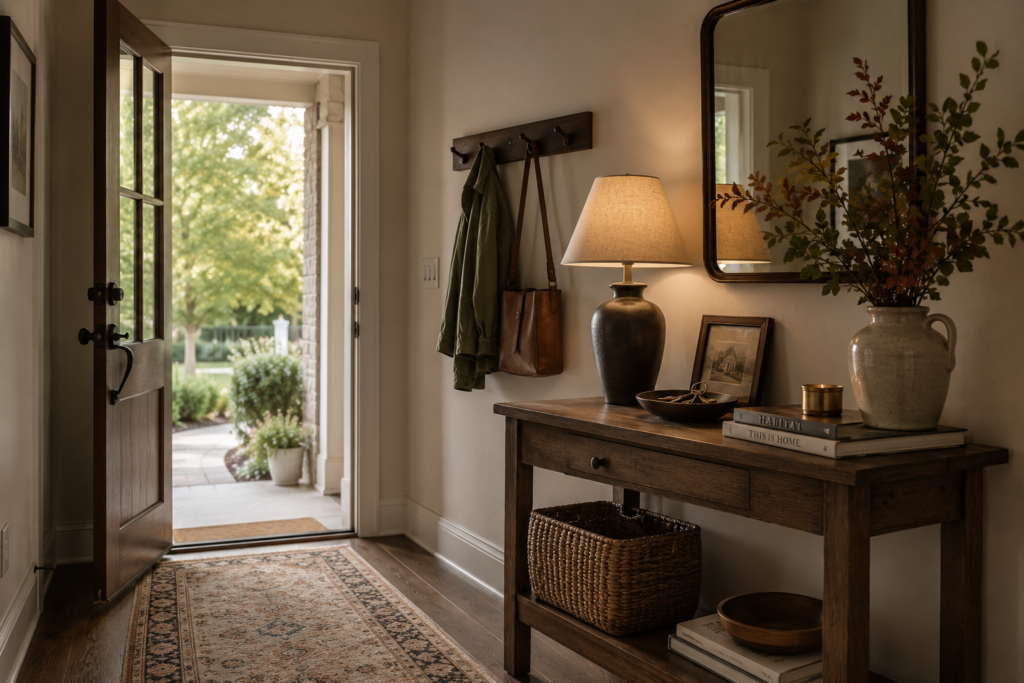
6. Give the Entryway a Small Seasonal Reset
Early fall changes what comes through the front door.
There are jackets again.
Shoes become heavier.
Bags carry different things.
Umbrellas eventually reappear.
The entryway should be ready before it becomes cluttered.
Clear away anything that belongs specifically to summer.
Give frequently used jackets a visible place.
Make sure the tray for keys is actually empty enough to hold keys.
If you use baskets, leave one available rather than filling every basket with decor.
Then add one seasonal element.
It might be a branch arrangement, a darker runner, a small lamp, or artwork with richer color.
You do not need a sign announcing the season.
A functional entryway with deeper texture and warmer light already tells the story.
It also makes the transition into colder-weather routines feel considerably less chaotic.
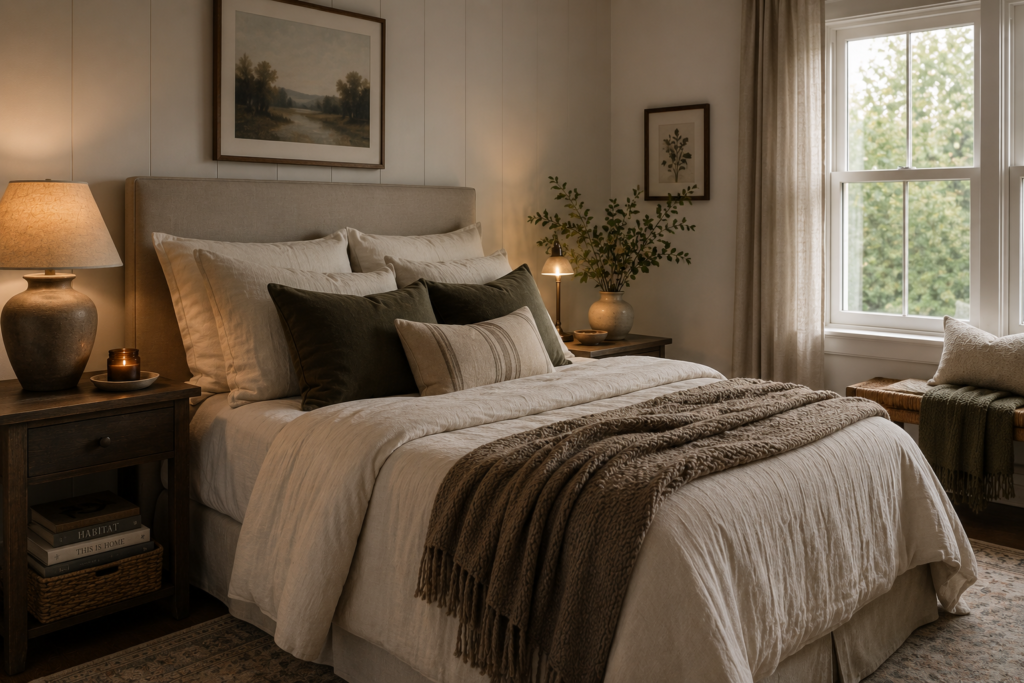
7. Layer the Bedroom Without Making It Heavy
The bedroom is another place where small changes have a large effect.
You probably do not need winter bedding yet.
Instead, build one extra layer.
Keep the duvet or quilt you already use and add a folded blanket across the lower third of the bed.
Introduce one darker pillow rather than replacing the entire set.
If your bedding is very pale, use contrast through the blanket, bedside lamp, or a small rug.
This is also a good moment to reconsider lighting.
A bedroom that looked bright and fresh in summer may benefit from softer bedside light as mornings and evenings grow darker.
Try to avoid the showroom effect of stacking every blanket and cushion you own onto the bed.
The room should still look easy to sleep in.
Early fall layering works best when it feels practical first and decorative second.
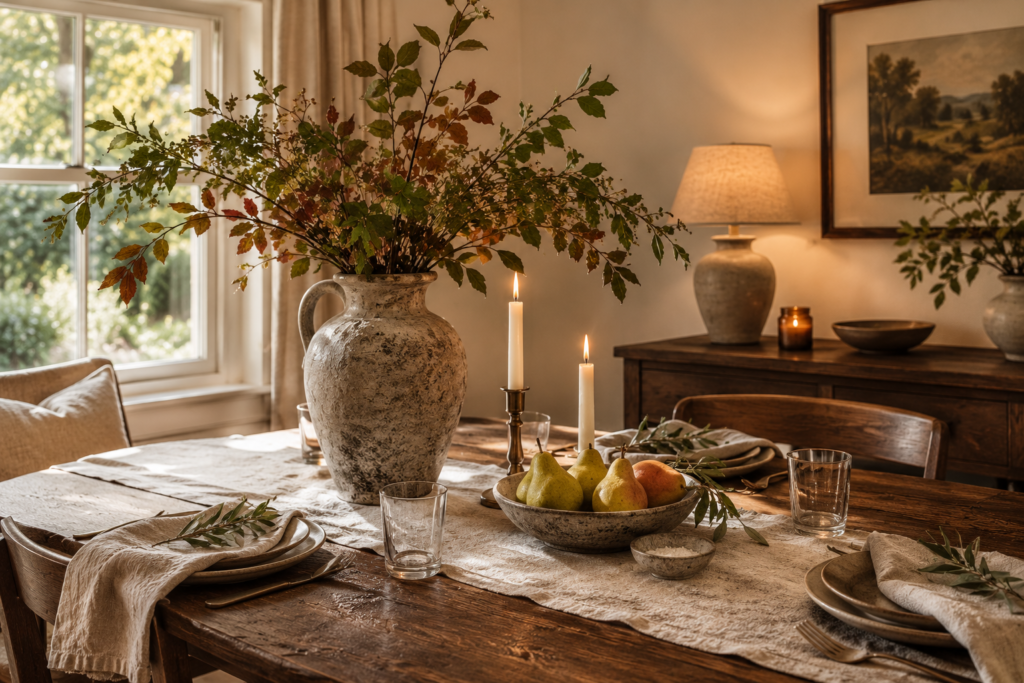
8. Change the Table Through Materials, Not Motifs
You do not need fall-themed plates to make a dining table feel seasonal.
Change the materials instead.
Linen napkins in olive, rust, brown, faded blue, or burgundy immediately create a different atmosphere.
Add ceramic plates with a little texture.
Bring out wood serving pieces.
Use amber or softly colored glassware if you already own it.
Replace a delicate floral centerpiece with foliage, fruit, herbs, or a simple bowl.
Pears, figs, apples, grapes, and even artichokes can become part of a table without looking like props.
Candles are especially effective as the evenings become darker.
A pair of taper candles can make an ordinary weekday dinner feel more intentional.
The best fall tables do not look as though they are waiting for Thanksgiving.
They simply feel a little richer than they did in July.
9. Bring Back the Objects Summer Made Unnecessary
Some of the most seasonal things in a home are not decorations at all.
They are the objects you begin using again.
The blanket beside the sofa.
The candle on the desk.
The tray for evening tea.
The basket that holds extra throws.
The book light beside the bed.
The small lamp on the kitchen counter.
Before buying something new, look at what you already own and ask what disappeared during summer.
Bring those things back deliberately.
This creates a subtle seasonal reset without adding clutter.
It can also make the house feel familiar in a way that new decor cannot.
There is something comforting about rediscovering an object that belongs to a particular part of the year.
Fall decorating does not always have to mean adding.
Sometimes it simply means returning.
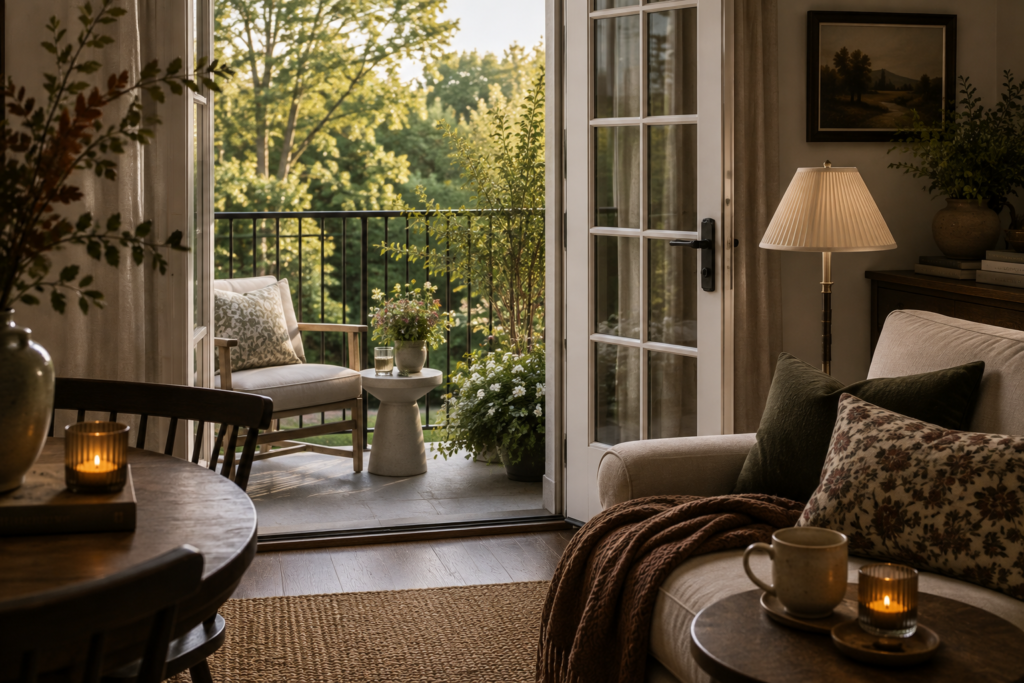
10. Keep One Foot in Summer
Early fall is still early fall.
Do not rush the house into November.
If the garden is still green, let it be green.
If you still eat outside, keep doing it.
If the white linen curtains still look beautiful in the afternoon light, they do not suddenly need to become velvet.
The most convincing seasonal transition allows two seasons to overlap for a while.
Pair a wool throw with an open window.
Use darker cushions beside fresh green branches.
Light candles on the patio while the evening is still warm enough to sit outside.
Keep summer flowers in one room and introduce autumn foliage in another.
This overlap creates a home that feels responsive rather than decorated according to a deadline.
The season outside is changing gradually.
Your rooms can do the same.
What You Do Not Need for Early Fall
You do not need to replace your existing decor with a collection of seasonal objects.
You do not need a different wreath for every month.
You do not need artificial leaves scattered across every surface.
And you certainly do not need to store boxes of things that only make sense for three weeks of the year.
Seasonal decorating becomes easier when most of the objects still belong in the room after the season changes.
A burgundy cushion can stay through winter.
A wool throw remains useful for months.
A ceramic vase can hold spring branches later.
A brass candlestick does not stop working in January.
Even richer colors can become part of the permanent palette rather than temporary autumn accessories.
Choose changes that make the home better, not simply more seasonal.
A Home Can Change With the Season Without Becoming Themed
One of the pleasures of early fall is that almost nothing has to happen all at once.
You notice the light first.
Then perhaps you bring a blanket downstairs.
A week later, the flowers on the table become branches.
The lamps start coming on earlier.
The bedroom gets another layer.
One evening, candles appear at dinner because suddenly the room feels like it needs them.
That gradual change is what makes seasonal decorating feel natural.
A home does not need to perform autumn.
It only needs to respond to it.
Let the colors become a little deeper.
Let the textures become a little heavier.
Let the light become warmer.
Then allow the rest of the season to arrive on its own.