12 Renter-Friendly Apartment Upgrades That Make a Rental Feel Like Home
A rental can be temporary without feeling temporary.
The problem is that many apartments arrive with the same familiar ingredients: blank walls, basic lighting, practical but uninspiring hardware, and a layout designed for whoever happens to live there next.
That does not mean you need to renovate it.
In fact, some of the most effective changes are the ones you can undo when you leave.
The goal is not to disguise the fact that you rent. It is to create a home that reflects the way you actually live now — without investing heavily in someone else’s property or creating a long list of repairs before move-out day.
These renter-friendly upgrades focus on changes that are flexible, useful, and visually significant enough to make a difference.
1. Stop Relying on the Overhead Light
Few things make a rental feel more generic than depending on one bright ceiling fixture for the entire room.
Instead, build your lighting in layers.
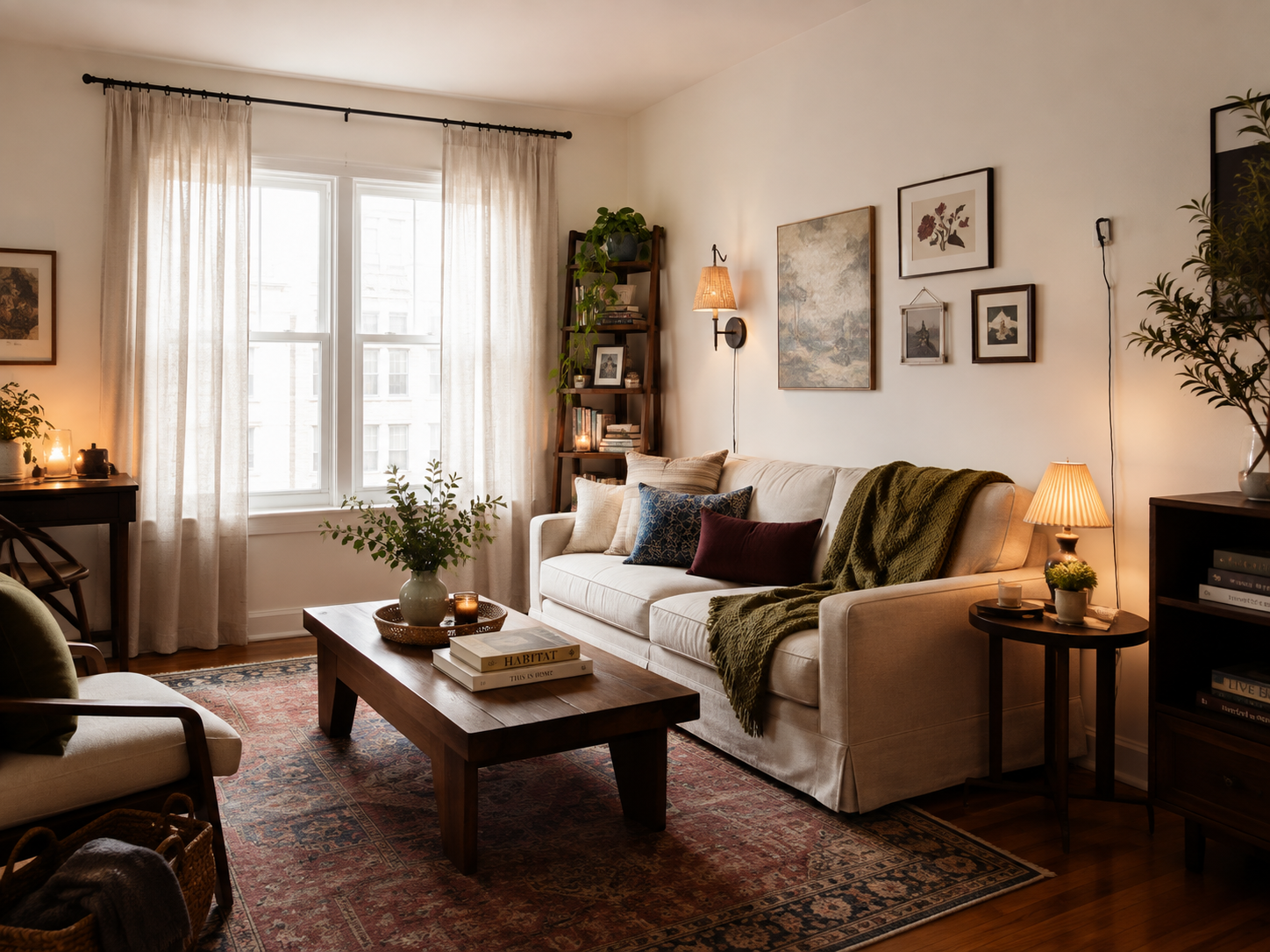
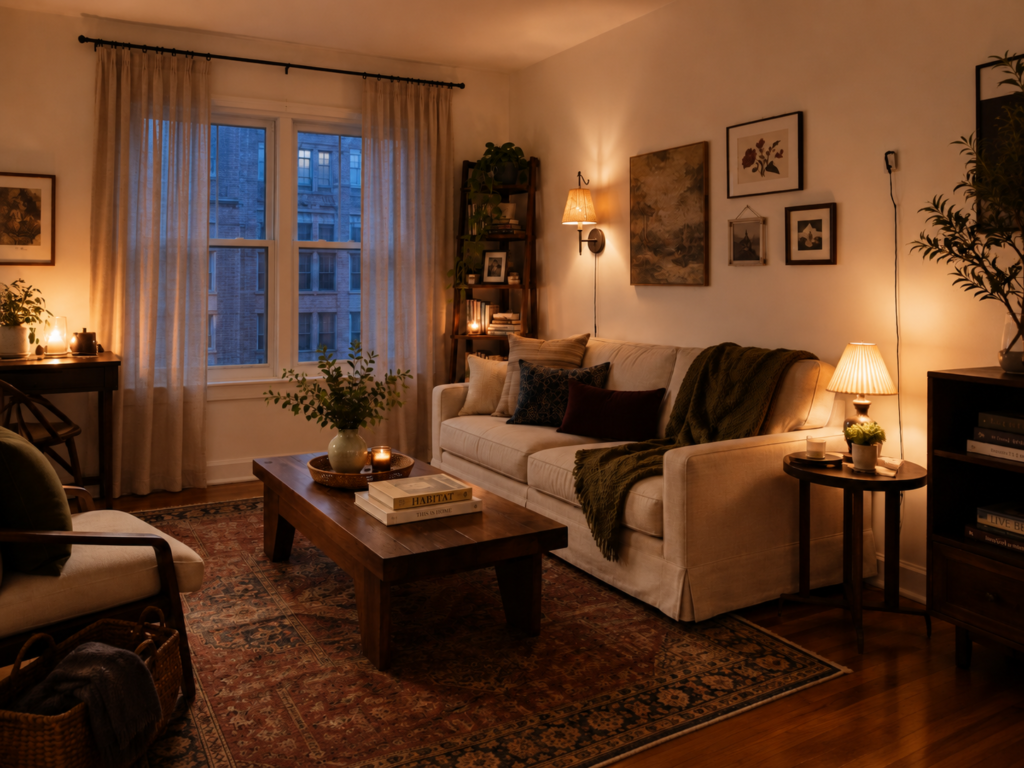
A table lamp beside the sofa, a small lamp on the kitchen counter, a floor lamp near a reading chair, or a plug-in wall sconce beside the bed can completely change how an apartment feels after sunset.
Rechargeable lamps are especially useful in rentals because they can go almost anywhere without wiring or a nearby outlet.
The important thing is not buying a matching collection of lamps.
It is placing light where you actually use the room.
A soft pool of light beside a chair will often make a living room feel more inviting than replacing an entire piece of furniture.
2. Use Removable Wallpaper in One Deliberate Place
Peel-and-stick wallpaper does not need to cover an entire room.
In a rental, it can actually be more effective when used selectively.
Try it behind the bed, inside a dining nook, along the back wall of an entryway, or even on the rear panels of an open bookcase.
A smaller application gives you the visual impact of pattern or color without making the apartment feel overly decorated.
It also gives you permission to choose something with more personality.
Aubergine, deep blue, botanical patterns, stripes, checks, or vintage-inspired prints can add character to a space that otherwise consists mostly of white walls.
Before committing, always test a small section somewhere discreet and follow the manufacturer’s removal instructions.
Not every wall finish reacts to removable products in exactly the same way.
3. Hang Curtains Higher Than the Window
Rental blinds are practical.
They are rarely the part of the apartment anyone falls in love with.
Adding curtains can soften the room immediately, particularly in bedrooms and living spaces.
When possible, position the curtain rod slightly above the window and allow the fabric to extend beyond the window frame.
It makes the opening feel larger and gives the room more vertical presence.
You do not need elaborate drapery.
Washed linen, cotton, subtle stripes, checks, or a richer solid color can be enough.
If drilling is restricted, look at tension systems or other removable mounting options that suit your particular window.
The difference comes less from the curtain itself than from giving the window a finished frame.
4. Let One Large Rug Define the Room
Small rugs have a habit of making small rooms look even smaller.
A more generous rug can visually gather the furniture and give an open-plan rental a clearer sense of structure.
In a living room, aim for something large enough that at least the front legs of the main seating can sit on it.
In a bedroom, use the rug to extend beyond the bed rather than floating a tiny rectangle beside it.
This does not mean choosing something neutral.
A rental is actually a good place to experiment with color and pattern because the floor covering moves with you.
A deep red vintage-style rug, graphic stripe, moss green flatweave, or blue patterned rug can give an otherwise plain apartment an identity very quickly.
5. Change the Hardware — and Keep the Original Pieces
Basic cabinet knobs and drawer pulls are surprisingly influential.
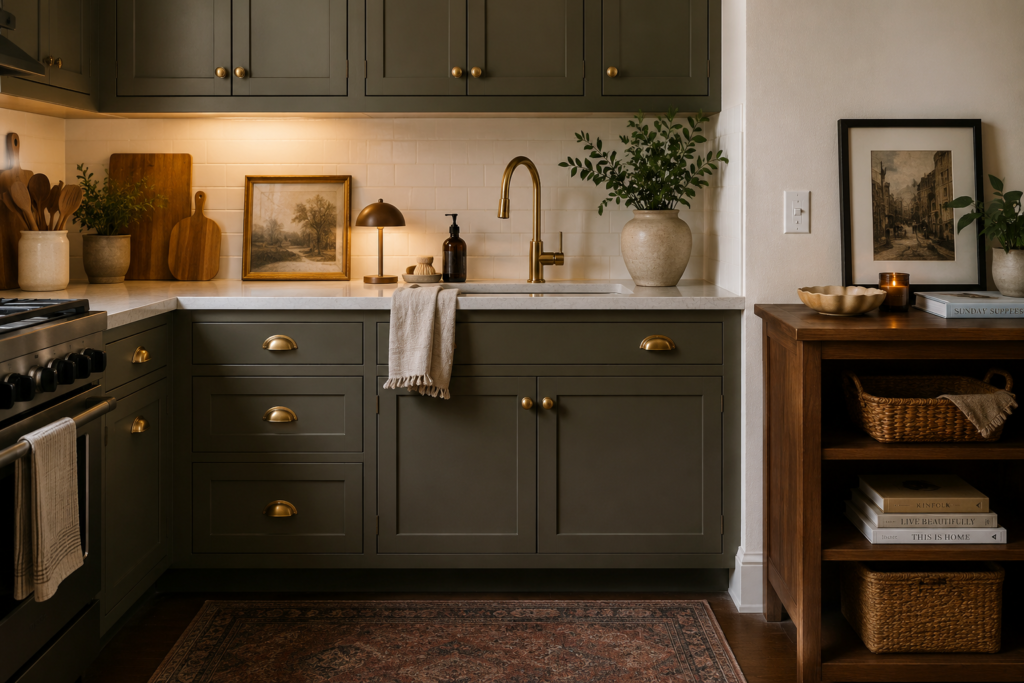
If your lease allows it, replacing them can make a kitchen, bathroom vanity, or built-in cabinet feel far more intentional.
The change is simple because you are working with existing holes rather than altering the cabinetry itself.
Brass can add warmth.
Dark metal creates contrast.
Wooden knobs can soften a basic painted cabinet.
Ceramic hardware can introduce color or pattern on a smaller scale.
There is one rule: keep every original piece.
Place the landlord’s hardware, screws, and fittings together in a clearly labeled bag or box so everything can be returned to its original condition when you move.
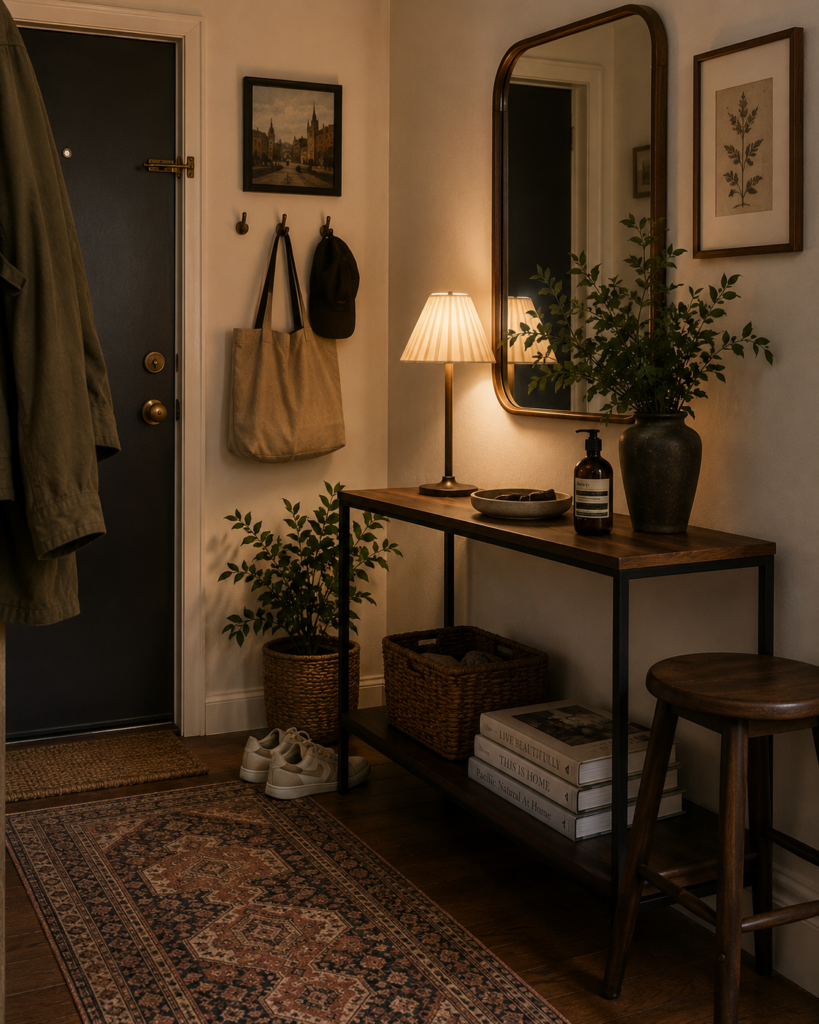
6. Give the Entryway a Job
Even a tiny apartment benefits from an arrival zone.
Without one, keys end up on the kitchen counter, bags land on chairs, shoes migrate into the living room, and the first few feet of the apartment begin to feel chaotic.
You do not need a formal foyer.
A narrow console, small wall shelf, sturdy stool, row of removable hooks, or simple catchall tray can create enough structure.
Add a mirror if the space allows.
Then decide exactly what belongs there.
Keys.
Mail.
A frequently used bag.
Perhaps one pair of shoes.
The entryway becomes more useful when it is designed around what you actually do when you come through the door rather than what an ideal entryway is supposed to contain.
7. Choose Storage That Looks Like Furniture
Rentals often lack the exact storage you wish they had.
The temptation is to solve every problem with plastic bins.
Sometimes bins are useful.
But for things that remain visible every day, freestanding furniture often works harder.
A narrow cabinet can hold bathroom supplies.
A small chest of drawers can provide storage in a dining room or entryway.
An attractive bookcase can hold books, baskets, speakers, serving pieces, and everyday objects at the same time.
A storage bench can hide shoes while providing somewhere to sit.
Because these pieces are not built in, they can move with you.
That makes them a better investment than trying to create permanent storage in a temporary space.
8. Add Wall Lighting Without Rewiring
A wall sconce can make an apartment feel far more finished, but traditional sconces usually require electrical work.
Plug-in and rechargeable versions solve that problem.
Use one beside a bed where a nightstand is too small for a lamp.
Place one above a reading chair.
Use a pair to visually frame a sofa, console, or artwork.
They are particularly useful in small apartments because they provide lighting without occupying much floor or table space.
Choose a design you would happily take to your next home.
A rental upgrade becomes much easier to justify when it is an object rather than an alteration.
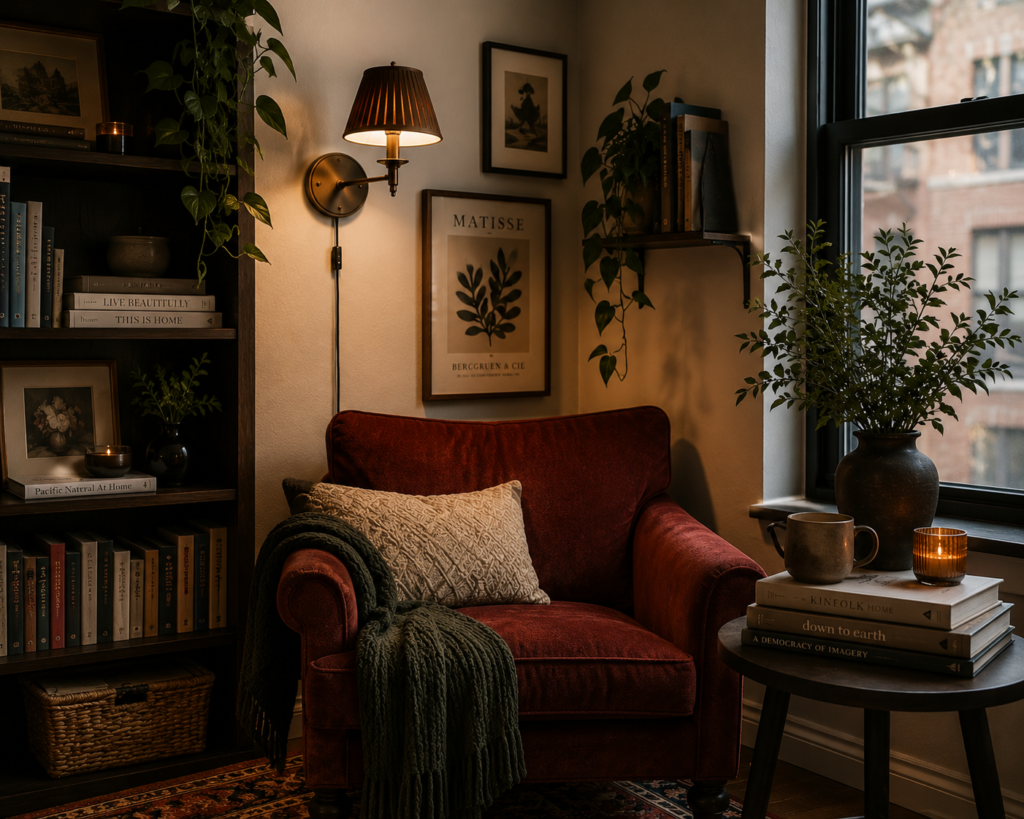
9. Create One Corner With a Strong Point of View
You do not have to decorate the entire apartment at once.
Choose one corner and make it unmistakably yours.
It could be a reading chair beside a lamp and a stack of books.
A small café table beside a window.
A desk surrounded by art.
A record player on a low cabinet.
A bold chair against patterned removable wallpaper.
This is where you can move away from safe decorating choices.
If you love cobalt blue, use it.
If you prefer dark wood and burgundy, build around that.
If your taste is playful, add something playful.
A rental often starts to feel personal once there is at least one place in it that clearly could not belong to just anyone.
10. Bring Color In Through Things You Can Carry Away
Painting is not the only way to change the color of a room.
In many rentals, it is not even the best way.
Curtains, bedding, rugs, cushions, lampshades, art, towels, and small furniture can introduce almost any palette without touching the walls.
Rather than scattering small accents everywhere, choose a few colors and repeat them deliberately.
For example, a room could combine cream walls with oxblood red, walnut, and dusty blue.
Another might use olive green, pale pink, and dark brown.
Or cobalt could appear in a lamp, artwork, and one patterned textile.
This creates a stronger visual identity than adding a collection of unrelated decorative objects simply because the room feels empty.
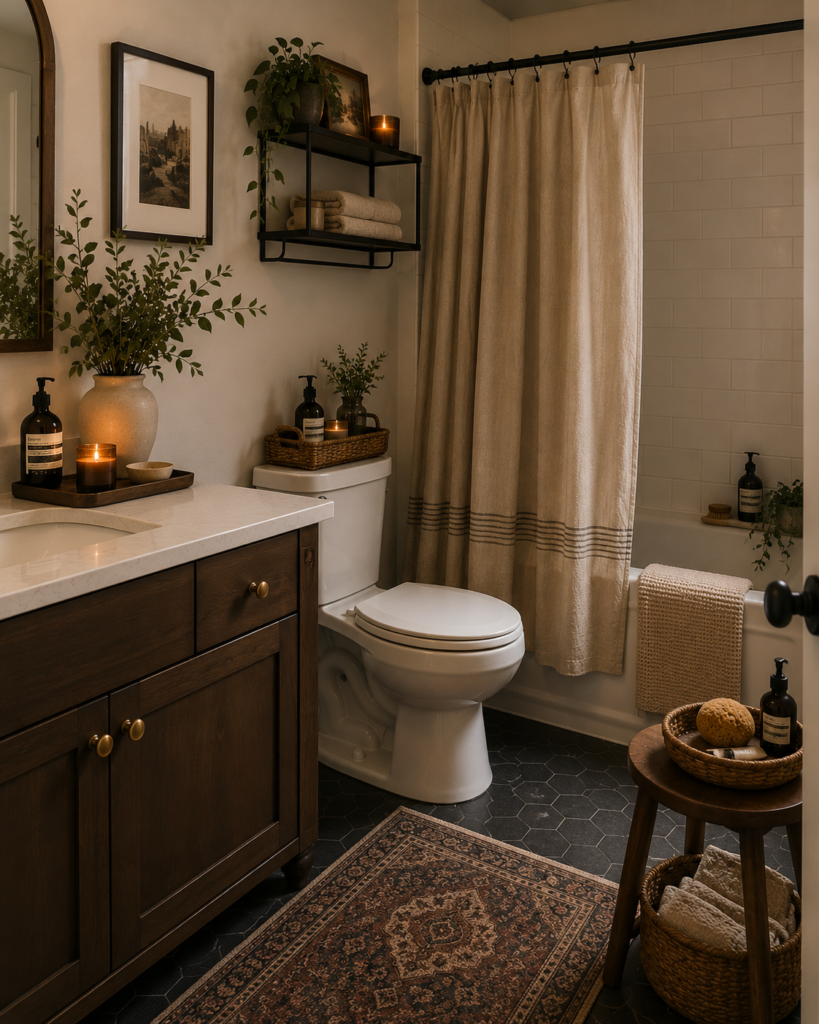
11. Make the Bathroom Feel Less Temporary
Rental bathrooms often offer very little freedom, but small changes still matter.
Start by replacing anything that is easy to take with you.
A better shower curtain.
A substantial bath mat.
Useful towels.
A small lamp if there is a safe, appropriate surface away from water.
A tray for everyday products.
A freestanding stool or narrow storage piece.
If your bathroom has open shelving, matching a few storage containers can reduce visual noise without turning the space into an organization showroom.
The bathroom does not need to look like a spa.
It simply needs to stop feeling like a room you have not moved into yet.
12. Edit What You Leave Visible
One of the cheapest rental upgrades is deciding what deserves to be seen.
A home can contain beautiful furniture and still feel unsettled when every surface becomes temporary storage.
Look at the things that collect on your kitchen counter, bathroom vanity, coffee table, desk, and entryway.
Some need a permanent home.
Some need a tray.
Some need a drawer.
Some simply need to leave.
Then allow a few useful things to remain visible.
A lamp.
A bowl you use constantly.
A stack of books.
A cutting board.
A plant.
A ceramic cup holding pens.
The goal is not minimalism.
It is intention.
A rental begins to feel less temporary when objects stop looking as though they are waiting to be unpacked.
What Is Worth Buying for a Rental?
The best purchases are usually the things you can carry into your next home.
Lighting is one of them.
So are rugs, curtains, freestanding storage, mirrors, art, good bedding, useful kitchen pieces, and small furniture.
Those purchases improve your current apartment without becoming permanently attached to it.
Be more cautious about spending heavily on anything designed specifically for one awkward measurement, one particular wall, or one landlord’s finishes.
If an item only works in this apartment, think carefully before spending a significant amount on it.
If it could work in your next three homes, it is easier to justify.
What Should You Avoid Changing?
A removable upgrade is only renter-friendly if it is actually compatible with your lease and the surfaces in your home.
Do not assume that every adhesive, wall hook, wallpaper product, fixture change, or hardware swap is permitted simply because it is marketed to renters.
Check your lease when necessary.
Test removable materials before covering a large area.
Keep anything you temporarily remove.
And avoid turning a simple decorating project into a repair project.
The goal is to make the apartment better while you live there — and uncomplicated when it is time to leave.
A Rental Still Deserves to Feel Like Your Home
It is easy to postpone decorating a rental.
You tell yourself the next apartment will have better windows.
The next kitchen will have nicer cabinets.
The next living room will be larger.
The next place will be worth the effort.
But home is not only the property you eventually own.
It is also the place where your coffee cup sits tomorrow morning.
The chair you read in tonight.
The light you turn on when the sun goes down.
The entryway you walk through at the end of the day.
You do not need to renovate a rental to make it personal.
A few thoughtful, reversible decisions can be enough to change the feeling completely.
And when it is time to move, the best parts can come with you.